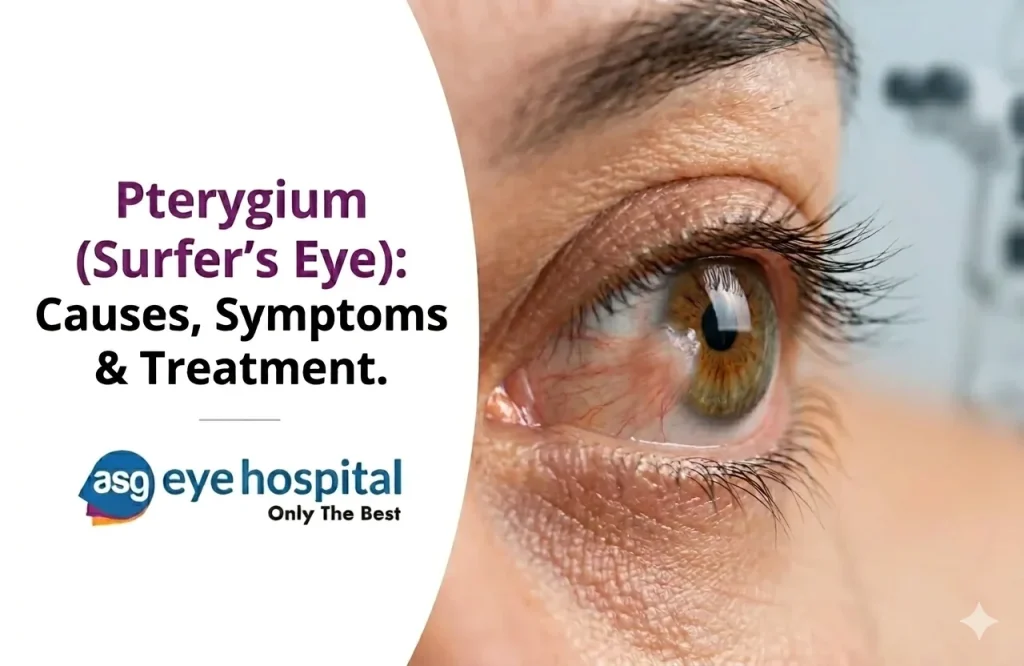
Pterygium, commonly known as Surfer’s Eye, is a non-cancerous growth that develops on the white part of the eye and can gradually extend onto the cornea. It may start as a small, harmless patch but can grow over time and affect vision if left untreated.
This condition is more common in people exposed to sunlight, dust, and dry environments especially those working outdoors.
What is Pterygium?
Pterygium is a wedge-shaped growth of tissue on the conjunctiva (the clear layer covering the white of the eye). Over time, it may spread toward the cornea and distort vision.
It usually appears near the inner corner of the eye and may affect one or both eyes.
Causes of Pterygium
The primary causes of pterygium include:
- Long-term exposure to UV (ultraviolet) rays
- Dust, wind, and dry environmental conditions
- Chronic eye irritation
- Outdoor work without eye protection
People living in sunny or tropical regions are at higher risk of developing this condition.
Symptoms of Pterygium
In the early stages, symptoms may be mild or unnoticeable. As it progresses, you may experience:
- Redness in the eye
- Dryness and irritation
- Gritty or burning sensation
- Visible fleshy growth on the eye
- Blurred vision (in advanced stages)
- Sensitivity to light
If the growth extends onto the cornea, it can lead to astigmatism and vision problems.
Stages of Pterygium
Pterygium develops gradually in stages:
- Early Stage – Small growth with mild irritation
- Progressive Stage – Growth increases with discomfort
- Corneal Involvement – Vision begins to blur
- Advanced Stage – Growth affects vision significantly
Diagnosis of Pterygium
An eye specialist can diagnose pterygium through:
- Eye examination
- Slit-lamp test
- Vision assessment
These tests help determine the severity and need for treatment.
Treatment of Pterygium
Treatment depends on the severity of the condition:
1. Non-Surgical Treatment
- Lubricating eye drops
- Anti-inflammatory medications
- UV protection (sunglasses)
These help manage symptoms but do not remove the growth.
2. Surgical Treatment
Surgery is recommended when:
- Vision is affected
- Growth becomes large
- Frequent irritation occurs
Modern surgery involves removing the growth and placing a tissue graft to reduce recurrence and improve cosmetic appearance.
Prevention Tips
You can reduce the risk of pterygium by:
- Wearing UV-protected sunglasses
- Avoiding dust and dry environments
- Using artificial tears
- Protecting eyes during outdoor activities
When to See a Doctor?
Consult an eye specialist if you notice:
- Persistent redness
- Eye irritation
- Growth on the eye surface
- Blurred or distorted vision
Early treatment can prevent complications.
Conclusion
Pterygium is a common eye condition caused mainly by environmental exposure. While it may start as a minor issue, timely diagnosis and proper treatment can prevent vision problems. Advanced surgical techniques make treatment safe and effective.
For expert care and advanced treatment options, visit ASG Eye Hospital.
FAQs (Frequently Asked Questions)
1. What is pterygium in the eye?
Pterygium is a non-cancerous tissue growth on the white part of the eye that may extend onto the cornea.
2. What causes pterygium?
The main causes include prolonged UV exposure, dust, wind, and dry environmental conditions.
3. Is pterygium dangerous?
Pterygium is usually not dangerous but can affect vision if it grows over the cornea.
4. Can pterygium go away without surgery?
No, it does not go away on its own. Eye drops can reduce symptoms, but surgery is required to remove it.
5. When is pterygium surgery needed?
Surgery is needed when vision is affected, growth increases, or irritation becomes severe.
6. Is pterygium surgery safe?
Yes, it is a safe and commonly performed procedure with modern techniques reducing recurrence risk.
7. How long does recovery take after surgery?
Recovery usually takes 1–2 weeks, depending on the individual and procedure.
8. Can pterygium come back after surgery?
Yes, but advanced surgical techniques and proper care significantly reduce recurrence chances.
9. How can I prevent pterygium?
Wear UV sunglasses, avoid dust exposure, and use lubricating eye drops regularly.
10. What are early signs of pterygium?
Early signs include redness, irritation, and a small growth on the white part of the eye.