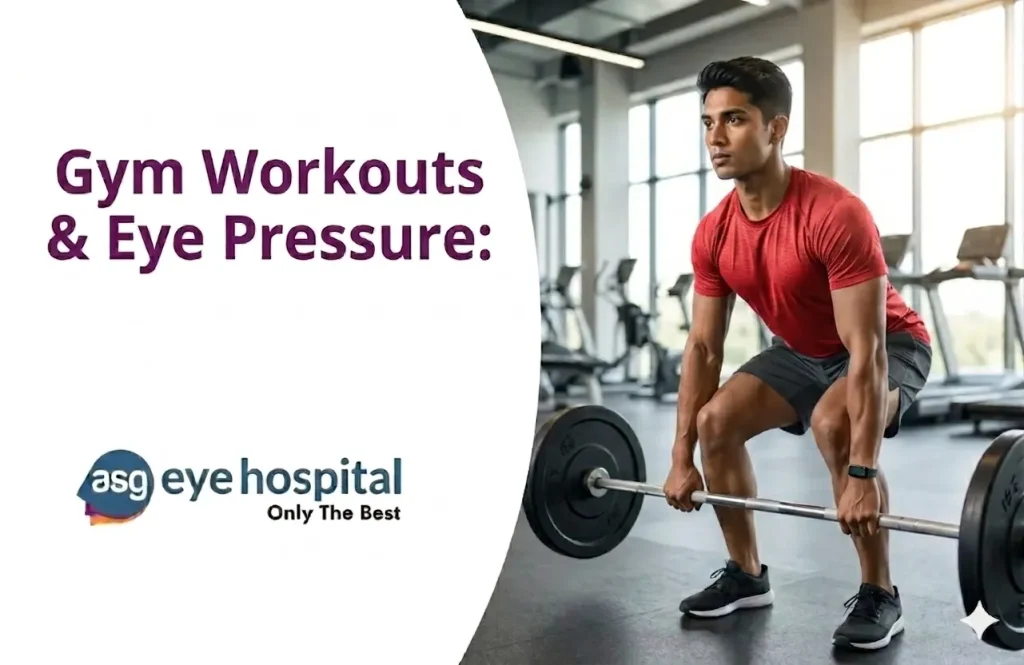
When people go to the gym, they want big arms, personal records for squats or deadlifts, to cut or grow, and to have a well-developed chest. I don’t think many people consider the impact of lifting heavy weights on their eyes. “Is there any connection?” is probably the most often asked question. It just doesn’t make sense to me.’ However, there is a link. An experienced gym expert says that at the gym workouts and eye pressure are more closely linked than most exercise fans think. In spite of what most people think, this subject comes up more often in training meetings.
Can Gym Workouts Increase Eye Pressure?
Yes. Heavy gym workouts such as deadlifts, squats, bench presses, and overhead lifts can temporarily increase intraocular pressure (IOP), especially when holding the breath during lifting. This pressure spike usually returns to normal in healthy individuals, but people with glaucoma, high eye pressure, or a family history of eye disease should take extra precautions. Proper breathing, avoiding excessive strain, staying hydrated, and regular eye checkups can help reduce the risk.
Exercises That Can Increase Eye Pressure
| Exercise | Eye Pressure Impact | Risk |
|---|---|---|
| Deadlifts | High spike | Moderate |
| Squats | High spike | Moderate |
| Bench Press | Medium spike | Moderate |
| Cardio | Usually low | Low |
| Resistance Bands | Mild | Low |
The Real Connection Between Lifting and Your Eyes
When someone asks, “Can gym increase eye pressure?” the answer is a clear “Yes, but for a limited amount of time and only when exercising very heavily.” When performing a complex exercise such as a big lift like deadlifts, squats or overhead presses, the intraocular pressure in the eye increases significantly. Researchers have found that one challenging set can raise the pressure inside the eye by 10 to 20 mmHg. For someone in good health, that will quickly settle.
For this reason, there has been a growing conversation among coaches and in the medical community on whether or not myopia and exercise at the gym should be taken seriously. Glaucoma gradually harms the optic nerve when eye pressure is only raised over long periods of time. So when a lifter is feeling the pressure, it’s really bad to not listen while training.
Many frequent gym patrons are startled by how infrequently this topic is brought up in casual fitness talks. While people spend hours talking workout splits, protein consumption, supplements, and recuperation approaches, eye health is often utterly overlooked. Even seasoned lifters frequently don’t grasp the connection until they contact a physician or detect odd pressure or headaches following hard exercises. Understanding the problem does not equal skipping the gym, which is why awareness is crucial. It simply requires knowing how the body responds to severe exercise and making more intelligent adaptations as needed.
Why the Weight Lifting Eye Pressure Risk Deserves Attention
When moving, most people don’t think about breathing. When someone does a repeat while stopping their breath, it’s known as a Valsalva technique. Massive pressure is formed in the head and chest as a result, and it pushes straight into the eyes. Exercises that cause people to hold their breath naturally, such as heavy bench presses, military presses, or pulling maximum deadlifts, increase the weight lifting eye pressure risk.
Resistance training greatly increases IOP, especially in those with pre-existing problems, according to a 2019 study released in the Journal of Glaucoma. Exercise and eye pressure changes are usually not a big worry for the average gym goer. Exercise-induced glaucoma should also not be disregarded if you have been diagnosed with glaucoma or if there is a family history of the condition.
Another important factor is that signs are often not quickly obvious. Some people report feeling short blurred vision, light headaches, or odd pressure around their eyes during heavy lifting activities, but they do not connect these symptoms to their training. There are those who perceive nothing at all. Therefore, persons who exercise hard several days a week may benefit from frequent eye tests, especially if glaucoma or other vision issues run in the family.
How to Train Hard Without Hurting Your Eyes
One basic piece of advice is always given to customers by smart exercise professionals: let go of the effort. When pushing or tugging, breathing stops pressure from building up in the brain. Drinking lots of water, changing the maximum weight for controlled reps, and getting regular eye checks are all very helpful. People should also refrain from performing prolonged isometric holds and working with their hands overhead for extended amounts of time without a doctor’s approval, based on the eye pressure.
The Bottom Line Nobody Talks About
Does hitting the gym cause blood pressure to rise? It can, really. But, this is not the time to abandon the lift. Training with awareness is all it takes to understand the link between glaucoma and gym exercise. Every lifter should protect every part of their body, including the areas they seldom see in the mirror, therefore the weight lifting eye pressure risk is real, controlled, and important to be aware of.
FAQ Section
1. Can gym workouts increase eye pressure?
Yes, intense gym workouts and heavy lifting can temporarily raise eye pressure, especially during exercises like squats, deadlifts, and bench presses.
2. Why does eye pressure increase during weight lifting?
Eye pressure rises mainly because of the Valsalva maneuver, where people hold their breath while lifting heavy weights. This increases pressure in the chest, head, and eyes.
3. Is heavy lifting dangerous for glaucoma patients?
Heavy lifting may increase the risk for people with glaucoma or high intraocular pressure. They should consult an eye specialist before intense strength training.
4. Which exercises increase eye pressure the most?
Deadlifts, squats, overhead presses, bench presses, and exercises involving breath-holding usually cause the highest eye pressure spikes.
5. Can exercise cause glaucoma?
Exercise itself does not directly cause glaucoma, but repeated high eye pressure spikes may worsen existing glaucoma or increase risk in susceptible individuals.
6. How can I reduce eye pressure while working out?
Proper breathing, avoiding breath-holding, using controlled weights, staying hydrated, and avoiding extreme strain can help reduce eye pressure during exercise.
7. Are cardio workouts safer for eye pressure?
Moderate cardio exercises like walking, cycling, and swimming are generally safer and may even help maintain healthy eye pressure levels.
8. Should people with myopia avoid heavy gym workouts?
Most people with myopia can exercise safely, but those with high myopia or retinal issues should avoid excessive straining and get regular eye checkups.