Ask any student about their study routine and late nights will almost always come up. Exam season has a way of turning midnight into the new 9 PM, and for many students, the laptop screen becomes their closest companion once the rest of the world goes quiet. Nobody talks much about what that actually does to the eyes over time. Eye strain from studying is one of those problems that builds slowly and quietly until it becomes impossible to ignore — and by that point, the damage has already been sitting there for months.
How Can Students Reduce Eye Strain While Studying Late at Night?
Students can reduce eye strain while studying by following the 20-20-20 rule, using proper room lighting, lowering screen brightness, blinking more often, staying hydrated, and taking short breaks every 20–30 minutes. Annual eye check-ups also help identify hidden vision problems that worsen study-related eye fatigue.
What Happens to the Eyes During Long Study Sessions
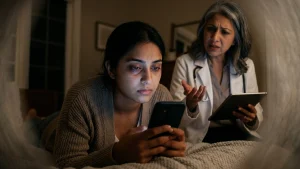
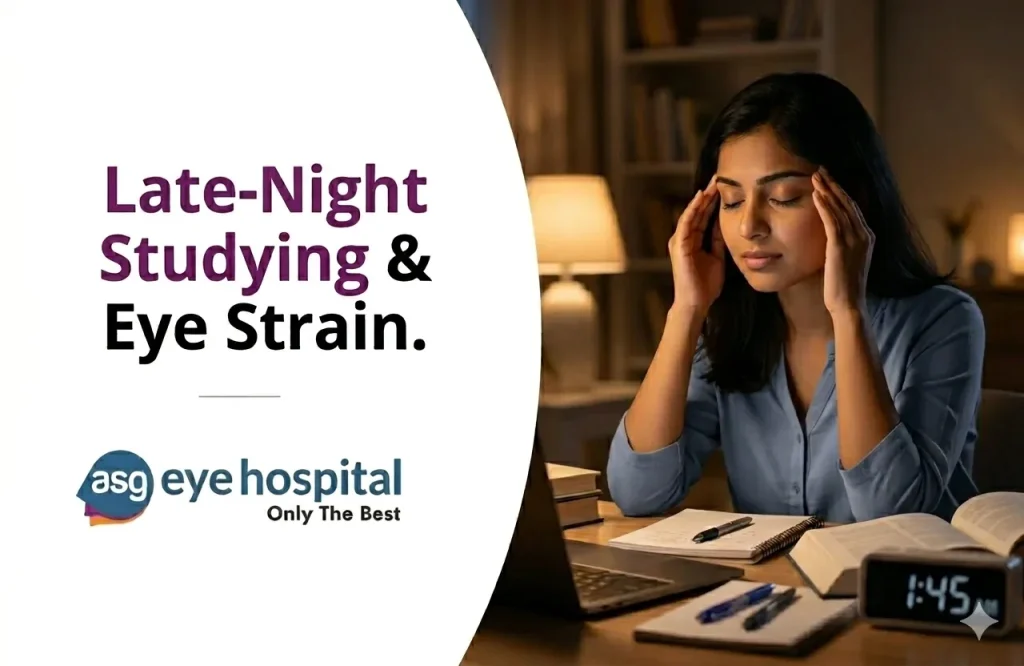
In brief, the eyes were not built for lots or many hours of staring intently. In order to keep the text or the image of a screen bright and clear, the eyes’ minuscule muscles are constantly engaged. During a normal day, those muscles get natural breaks — looking out of a window, glancing across a room, walking somewhere. During a four-hour late-night study session, those breaks disappear entirely.
The result is muscular fatigue, and that fatigue is exactly what eye strain from studying feels like. The burning sensation, the heaviness behind the eyes, the text that starts blurring slightly and then clears again — all of that is the eye muscles signaling that they have been overworked. At night, the situation gets considerably worse because a bright screen surrounded by darkness forces the eyes to constantly adjust to a sharp contrast that speeds up the fatigue dramatically.
Common Study-Related Eye Problems & Simple Eye Care Tips for Students
| Problem During Study | Simple Eye Care Solution |
|---|---|
| Burning eyes | Blink more often |
| Blurry vision | Follow 20-20-20 rule |
| Headaches | Improve room lighting |
| Dry eyes | Drink enough water |
| Eye fatigue | Take short screen breaks |
| Light sensitivity | Lower screen brightness |
Late Night Study Eye Care Tips That Students Can Actually Use
Most advice about late night study eye care tips gets ignored because it feels impractical or vague. These suggestions are specific enough to actually work:
- Follow 20-20-20 rule without changing. Every 20 minutes, stop for 20 seconds to look as far away as 20 feet. It genuinely relaxes the concentrating muscles and allows the eyes a reset in between lengthy reading periods, despite the fact that it looks so simple as to be dismissive.
- Sort out the lighting before sitting down to study. One of the most damaging late night study eye care tips that gets ignored is about room lighting. A bright screen in a pitch-dark room is one of the worst setups possible for eye comfort. A small lamp placed behind or beside the screen reduces contrast and takes real pressure off the eyes.
- Blink deliberately and often. Screen users blink far less than normal without realising it — sometimes as little as a third of their usual rate. Blinking on a regular basis is one of those practices that, unexpectedly, has a stronger influence.
- Change the screen’s colors to match the space. In a dark room, it’s difficult for the eyes to function at full brightness when staring at a screen. During such late hours, dimming the light to a reasonable level instead than glaring is extremely useful.
- Drink water consistently. This one gets overlooked constantly. The production of tears is hindered by dehydration, and dry eyes become strained substantially more rapidly. Every cup of coffee that students reach for after midnight should be matched by a glass of water.
Student Eye Health Tips: When Rest Alone Is Not Enough
One of the most practical student eye health tips is getting a proper annual eye exam — not just during obvious problems, but routinely. Surprisingly many youngsters are carrying a weak, inappropriate medicine that they have never been taught about. Those eyes compensate silently but tire faster, and correcting even a small refractive error often produces a huge improvement in comfort during study sessions.
Student eye health tips also include recognising when symptoms are crossing a line. If the pain does not go away after getting a good night’s rest, if one eye is more foggy than the other, or if headaches persist after studying, then it’s time for a professional eye exam.
Knowing How to Reduce Eye Strain While Studying Makes a Real Difference
It doesn’t need costly instruments or intricate ways to discover how to reduce eye strain while studying. It requires focus on little habits that most of the students already know but very few do. The 20-20-20 rule, proper lighting, purposeful breathing, reducing screen brightness and drinking plenty of water could be a good combination to protect eye health even during the heaviest of schoolwork.
If the behaviours causing eye strain from studying continue the same, it won’t go away on its own. Every lecture, every late study session, and every exam is carried out by the eyes. Giving them a reasonable level of daily care is not asking much in return.
FAQ Section
1. What causes eye strain during late-night studying?
Eye strain happens when students focus on screens or books for long periods without breaks. Reduced blinking, poor lighting, and bright screens in dark rooms increase stress on the eye muscles.
2. What is the 20-20-20 rule for eye strain?
The 20-20-20 rule means every 20 minutes, look at something 20 feet away for 20 seconds. It relaxes the eye muscles and reduces fatigue during long study sessions.
3. Can studying at night damage eyesight permanently?
Occasional late-night studying usually does not cause permanent damage, but repeated eye strain can lead to chronic dryness, headaches, blurred vision, and worsening discomfort if ignored.
4. Why do my eyes burn after studying for hours?
Burning eyes are commonly caused by reduced blinking, screen glare, dryness, and prolonged focus during studying. Poor room lighting can make symptoms worse.
5. How can students protect their eyes during exam preparation?
Students should maintain proper lighting, limit continuous screen exposure, blink frequently, drink enough water, and schedule regular eye exams to protect eye health during exams.
6. When should students visit an eye doctor for eye strain?
Students should get an eye examination if symptoms continue despite rest, headaches become frequent, vision becomes blurry, or one eye feels more strained than the other.