
Congenital Cataract: Expert Care for Clear Vision
Congenital cataract is a rare eye condition in newborns caused by cloudy lenses. Early screening and expert care can help protect and restore vision.

20
Years
180+
Hospitals

700+
Eye Specialists

3
Crore+ Eyes



What is Congenital Cataract?
A congenital cataract is a cloudy area in the eye’s natural lens that is present at birth or develops during early childhood. Normally, the lens focuses light clearly onto the retina, but cataracts block or scatter light, causing blurred or reduced vision.
Some congenital cataracts are small and do not significantly affect vision, while larger cataracts can severely impair visual development and require early surgical treatment.
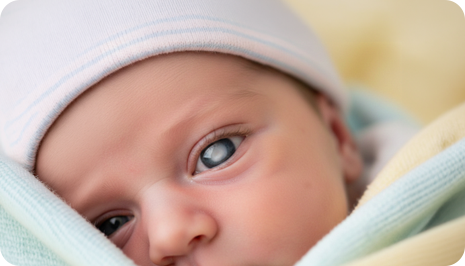
Congenital Cataract – Symptoms, Causes & Treatment at ASG Eye Hospital
Congenital cataract is a condition in which a baby is born with clouding of the natural lens of the eye. The cloudy lens blocks light from reaching the retina properly, which can interfere with normal visual development. Congenital cataracts may affect one or both eyes and can lead to permanent vision problems if not diagnosed and treated early. Timely medical care is essential because vision development during infancy plays a critical role in lifelong eyesight. At ASG Eye Hospital, experienced pediatric ophthalmologists and cataract specialists provide advanced diagnosis, pediatric cataract surgery, and long-term visual rehabilitation for children with congenital cataracts.
Types of Congenital Cataract
Unilateral Congenital Cataract
This type affects only one eye and may lead to severe lazy eye (amblyopia) if untreated.
Bilateral Congenital Cataract
Bilateral cataracts affect both eyes and may significantly impair overall visual development.
Partial Congenital Cataract
Only a small portion of the lens becomes cloudy, and vision may remain relatively normal.
Total Congenital Cataract
The entire lens becomes cloudy, significantly affecting vision and often requiring surgery.
Symptoms of Congenital Cataract
Common signs and symptoms include:
- White or gray reflex in the pupil
- Cloudy appearance in the eye
- Poor visual response
- Eye misalignment (squint)
- Nystagmus (abnormal eye movements)
- Difficulty focusing on objects
- Delayed visual development
- Sensitivity to light
- Poor eye contact in infants
Parents may notice a white reflex in photographs instead of the normal red reflex. Immediate eye examination is important in such cases.
Causes of Congenital Cataract
Congenital cataracts may develop due to various genetic or developmental factors, including:
- Genetic mutations
- Family history of cataracts
- Infections during pregnancy
- Metabolic disorders
- Developmental abnormalities
- Trauma during pregnancy
- Associated genetic syndromes
In some cases, the exact cause may not be identified.
Risk Factors for Congenital Cataract
Factors that may increase risk include:
- Family history of congenital cataract
- Maternal infections during pregnancy
- Premature birth
- Genetic syndromes
- Metabolic diseases
- Developmental abnormalities
Complications of Untreated Congenital Cataract
Without timely treatment, congenital cataracts may lead to:
- Permanent vision loss
- Lazy eye (amblyopia)
- Delayed visual development
- Strabismus (squint)
- Nystagmus
- Poor depth perception
- Learning and developmental difficulties
Early diagnosis is critical because the brain’s visual pathways develop rapidly during infancy.
Diagnosis of Congenital Cataract
At ASG Eye Hospital, pediatric ophthalmologists perform detailed eye examinations to diagnose congenital cataracts and evaluate visual development. Diagnostic evaluation may include:
- Red reflex examination
- Slit lamp examination
- Pediatric retinal examination
- Vision assessment
- Eye alignment testing
- Ultrasound imaging if required
Advanced pediatric eye diagnostic systems help specialists determine cataract severity and treatment planning.
Treatment Options for Congenital Cataract
Observation & Monitoring
Small cataracts that do not significantly affect vision may only require regular monitoring.
Pediatric Cataract Surgery
Significant congenital cataracts often require surgery to remove the cloudy lens and restore visual clarity. Early surgery is important for proper visual development. (aao.org)
Intraocular Lens (IOL) Implantation
In some children, an artificial intraocular lens may be implanted during surgery to improve focusing ability.
Corrective Glasses or Contact Lenses
After surgery, children may require glasses or contact lenses to support visual rehabilitation.
Amblyopia (Lazy Eye) Treatment
Patching therapy or visual exercises may be recommended to strengthen vision in the weaker eye.
Long-Term Follow-Up
Children who undergo cataract surgery require regular follow-up to monitor visual development, eye pressure, and refractive errors.
Recovery After Congenital Cataract Surgery
Recovery generally includes:
- Use of prescribed eye drops
- Protective eye care after surgery
- Regular pediatric eye examinations
- Vision rehabilitation
- Monitoring for glaucoma or other complications
With early treatment and proper follow-up, many children achieve useful functional vision.
Importance of Early Detection
Parents should consult an eye specialist immediately if they notice:
- White pupil reflex
- Cloudy eye appearance
- Poor visual response
- Eye misalignment
- Abnormal eye movements
Early treatment significantly improves visual outcomes and reduces the risk of permanent vision impairment.
Why Choose ASG Eye Hospital for Congenital Cataract Treatment?
- Experienced pediatric ophthalmologists and cataract surgeons
- Advanced pediatric eye diagnostic technology
- Modern pediatric cataract surgery facilities
- Personalized visual rehabilitation programs
- Child-friendly treatment environment
- Comprehensive long-term pediatric eye care
- Trusted eye hospital network across India
ASG Eye Hospital provides comprehensive diagnosis, surgery, and visual rehabilitation for congenital cataracts with a focus on preserving vision and supporting healthy childhood visual development.

Book Your Appointment

Submit Your Request
Get a Call from Our Team
Meet Your Specialist
Begin Your Eye Care Journey
Please wait...
Self Booking
Get A Call Back

Vision for All.
Not Just for Some
ASG is growing its network with 200 Vision Centres, delivering affordable eye care to over 4 million people.
Or
Clear Answers for Better Vision
Can congenital cataracts be cured?
Yes, many congenital cataracts can be successfully treated with early surgery and visual rehabilitation.
Is congenital cataract hereditary?
Some congenital cataracts may have a genetic or hereditary association.
At what age should congenital cataract surgery be done?
The timing depends on cataract severity and whether one or both eyes are affected. Early surgery is often recommended for significant cataracts affecting vision.
Can children develop normal vision after surgery?
Many children achieve functional vision with timely treatment, corrective lenses, and proper visual rehabilitation.
When should parents consult an eye specialist?
Parents should seek immediate evaluation if a child develops cloudy eyes, white pupil reflex, abnormal eye movements, or poor visual response.

Every Angle of Vision.
Every Kind of Care.
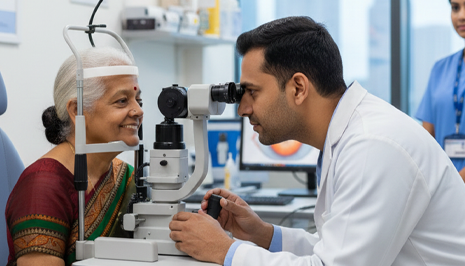
Cataract
What do you understand by Cataract? A cataract is an eye condition characterized by the clouding of the natural lens in the eye, leading to vision

Diabetic Retinopathy
What Do You Understand by Diabetic Retinopathy? Diabetic retinopathy is an eye condition, it is caused by diabetes
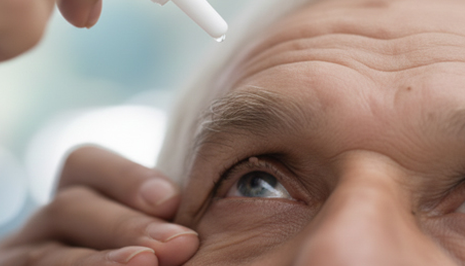
Cornea
Cornea and Associated Diseases The cornea is the transparent front part of the eye that covers the iris, pupil, and anterior parts of an eye.
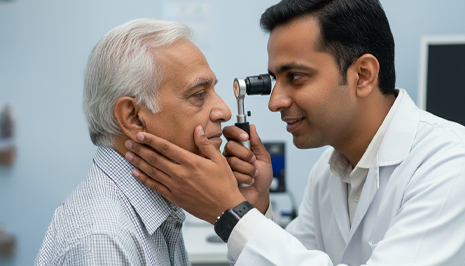
Glaucoma
Glaucoma: A Silent Thief of Sight Glaucoma is an eye condition that directly damages the optic nerve (the bundle of nerve fibers that carries..

Neuro-Ophthalmology
What is Neuro-Ophthalmology? Neuro ophthalmology is a combination of super specialty of both neurology and ..