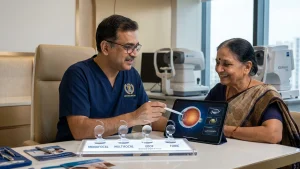
Healing after an eye procedure needs time and some steady daily care. People’s comfort and vision typically get better as they recover. People sort of follow this advice after cataract surgery Bhopal to regain confidence in their daily lives. When they stick to the recovery tips and guidelines, healing goes more smoothly, and they run into fewer eye problems down the line. Taking those tips seriously really pays off.
How Long Does Cataract Surgery Recovery Take?
Most patients notice improved vision within a few days after cataract surgery, while complete healing may take 4–6 weeks. Following prescribed eye drops, attending follow-up appointments, avoiding eye rubbing, and protecting the eyes from dust and strain can help ensure a smooth recovery.
- Give Your Eyes Some Time to Settle In: After eye surgery, the first few days are key, they really matter for healing. Your sight may keep changing for a while as your eyes get used to the full procedure, kind of gradually. So, it’s important to get plenty of rest. That way you avoid straining your eyes. A calm, quiet rhythm usually helps things settle on their own and then you can start feeling better sooner. This patience usually leads to a smoother recovery down the line.
- Follow Instructions Carefully: Eye drops really help with healing after surgery. Using them when you’re supposed to keeps your eye comfortable and aids recovery. Making a quick schedule makes it easier to remember the doses. Cleaning your hands before putting in the drops is also important for keeping up good eye care in Bhopal. Being quite consistent with the drops helps you heal steadily.
- Protect Your Eyes: Taking simple steps for protection really matters after surgery. Using protective eyewear, as suggested, helps keep eyes safe. Things that seem normal might need more care during healing time. It lets your eye get better without added annoyance or risk. Being mindful of where you put your hands helps a lot.
- Focus on Quality Sleep: Good sleep helps the body recover. It keeps healing naturally while we rest. Feeling cozy while sleeping and following eye care tips keeps things comfortable at night. A sleep routine really helps feel good overall. When you’re refreshed, recovery usually goes better and feels more balanced.
- Avoid Rubbing: This is quite uncomfortable and delays healing. Even if they feel itchy, follow the care advice instead. Try not to touch them throughout the day either. This actually helps you recover quicker. These small precautions ensure faster and better healing.
- Take Breaks from Screens: Digital screens are everywhere nowadays. But after surgery, it’s wise to go easy on yourself, including your tech use. Give your eyes regular short breaks by looking away from your phone or tablet. Staring a bit into the distance helps too. It helps your eyes breathe a little easier. The top eye surgeon suggests trying to try lowering the screen brightness so you get less visual fatigue and that kind of pressure. When you’re mindful of tech use, recovery can go smoother.
- Follow up appointments: These kinds of check-ups let the eye specialist see how well you’re really mending. It’s sort of like, they can confirm that everything is still going okay with your recovery, even if it feels slow at first. Patients can also talk about any new questions on vision or daily tasks. Going to these visits keeps you informed during recovery. It also means you get ongoing support and advice from your eye doctor, which is really reassuring as you keep healing.
- Return to Activities Gradually: People can’t wait to get back to normal after surgery, but moving slowly actually works better. It helps your eyes adjust without stress. Plus, you can slowly add activities as recommended by the pros. Building it up gradually boosts confidence and aids healing. Respecting how your body recovers makes the return to daily life feel easier overall.
- Clean Environment: A clean space is another way to stay comfortable while you recover. Cleaning helps reduce dust. Therefore, it’s worth keeping up with. It feels nice to look at neat areas and fresh linens as well. It’s amazing how a clean space promotes a comfortable healing atmosphere. Small, simple changes often make the recovery process easier and nicer.
- Stay Positive Throughout Recovery: A positive attitude makes recovery easier. It’s key to celebrate small wins too, to stay upbeat and confident. Seeing daily progress makes the healing process go smoother. By sticking to healthy habits and following eye care advice, you support yourself through your recovery better. Being patient and mindful of the guidance on the eye health you get lets patients relax more during their healing time.
Cataract Surgery Recovery Timeline
| Recovery Stage | What to Expect |
|---|---|
| First 24 Hours | Mild discomfort, blurred vision, rest required |
| 1–7 Days | Vision begins improving, continue eye drops |
| 1–2 Weeks | Resume most daily activities with care |
| 3–4 Weeks | Reduced sensitivity and improved clarity |
| 4–6 Weeks | Complete healing for most patients |
| Follow-Up Visits | Essential for monitoring recovery progress |
In conclusion, healing after cataract surgery takes patience and some solid daily habits. Proper rest, eye protection and keeping those appointments really make a difference. Your cataract doctor Bhopal from top hospitals like ASG Eye Hospital can help you through all the healing stages. Following their care instructions makes recovery smooth and less stressful. You can get back to daily activities easily too. Therefore, adhering to these really boosts your chances of a successful recovery.
FAQs
1. How long does it take to recover from cataract surgery?
Most patients recover within 4–6 weeks, although vision often starts improving within a few days.
2. What should I avoid after cataract surgery?
Avoid rubbing your eyes, lifting heavy objects, swimming, exposure to dust, and excessive screen use during the early recovery period.
3. Can I use my mobile phone after cataract surgery?
Yes, but screen time should be limited initially. Take frequent breaks and reduce screen brightness to avoid eye strain.
4. Why are follow-up appointments important after cataract surgery?
Follow-up visits help your eye specialist monitor healing, detect complications early, and ensure optimal visual recovery.
5. When can I return to normal activities after cataract surgery?
Most patients can resume light daily activities within a few days, while strenuous activities should be resumed only after medical approval.
6. Is blurry vision normal after cataract surgery?
Yes. Mild blurry vision is common during the first few days and usually improves as the eye heals.
7. How important are eye drops after cataract surgery?
Prescribed eye drops help prevent infection, reduce inflammation, and support proper healing.
8. When should I contact my eye doctor after surgery?
Seek immediate medical attention if you experience severe pain, sudden vision loss, excessive redness, or unusual discharge.