Most people think of cataracts as a total clouding of the eye lens and severe vision loss. But actually cataracts develop very slowly. In many cases what we see is an immature senile cataract which is a stage in which the natural lens has begun to cloud over but has not yet fully gone dark.
An immature senile cataract may present in the form of issues like reading, driving, watching TV, or recognizing faces. Also because the progression is so slow many people ignore the early signs which in turn delays them from seeking out medical attention.
What we do at ASG Eye Hospital is that we focus on making our patients aware of their condition, what the symptoms are, and what the treatments are which in turn helps protect vision and improve quality of life. We also at our hospital see many cases of the immature senile cataract before they progress to a stage that would greatly affect a person’s independence and visual function..
What Is an Immature Senile Cataract?
In the case of an immature senile cataract the natural eye’s lens’ inner core has developed cloudiness while the outer layer of the lens remains transparent. As some portions of the lens are yet clear, light may pass through and vision is not as affected though not perfect.
This is a gradual development and is the most common type of age related cataract we see across the world. As the cataract progresses more of the lens tissue becomes opaque which will end up in a mature cataract should it go untreated.
An immature senile cataract is a between stage of clear and fully matured cataract. Early diagnosis allows us to put out an eye care plan for the patient’s particular case.
How Does an Immature Senile Cataract Develop?
As we age the natural lens in our eye begins to deteriorate and develop clumps. These protein changes produce cloudy areas as a result that in turn impede light.
Also there are a number of factors which can cause a person to get an immature senile cataract early in life including:
- Increasing age
- Diabetes
- Smoking
- Long-term steroid use
- Excessive UV exposure
- Eye injuries
- Family history of cataracts
As a main cause of which aging is responsible we see also that lifestyle and health issues play a role in the cataract’s development.
Common Symptoms of an Immature Senile Cataract
Many patients report early very mild signs which later progress to serious visual issues.
- Blurred or hazy vision
- Increased sensitivity to light
- Difficulty driving at night
- Halos around lights
- Frequent changes in spectacle prescription
- Faded or dull color perception
- Reduced contrast sensitivity
- Double vision in one eye
Because the development of an immature senile cataract is a slow process patients often do not notice until the condition has progressed. Early cataract symptoms should not be put out of mind also in persons over 50.
Vision Problems Caused by an Immature Senile Cataract
The vision problems associated with an immature senile cataract vary depending on which part of the lens is affected.
| Cataract Location | Possible Vision Problem |
| Central Lens | Difficulty reading and recognizing faces |
| Peripheral Lens | Increased glare and light sensitivity |
| Posterior Lens | Trouble seeing in bright sunlight |
| Nuclear Region | Changes in distance vision |
Many patients which present with an immature senile cataract report that night time driving is especially challenging because of headlight glare.
As the disease progresses vision quality goes down which in turn affects daily activities and overall confidence.
Immature vs Mature Cataract: What Is the Difference?
One of the most common questions patients ask is about immature vs mature cataract stages.
The key difference lies in how much of the lens has become opaque.
| Feature | Immature Cataract | Mature Cataract |
| Lens Clarity | Partially cloudy | Completely cloudy |
| Vision | Reduced but still functional | Significantly impaired |
| Red Reflex | Usually present | Often absent |
| Daily Activities | Can still perform most tasks | Major difficulty performing tasks |
| Surgery Timing | Based on symptoms | Usually strongly recommended |
When it comes to immature vs mature cataracts it is important to note that surgery does not have to wait until the cataract reaches maturity.
Today’s ophthalmology practice has shifted to a model of treatment which is based on a patient’s visual needs as opposed to the appearance of the lens. By being aware of the differences between immature vs mature cataract stages we are able to better inform our patients in their treatment choices.
How Is an Immature Senile Cataract Diagnosed?
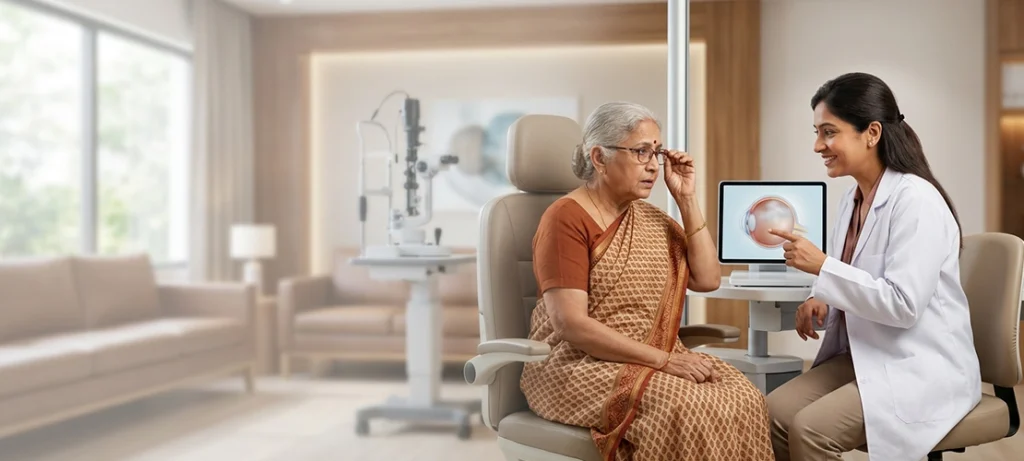
An ophthalmologist can diagnose an immature senile cataract during a comprehensive eye exam.
Common diagnostic tests include:
- Visual acuity testing
- Refraction assessment
- Slit-lamp examination
- Retinal evaluation
- Intraocular pressure measurement
A slit-lamp examination allows the ophthalmologist to determine the severity and location of the immature senile cataract and assess its impact on vision.
When Should You Consider Treatment?
Not every immature senile cataract requires immediate surgery.
Treatment decisions depend on:
- Impact on daily activities
- Driving difficulties
- Reading challenges
- Occupational requirements
- Overall visual quality
If glasses no longer provide the correction you need, we may recommend treatment. Also patients tend to compare the stage of a cataract’s development fromimmature vs mature cataract which in turn determines when they have surgery.
In fact with modern surgical techniques waiting for a cataract to mature is not a requirement.
Can Glasses Improve Vision?
At the start of an immature senile cataract’s development a new prescription may improve vision temporarily. But glasses do not remove the clouded lens. As the cataract in its immature stage progresses the value of spectacles in improving vision is less. This is why it is important to have regular eye exams to monitor the progress.
Cataract Surgery: The Definitive Treatment
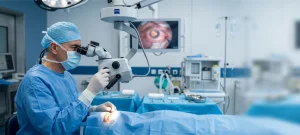
Presently the only effective treatment for immature senile cataract is cataract surgery. In terms of the modern cataract surgery the natural clouded lens is removed and a clear artificial intraocular lens is put in.
Benefits include:
- Improved visual clarity
- Better contrast sensitivity
- Reduced glare
- Enhanced color perception
- Greater independence
Today we see that cataract eye surgery is very safe and very successful world wide. For many patients with an immature senile cataract surgery greatly improves quality of life.
What Happens During Cataract Eye Surgery?
A typical cataract eye surgery procedure involves:
| Step | Description |
| Preparation | Eye numbed with anesthetic drops |
| Lens Removal | Cloudy lens removed using ultrasound technology |
| Lens Implant | Artificial intraocular lens inserted |
| Recovery | Patient usually returns home the same day |
Modern cataract eye surgery is usually under 30 minutes in duration and does not require an overnight stay. Many patients who compare results of early vs later cataract treatments report that early intervention has the benefit of a smoother recovery.
Risk Factors for Progression
Some factors which may see an immature senile cataract progress more quickly:
- Poor diabetes control
- Smoking
- Chronic UV exposure
- Long-term corticosteroid use
- Previous eye trauma
Regular monitoring helps identify changes before significant vision loss occurs.
Can an Immature Senile Cataract Be Prevented?
There is no guaranteed way to prevent an immature senile cataract, particularly when age-related changes are involved. However, certain lifestyle habits may help reduce risk or slow progression:
- Wear UV-protective sunglasses
- Maintain healthy blood sugar levels
- Eat a diet rich in antioxidants
- Avoid smoking
- Attend regular eye examinations
- Use medications only as prescribed
These measures support long-term eye health and may delay progression of an immature senile cataract.
Why Early Evaluation Matters
Many people think cataracts have to be at a very late stage before treatment is necessary. This is not true which in turn causes delay in seeking care.
An immature senile cataract may for some time affect driving skills, job performance, and day to day independence before it reaches very bad stages.
Routine eye exams determine if the cataract is stable or is in a state of progression which in turn allows for timely treatment.
At ASG Eye Hospital we evaluate each patient’s lifestyle, visual requirements, and cataract degree of advancement before we put forth a treatment plan.
Key Takeaways
- An immature senile cataract is a which has developed partially from an age related stand point.
- Vision may be present but does fade over time.
- We see symptoms like blurred vision, glare, halos, and issues with night time driving.
- It is important for patients to know the difference betweenimmature vs mature cataract stages which aids in treatment decisions.
- Modern cataract surgery is safe, effective and in fact does not require you to wait until the cataract is fully mature.
- Early diagnosis and regular check ups are key to preserving quality of life.
Frequently Asked Questions
1. What is an immature senile cataract?
An age-related cataract that in part of the lens has developed cloudiness but the rest of the lens is still clear is what we mean by an immature senile cataract.
2. What is the difference between immature vs mature cataract?
In an immature vs mature cataract comparison, an immature cataract is partially cloudy, whereas a mature cataract is completely opaque and causes more severe visual impairment.
3. Can an immature senile cataract be treated without surgery?
In some cases glasses may improve vision but the only definitive treatment for an immature senile cataract is cataract surgery.
4. How quickly does an immature senile cataract progress?
Progression is variable between individuals and is based on age, health conditions, and lifestyle. Some cataracts progress slowly over the years, others much more so.
5. Is cataract eye surgery safe?
Yes. At present modern cataract eye surgery is considered one of the safest and most successful surgical procedures world wide.
6. When should I consider cataract surgery?
You should consider cataract surgery when vision changes start to affect daily activities which include driving, reading, work, or in general quality of life.