Every day it is the case that thousands of workers are in settings which expose them to chemicals, dust, flying particles, sparks, fumes and also other hazards. Although many employees do put on gloves or helmets or protective footwear, eye protection tends to be forgotten until an accident happens. Also true is that a small particle that gets in the eye can cause pain, an infection, temporary vision issues or in bad cases may cause permanent vision loss.
That is the reason why lab goggles are so very important in labs, factories, research centers, workshops and industrial settings. Maybe you are working with chemicals in a lab or operating machinery in a factory. What is for certain is that wearing the right lab goggles is one of the easiest and most effective forms of vision protection.
At ASG Eye Hospital we see many patients with eye injuries which are preventable had they been wearing the proper protective eyewear. By the way, we think it is important for people to know the value of lab goggles in order to make their work places safer and to reduce the risk of serious eye damage.
Why Eye Protection Matters at Work
The human eye is very delicate. We see in which people may sustain instant injuries or health issues as well as long term damage from harmful substances. In labs, a splash of a chemical will burn the outer layer of the eye in a very short time.
In factories the eye can be hit by metal particles, wood chips, dust, or sparks out of the blue. Also it is the everyday tasks that workers do which have been reported to produce many workplace eye injuries. What we do almost out of routine causes us to play down the risks. That said, proper lab goggles which act as a protective shield for the eyes at the same time as allowing workers to carry out their functions easily.
From what the occupational safety authorities all over the world report that a large scale of workplace eye injuries can be put to a stop through use of right eye protection and application of safety practices.
Common Eye Hazards in Laboratories and Industrial Workplaces
Different workplaces present different risks. Understanding these risks helps explain why lab goggles are essential.
| Workplace Environment | Common Eye Hazards |
| Chemical Laboratories | Chemical splashes, vapors, fumes |
| Manufacturing Units | Flying particles, metal fragments |
| Construction Sites | Dust, debris, cement particles |
| Welding Operations | Sparks, intense light, heat |
| Pharmaceutical Labs | Chemical exposure, powders |
| Research Facilities | Biological agents, chemical reactions |
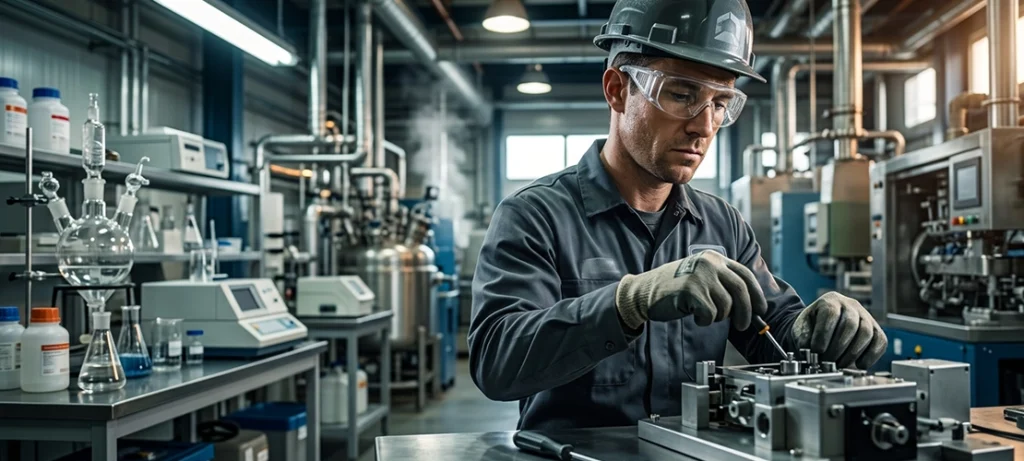
In laboratory settings, laboratory goggles are specifically designed to provide a secure seal around the eyes, offering protection from chemical splashes that ordinary glasses cannot provide.
What Are Lab Goggles?
Lab goggles are a type of protective eyewear which is to say they completely cover the eyes from harmful substances and flying particles. Also unlike normal spectacles or fashion wear glasses, lab goggle design is based on safety which is put forward as the primary feature which includes in it better protection. Also in the present time we see that most lab goggle models come with impact resistant lenses, side protection, anti fog coatings and also comfortable seals which in turn help in to keep out harmful substances from getting to the eyes. To which work environment one works in will determine what type of lab goggles are required based on the present hazards. In a scientific setting lab goggles are a standard part of personal protective equipment as they protect against both liquid and air born hazards.
How Lab Goggles Prevent Serious Eye Injuries
Lab goggles main role is prevention. Eye injuries which may present in a second with no notice. A chemical splash, flying fragment, or sudden reaction may cause permanent damage before a worker is aware. When donned properly lab goggles do put between you and that which is dangerous. Also they reduce the risk of corneal abrasion, chemical burn, foreign body injuries, and infections. In many cases wearing lab goggles is between a minor issue and a lifetime of vision problems. At ASG Eye Hospital we see that prevention is always better than to seek out emergency eye care after the injury has happened.
Types of Lab Goggles Used in Different Industries
Not all protective eyewear is the same. Various industries require different styles of lab goggles depending on the hazards present.
| Type of Goggles | Suitable For | Protection Offered |
| Chemical Splash Goggles | Laboratories | Liquid chemicals and splashes |
| Impact-Resistant Goggles | Manufacturing | Flying particles and debris |
| Ventilated Goggles | Industrial Work | Dust protection with airflow |
| Non-Ventilated Goggles | Chemical Handling | Maximum splash protection |
| Welding Goggles | Welding Operations | Heat, sparks, and radiation |
Choosing the correct lab goggles is important because using the wrong type may leave workers vulnerable to injury.
Laboratory Goggles vs Regular Safety Glasses
Many people think that safety glasses and lab goggles are the same in terms of protection. That is a fallacy. Lab goggles present a full seal which in turn reduces the risk of chemicals getting to the eyes from the sides, top, or bottom. Safety glasses do a good job at warding off direct impacts but may have gaps which allow in liquids or fine particles. In chemical, bio agent, or harmful liquid containing environments goggle wear is the recommendation. This is the reason that in research and lab settings workers are asked to wear laboratory goggles as opposed to standard safety glasses.
Importance of Wearing Lab Goggles Consistently
In the occupational setting eye injuries are also very much a result of inconsistent use of protective gear. Workers may take off their lab goggles for comfort, convenience, or as they perceive a task to be of low risk. Also we do not see warning signs before accidents which may happen. A single instance of going without lab goggles may bring about severe results. Employers should see to it that workers are made aware of the risks and have access to properly fitting protective eyewear. Those that put eye safety first usually report lower injury rates and improved workplace safety culture. By following proper eye safety practices and wearing lab goggles at all times you help to create a safer environment for all.
What to Do If an Eye Injury Occurs
Even in the face of due care accidents do happen. If chemicals, dust, or foreign materials get into the eye immediate action is a must. The eye should be rinsed with clean water as soon as possible. Workers should out of all do to avoid rubbing the eye which in turn may complicate the issue. Any that includes persistent pain, redness, blurred vision, or sensitivity to light require a visit to the emergency room. Prompt treatment is the key to prevent complications and save vision. If symptoms persist after first aid it is very much advised to seek out care at an ophthalmologist.
Maintaining and Replacing Lab Goggles
Check protective eyewear regularly. Scratched lenses, damaged straps, broken seals, or reduced visibility compromise the protection offered by the eyewear. Workers should clean lab goggles as per the manufacturer’s instructions and replace them when damaged.
Proper maintenance ensures that lab goggles continue to provide reliable protection throughout their lifespan.
Eye Safety at ASG Eye Hospital
At our ASG Eye Hospital we see many of the work related eye injury cases that come in. Many of these issues may have been avoided with the use of appropriate lab goggles and better adherence to workplace safety measures. We also put out the word that it is the responsibility of employees, researchers, students and industrial workers to make eye protection a priority at all times. Although we have state of the art eye care which does what it can to manage injury, the best way to preserve long term vision is to protect your eyes before an accident happens. If you do suffer a work related eye injury we urge you to get in to a qualified eye hospital right away for a prompt diagnosis and treatment.
Key Takeaway
Protecting your eyes should never be optional in hazardous environments. In a research lab, manufacturing floor, pharmaceutical setting, or industrial plant, lab goggles are that extra layer of defense which is required. Also we see that high quality lab goggles play a key role in reducing chemical burns, foreign body injuries, and incidents that threaten vision. Along with implementation of proper safety practices in the workplace and a regular drill of eye safety tips, they play a very important role in the health of your vision.
Frequently Asked Questions
1 Why are lab goggles important in laboratories?
Lab goggles which are used in the lab setting protect eyes from chemical splashes, airborne particles, fumes and other present in the lab environment. They greatly reduce the risk of eye injuries.
2 What is the difference between laboratory goggles and safety glasses?
Goggle which is the type of PPE for the face provides a full seal around the eyes and thus better protection against liquids and chemicals, on the other hand safety glasses mainly protect against direct impacts.
3 Can lab goggles prevent chemical eye injuries?
Yes. With proper fit goggles which is a type of protective gear for the eye area prevent chemicals from reaching the eye surface and in turn reduce the risk of severe burns and vision damage.
4 How often should lab goggles be replaced?
Lab goggles must be replaced when they have scratch marks, damage, fit loose, or stop providing clear vision and full protection.
5 What should I do if a chemical enters my eye despite wearing goggles?
Immediately wash out the eye with clean water and get medical care. If symptoms persist go to an ophthalmologist at the eye clinic as soon as possible.