Eyelid irritation may at first be a small issue but in full blown attacks it can ruin your day with eyes that are burning, watering, itching, and feeling sticky in the morning. Many think that they have a recurring eye infection which brings them to the ophthalmologist, what in fact they have is blepharitis which is a very common form of eyelid inflammation. There are two main types anterior and posterior and awareness of which you have may help to understand why the symptoms keep coming back.
Anterior blepharitis impacts the front of the eyelid which in turn affects the base of the eyelashes. For the back lid version it is the inner eyelid margin which is affected, that is where the oil glands empty into the tear film. Both forms cause redness, crusting, burning, tearing and dry eye but they do not always respond to the same treatment.
What Is Blepharitis?
Blepharitis is a condition that affects the eyelid margin. It is usually not a serious issue but may become chronic, which in turn is uncomfortable and frustrating when it comes back. For the most part anterior blepharitis which is very common has to do with crusting around the eyelashes, bacterial overgrowth, dandruff like skin changes, or seborrheic dermatitis. Posterior blepharitis on the other hand is more related to meibomian gland dysfunction which is an issue of the oil glands in the eyelid not producing healthy oil for the tears.
When the eyelid edge is in a state of inflammation the tear film’s stability is affected. This is the reason many people with blepharitis also require dry eye treatment along with lid hygiene. A full eye exam is important to determine if the issue is at the base of the lashes, the oil glands, or both.
Front vs Back Eyelid Blepharitis
Although in different locations the two types of this condition affect the eyelids. Then half of the first type affects the external lid margin and lash follicles and the latter which is of the second type affects the meibomian glands within the lids. That distinction is important to note as a patient with sparse lashes may require more attention to the lash line including cleaning and growth support while a patient with blocked glands may do better with warm compresses, gland expression and tear film support.
| Comparison Point | Front Eyelid Type | Back Eyelid Type |
| Area affected | Front eyelid margin and base of eyelashes | Inner eyelid margin and oil gland openings |
| Common appearance | Flakes, crusting, redness, sticky lashes | Thick oil, blocked glands, foamy tears, oily lid margin |
| Common triggers | Bacterial overgrowth, dandruff, seborrheic dermatitis | Meibomian gland dysfunction, rosacea, poor tear film quality |
| Common symptoms | Itching, crusting, irritation, redness | Burning, watering, dryness, fluctuating vision |
| Treatment focus | Lid cleaning and lash hygiene | Warm compresses, gland care, and tear-film support |
Symptoms of the Front Eyelid Type
Anterior blepharitis is what we see more of as it affects the visible eyelid margin. Patients may see scales at the base of the eyelashes, crusting of the lids after sleep, redness, itching, or a sticky feeling to the eye on waking. Also in some cases the lids may feel sore, and lashes may drop out or grow in a different direction.
Within anterior blepharitis what we see is that symptoms may improve for a few days and then come back if lid hygiene is stopped. That is why regular eyelid cleaning is a must. We aim not only to remove the crusts but also to reduce repeat irritation around the eyelashes.
Symptoms of Posterior Blepharitis
Posterior blepharitis is also a present of dry eye rather than what one would think of as a simple eyelid issue. Patients report burns and a gritty feeling in their eye, watering, fluctuating vision, or eye tiredness after using screens. Vision may improve for a short while after blinking which in turn spreads the tear film over the eye surface.
This is due to poor quality oil secretion by the meibomian glands out of which not enough of it is produced. Thus eyes dry out even while they are watering and we see the issue of dry eye. For many patients we see benefit from a mixed approach which includes lid care and dry eye treatment.
What Causes Blepharitis?
Anterior blepharitis is not a result of poor hygiene in all cases. It may be related to normal skin bacteria, dandruff, oily skin, scalp issues, or inflammation of the lash follicles. Also people with repeat styes or crusting may also have this type of eyelid inflammation.
Posteriorly the meibomian glands tend to get blocked up or produce thick oil which is the issue. This may present in cases of rosacea, age related gland changes, long term computer use, hormonal changes, or chronic dry eye. In many cases the issue is with the front and the back of the eyelid which is why we see a very individualized treatment approach.
| Cause or Risk Factor | How It Affects the Eyelids |
| Bacterial overgrowth | Can irritate the lash base and worsen anterior blepharitis |
| Seborrheic dermatitis | Causes dandruff-like flakes around the scalp, eyebrows, and eyelashes |
| Meibomian gland dysfunction | Blocks oil flow and destabilizes the tear film |
| Rosacea | Can inflame eyelids and disturb oil gland function |
| Makeup residue | Can collect near the lash line and trigger irritation |
| Dry eye disease | Makes the eye surface and eyelids more sensitive |
| Contact lens use | Can worsen discomfort when the lid margin is already inflamed |
How Is Blepharitis Diagnosed?
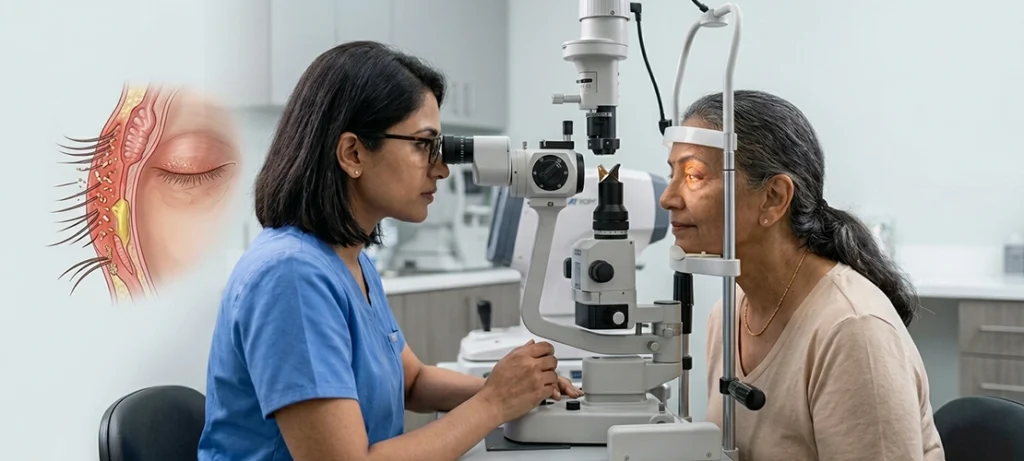
Diagnosis is typically done through ophthalmoscopy which is a type of slit-lamp eye exam. In the case of anterior blepharitis the doctor will look for flakes, scales, crusting, redness, irritation, and changes to the eyelashes. Also the surface of the eye is evaluated as long term irritation of the eyelids may affect the tear film and cornea.
For the post diagnostic phase the doctor will look at meibomian gland function, oil quality, tear stability, and the inner eyelid margin. If symptoms are severe, one sided, recurring, or not improving the ophthalmologist may look for Demodex, rosacea, allergy, or other eye conditions before determining treatment.
Treatment for the Front Eyelid Type
The mainstay of treatment for anterior blepharitis is to practice good eyelid hygiene. We use warm compresses which help to break up the crusting, and gentle lid cleaning to remove scales at the base of the lashes. In some cases we may use medicated lid wipes, antibiotic ointment, or short term anti-inflammatory medication if the lid margin is very red or irritated.
Anterior blepharitis will improve with regular treatment, but if care is stopped too soon symptoms may return. It is recommended that patients go to bed without eye make up, use only unexpired cosmetics, not to rub their eyes, and also to avoid sharing towels. Also if there is dandruff or seborrheic dermatitis present, treating the scalp and skin issue will in turn also help to reduce blepharitis flares.
Treatment for Posterior Blepharitis
Posterior blepharitis treatment is focused at improving oil gland function. Warm compresses are very useful in that they help to soften thick oil within the glands. Also may try gentle lid massage, lubricating drops, and treatment for meibomian gland dysfunction which will be based on the degree of your condition.
The back lid form may require extended follow up as gland function does not improve quickly. In some patients we also treat associated rosacea, dry eye disease, or inflammation. We aim to improve tear quality, reduce burning and to prevent repeat flare ups.
Can Blepharitis Cause Dry Eye?
Yes. Blepharitis is a frequent co-occurrence with dry eye as the eyelids play a key role in the maintenance of the tear film. When there is inflammation of the eyelid margin, tears do not spread well over the eye. Also this is a common issue when the oil glands are blocked.
Anterior blepharitis also causes dry eyes which is a result of crusting and inflammation at the base of the lashes which in turn irritates the eye surface. This is the reason many patients require a plan that includes lid hygiene, lubricating drops, and dry eye treatment. Treating only the dryness aspect without care for the eyelids may prove to be incomplete.
When Should You See an Eye Doctor?
You should go to an eye doctor if redness, itching, crusting, watering, or burning persist despite home care. Also get checked for anterior blepharitis if there is loss of eyelash, repeat styes, swelling, or continuous irritation. It is best not to ignore symptoms in one eye.
Eye care should be sought out sooner if you have pain, light sensitivity, blurred vision, pus like discharge, or sudden increase in swelling. These may be signs of another eye issue which requires prompt care. Also it is unsafe to use random steroid drops without medical advice as they may increase your eye pressure and cause other issues.
Daily Eyelid Care to Prevent Flare-Ups
Long term care is a result of consistent effort. We see that warm compresses, gentle lid cleaning, proper make up removal, use of fresh products, and treatment of dandruff or rosacea play a role in minimizing break outs. Also for those that work with computers for great lengths of time we advise to take breaks to refresh your eye blink rate which in turn will better your tear film health.
Good for the lash base to be kept clean in case of anterior blepharitis. As for the posterior type we must support the meibomian glands and the tear film. Also even when symptoms improve it is still that care is required as blepharitis very much is a recurring issue.
Blepharitis Care at ASG Eye Hospital
At the ASG Eye Hospital we evaluate patients with eyelid irritation to determine the root cause of their symptoms. We check if the issue is anterior blepharitis, meibomian gland dysfunction, dry eye disease, allergy, infection, or some other eyelid condition. This is an important step which we take in to identify what each patient requires as far as treatment goes.
The treatment we may recommend includes instructions on lid hygiene, lubricating drops, medicated ointments, dry eye treatment also we may try other eye treatments which present during the exam. We focus on reducing discomfort, control of eyelid inflammation, protection of the eye surface, and prevention of flares.
Key Takeaways
Anterior blepharitis affects the front eyelid margin near the eyelashes and commonly causes flakes, crusting, redness, and itching. The posterior form affects the inner eyelid margin and oil glands, often causing burning, watering, dry eye symptoms, and fluctuating vision.
Both types are manageable with correct diagnosis and regular care. Patients should avoid self-medicating with random drops and should see an eye doctor if symptoms persist, worsen, or keep returning. Early treatment helps protect the eye surface and improves day-to-day comfort.
Frequently Asked Questions
What is the difference between anterior blepharitis and posterior blepharitis?
The front type of blepharitis affects the outer edge of the eyelid by the eyelashes, the back type affects the inner eyelid margin and oil glands. One usually results in more crusting and flaking, the other is more related to dry eye issues and unstable tear film.
Is anterior blepharitis serious?
Anterior blepharitis is typically not a serious issue but it may become a chronic and irritating condition if left untreated. It may cause crusting, itchiness, redness, and recurrent discomfort. With regular lid care and medical intervention most patients do well.
Can posterior blepharitis cause dry eye?
Yes. When the meibomian glands don’t produce good quality oil tears evaporate faster. This results in burning, watering, a gritty sensation, and fluctuating vision. Treatment is usually warm compresses, lid care, lubricating drops, and dry eye management.
Can blepharitis be cured permanently?
Blepharitis does very well with control, in some patients it doesn’t go away completely. Many people require ongoing eyelid care to avoid flares. The goal is to reduce inflammation, protect the eye surface and to keep symptoms in check.