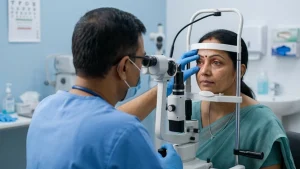

Dry eye syndrome may at first seem like a minor issue but for many it gradually gets to the point that it affects reading, screen work, driving, sleep, and overall comfort. Patients report burning, a sensation of weight in the eye, that there is sand in the eye, tearing, redness, or that something is out of place in the eye. Also some note that their vision will blur through the day and then clear somewhat after a blink.
At ASG Eye Hospital what we see is many patients that have been using over the counter lubricating drops for weeks or even months before they come in. The drops may bring some relief but for long term results we have to get to the bottom of why the tear film is not functioning right. A good dry eye syndrome treatment plan at which we specialize looks at the cause of the issue, the degree of the syndrome, the health of the eyelids, the condition of the eye surface, and the patient’s day to day doings.
What Is Dry Eye Syndrome?
Dry eye syndrome is out to include those in which the eyes do not produce enough tears, tears evaporate off the eye before they are supposed to, or the tears which are produced do not stay put on the eye. It is a common thing that tears are simply water. In actuality they are a mixture of oil, water, and mucus which when balanced well, do the job of keeping the eyes moist, smooth and clear.
When we see this balance disrupted the eye surface becomes exposed and irritated. At first the discomfort may present itself during screen use, travel, or air conditioning. Over time symptoms may become more frequent. This is where early dry eye syndrome intervention is important, in particular when dryness begins to impact daily life.
Why Tears Matter for Clear Vision
Every time we blink the tear film which in turn covers the eye. This film protects the eye surface, washes out small particles, and also creates a smooth optical surface for clear vision. If the tear layer breaks up too quickly light doesn’t focus properly and vision may fluctuate even if the glasses are the right prescription.
Some patients are taken by surprise that they produce a great deal of tears from the eyes which at the same time are diagnosed with dry eye syndrome. This is so because irritation brings on reflex tearing. What may present as a lot of tears may in fact not stay on the eye long enough to actually relieve the basic dryness.
Common Causes and Risk Factors
Dry eye syndrome is often a result of multiple factors that are at play at once. We see that long screen time, reduced blinking, aging, contact lens use, issues with the eyelid oil glands, allergies, diabetes, thyroid disorders, certain medications, as well as exposure to dust, smoke, wind, or air conditioning are included in those factors.
| Cause or Trigger | How It Affects the Eye |
| Long screen use | People blink less while looking at screens, which allows tears to evaporate faster. |
| Meibomian gland dysfunction | Blocked oil glands reduce the oily layer of tears and make evaporation worse. |
| Age and hormonal changes | Tear production and tear stability may reduce with age. |
| Contact lens use | Long hours of lens wear may increase irritation and dryness in sensitive eyes. |
| Air-conditioning, dust, and pollution | These factors can disturb the tear film and increase burning or redness. |
| Medical conditions and medicines | Diabetes, thyroid disease, autoimmune disease, allergy medicines, and some blood pressure medicines may contribute to dry eyes. |
Because the cause may differ from patient to patient, dry eye syndrome treatment should be personalized rather than based only on general eye drops.
Symptoms That Should Not Be Ignored
Dry eye is a condition which tends to get worse at the end of the day after a long time on the phone, computer, watching TV, or reading. Also it may worsen in dry weather, while traveling, or in environments with air from fans or air conditioning. Patients may report burning, stinging, a foreign body sensation, redness, eye fatigue, light sensitivity, stringy mucus, contact lens issues, or variable blurred vision.
If these symptoms persist it is better to see an eye specialist instead of trying different drops. A proper diagnosis is required to determine if simple lubrication is enough or if we require a more in depth dry eye syndrome treatment plan.
Treatment Options for Lasting Relief
Dry eye treatment is based on what is causing it and the degree of the disease. In mild cases which may improve we see patients do better with lifestyle changes and lubricating drops, in moderate or chronic cases we may require medication, eyelid therapy or procedures which will preserve tears.
| Treatment Option | When It May Be Recommended |
| Artificial tears | Used for mild symptoms and temporary relief during screen work or outdoor exposure. |
| Preservative-free lubricants | Preferred when drops are needed many times a day or when the eyes are sensitive. |
| Warm compresses and lid hygiene | Useful when eyelid oil glands are blocked or inflamed. |
| Anti-inflammatory eye drops | Prescribed when inflammation is contributing to dryness and irritation. |
| Punctal plugs | Consider when tears drain away too quickly and other measures are not enough. |
| Management of associated disease | Treating allergy, diabetes, thyroid disease, or autoimmune disease can support long-term control. |
As for what is at the disposal today in terms of dry eye syndrome treatment it is not a one size fits all approach. Presently we see doctors do more in terms of identifying the exact tear film issue at hand and also in putting together a dry eye syndrome treatment plan which best suits the patient’s particular case.
Home Care That Supports Relief
Daily we see which practices pay off. Patients should take screen breaks, blink fully, stay away from direct air of fans or AC vents, wear protective glasses outdoors, stay hydrated, and clean the eyelids as your doctor advises. Home care is a support to the dry eye syndrome treatment plan but it shouldn’t take the place of medical advice when symptoms are severe, frequent or associated with pain, redness, light sensitivity, discharge, or vision changes.
Care at ASG Eye Care
At ASG Eye Hospital we are focused on offering practical and long lasting relief. We do a full evaluation of the tear film, eyelid margin, eye surface, medical history, and lifestyle before we present a dry eye syndrome treatment plan. This is to avoid a one size fits all approach. Based on the issue at hand, dry eye syndrome treatment may include options such as lubricating drops, preservative free tears, eyelid hygiene, warm compresses, anti-inflammatory therapy, lifestyle changes and follow up monitoring. In patients that have related eye or systemic conditions the dry eye syndrome treatment plan may also include coordination with other specialists when needed.
When Should You See an Eye Doctor?
Dryness that lasts more than a few days, comes back, or which affects your work, reading, screen use, driving, or sleep should see an eye doctor. Also seek care at the first sign of pain, redness, light sensitivity, discharge, or sudden change in vision. Also pay close attention if you have diabetes, thyroid or auto immune disease, are a long term contact lens user, or have had eye surgery in the past. In these cases which may require more frequent check ups and close monitoring.
Key Takeaway
Dry eye syndrome is a chronic condition, much more than the experience of intermittent dryness at times. This is a tear film and eye surface issue that has the ability to impact comfort, visual acuity and your daily life. Right diagnosis is key in determining what is the root cause which may be low tear production, fast evaporation, eyelid gland disease, inflammation or environmental triggers. In the early diagnosis and with a consistent care plan that includes the right dry eye syndrome treatment most patients do see great relief and protection of the eye surface. If your symptoms are recurring we always recommend a full eye exam over the use of over the counter drops.
Frequently Asked Questions
1. What causes dry eyes?
Dryness which is a result of reduced tear production, fast tear evaporation, eyelid oil gland issues, aging, screen use, contact lenses, certain medicines, air conditioning, pollution, also may be brought on by medical conditions like diabetes, thyroid disease, or autoimmune disorders.
2. What is the best dry eye syndrome treatment option?
The cause of the dry eye syndrome will determine the best dry eye syndrome treatment. We see that some patients do well with lubricating drops and lifestyle changes, also we may use lid hygiene, anti inflammatory drops, punctal plugs, or dry eye syndrome treatment of an underlying health issue.
3. Can this condition go away permanently?
In some mild cases what we see is that once the trigger is removed, there is a great amelioration, for example if it was a case of reduced screen time or avoidance of direct air flow. In chronic cases while total disappearance does not always happen what is usually true is that with proper management we are able to manage the symptoms very well.
4. Is it serious?
It is usually manageable, but it should not be ignored if symptoms are frequent or severe. Without proper care, ongoing irritation may damage the eye surface and affect visual comfort.