A sudden loss of vision or dark spot in one eye may be very scary, at which time pain may not be present. Many of our patients report to the clinic that the vision in one eye went out of it all very suddenly or that straight lines and faces which used to look clear now do not. Also we see that a cause is central retinal vein occlusion also known as CRVO. What is important is early understanding of CRVO treatment which in turn can help reduce retinal swelling, lower the risk of complications, and in the process help preserve what is left of the useful vision.
A crvo eye is a case in which the primary vein which takes blood away from the retina becomes blocked. The retina is the light sensitive layer at the back of the eye, and when blood does not circulate properly fluid and blood may leak into the retinal tissue. This can cause blurry vision, distorted vision, floaters, or a sudden loss in sight. Treatment does not usually “fix” the blockage. What we do is we focus on reducing retinal swelling, we monitor blood flow, we prevent abnormal new blood vessels from growing, and we protect the eye from more damage.
What Is CRVO?
Central retinal vein occlusion is a condition in which the central retinal vein is blocked or it’s flow is greatly reduced. This blockage in turn causes pressure within the retinal blood vessels which in turn leads to bleeding, fluid leakage and macular edema. The macula is the element of the retina that is responsible for our sharp central vision. As it is too swollen you will see reading, recognizing faces, driving, and fine detail recognition become difficult.
In certain cases a crvo eye issue may present with very mild symptoms while in others there is large scale vision loss. The disease usually presents in one eye at a time but the other should be evaluated as many body wide risk factors which include high blood pressure, diabetes, glaucoma, high cholesterol, and blood clot issues play a role. Also treatment is not just for the eye. We also have to identify and treat the health issues which may have played a role in the vein blockage.
Why Timely CRVO Treatment Matters
After CRVO the most common cause for vision loss is macular edema which is retinal swelling. Also a very serious issue is ischemia which is a condition where parts of the retina do not get enough oxygen. When the retina is deprived of oxygen it produces signals which in turn cause growth of abnormal blood vessels. These new vessels are weak and they lead to bleeding, high eye pressure, and neovascular glaucoma.
Early intervention for CRVO gives the retina a better chance to stabilize before complications progress to advanced stages. Also it allows the retina specialist to determine if the condition is ischemic or non-ischemic which in turn affects follow up schedule and crvo treatment plan. A CRVO eye requires close monitoring, in particular in the first few months, because complications may present themselves even when the patient reports that vision has improved.
Common Symptoms of CRVO
| Symptom | What the Patient May Notice | Why It Happens |
| Blurred central vision | Reading and recognizing faces become difficult | Fluid collects in the macula |
| Sudden painless vision loss | Vision drops in one eye without redness or pain | Retinal bleeding and poor blood drainage affect vision |
| Dark spots or floaters | Small shadows or moving spots appear | Blood or retinal changes may disturb the visual field |
| Distorted vision | Straight lines may look bent or wavy | Macular swelling affects the central retina |
| Eye pressure symptoms in advanced cases | Pain, redness, or halos may occur | Abnormal vessels may raise eye pressure |
How CRVO Is Diagnosed
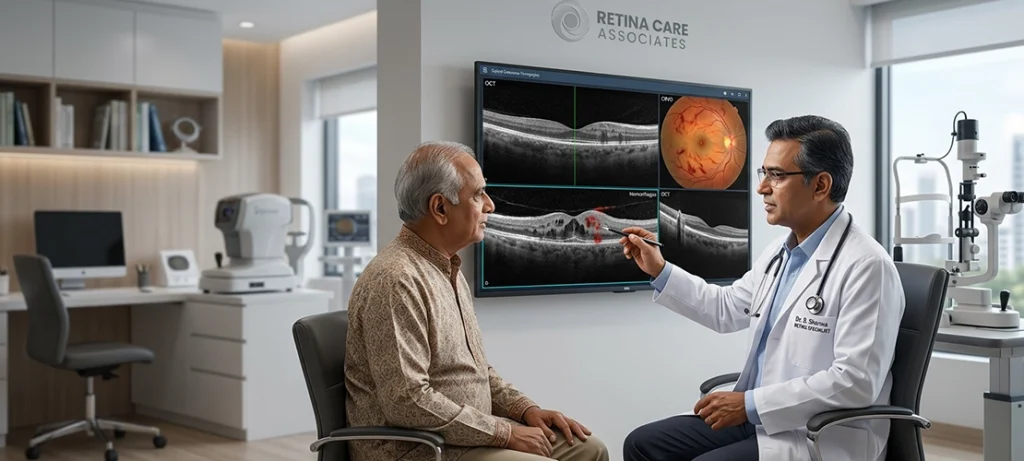
An in depth retina exam is the first step. The doctor will check visual acuity, eye pressure, pupil response, and the retina after dilating the pupil. We also use Optical coherence tomography which we call OCT to measure macular swelling and to track response to treatment over time. Also we have fundus photography which helps document retinal bleeding and changes. Also we may advise fluorescein angiography to study retinal blood flow and to identify ischemic areas.
In certain patients we see that blood pressure measurement, blood sugar testing, cholesterol assessment, and other medical studies are put forth. Also this is a particular issue for younger people or those without a clear out of the ordinary risk. Since CRVO is a major eye disease related to health issues in the body’s systems, collaboration between the ophthalmologist and physician will in turn make the care provided that much better and more comprehensive.
Main CRVO Treatment Options
Crvo treatment is based on the degree of vision loss, the extent of macular edema, the presence of ischemia, and the health of the eye. The goal is to preserve vision, reduce swelling, prevent complications, and to maintain long term retinal health.
The primary approach is that of intravitreal injection therapy. In this we put medication into the eye which is done under sterile conditions after the use of numbing drops. We see that the most common meds are anti-VEGF agents which in turn help to reduce leakage from abnormal or stressed retinal blood vessels. What these do is they reduce macular edema and in many cases improve or stabilize vision. For a case of CRVO with large scale swelling anti-VEGF agents are very often the first line of treatment.
Steroid injection or implantation is an option in some cases which includes when swelling doesn’t respond to anti vegf agents or when the doctor determines steroids are the right choice. Also we must note that steroids may raise eye pressure and also speed up cataract formation in some patients which is why they should be used with care. Laser treatment is not the primary for macular swelling in CRVO but may be used when abnormal new blood vessels do present or when there is ischemic retina which requires attention.
| Treatment Option | When It Is Used | Main Purpose |
| Anti-VEGF injections | Macular edema affecting vision | Reduce swelling and improve or stabilize vision |
| Steroid injection or implant | Selected cases of persistent edema | Control inflammation and fluid leakage |
| Retinal laser treatment | Abnormal new vessels or ischemic retina | Reduce risk of bleeding and neovascular glaucoma |
| Risk factor control | High blood pressure, diabetes, cholesterol, glaucoma | Lower future risk and protect both eyes |
| Regular monitoring | All CRVO patients | Detect swelling, ischemia, and pressure-related complications early |
Role of Anti-VEGF Injections in CRVO Treatment
Anti vegf drugs have transformed the approach we take in the management of CRVO which is to target directly the primary cause of retinal leakage. VEGF is a cytokine which the stressed retina releases and high levels of it promote swelling and abnormal vessel growth. By blocking this signal anti vegf agents improve macular edema and in turn allow the retina to function better.
Patients see that in most cases of injection therapy what is required is a series of visits. We don’t usually see single dose treatments for the long term. The retina specialist may begin with a monthly injection regimen which we may then change out based on the results of the OCT and visual response. Some patients are on treatment for a few months, others for a longer time. The exact plan is determined by the CRVO eye’s response.
Can Vision Fully Recover After CRVO?
Vision recovery is very variable. In some cases of non-ischemic CRVO and early macular edema patients do well and see well again. But in other cases vision may be impaired if the retina has had severe ischemic damage. The sooner the patient is seen and the more we pay attention to the condition the better our chance of preserving function.
It is critical to set realistic expectations. We see that treatment does what it is supposed to do, which is reduce swelling and prevent many of the complications, but it may not fully restore vision in all cases. Should the macula or the optic nerve have very serious damage the degree of improvement may be less. Also, while full restoration may not be a result we see from treatment, what we do see is that it prevents the condition from getting worse and it protects what site we still have.
Lifestyle and Medical Control Along With Eye Treatment
A crvo eye of the issue is that a retinal condition should not be looked at in isolation. High blood pressure is the most typical associated issue and also uncontrolled diabetes, raised cholesterol, smoking, obesity, dehydration, sleep apnea, and glaucoma which also play a role may also present. We can reduce the risk of the disease progressing and also protect the other eye by managing these factors.
Patients should follow what the doctor says for blood pressure, sugar, cholesterol, and blood thinning work up as needed. Also they should not begin aspirin or blood thinners without a doctors say so. Great overall health support is from the base of the blood issues to the eye health.
CRVO Treatment at ASG Eye Care
At ASG Eye Care our retina team works to determine the stage of retinal vein occlusion and the degree of macular edema in the patients that we see. We may perform a series of tests which include OCT scans, retinal imaging, eye pressure assessment and we will work with a retina specialist in the development of a treatment plan for you. Should injection therapy be required it is done in a very sterile environment and we will give you a clear timeline for your follow up.
At ASG Eye Care we aim to not only address present swelling but also to watch out for future complications in our patients. As CRVO is a type of retinal disease which may change over time, we stress the importance of a regular follow up. Also we advise patients on their systemic risk factors and the issue of coordinating care with their physician when needed.
When Should You See a Retina Specialist?
Any sudden painless loss of vision in one eye is a medical emergency. If a patient’s vision becomes blurred, distorted, cloudy, or dark for no apparent reason they should seek care from a retina specialist right away. Delaying treatment may cause macular edema and abnormal blood vessel growth to progress.
Even at the start of crvo treatment do not miss your follow up. A crvo eye may appear stable for a while but then may present with swelling or pressure related issues later. Routine OCT scans and retinal exams will help the doctor to modify treatment which in turn may prevent vision from deteriorating again.
Key Takeaways
CRVO is a blocking of the primary retinal vein and may cause sudden painless vision loss in one eye. In terms of treatment for CRVO treatment we focus mainly on management of macular edema, prevention of abnormal blood vessel growth, and also that of risk factors which include hypertension, diabetes, high cholesterol, and glaucoma.
A crvo eye requires careful monitoring because the condition can change over time. A chronic retinal condition is one which requires close monitoring as it may change over time. We see to it that anti-VEGF agents are used for macular edema which in turn affects vision, also we may recommend laser or steroid treatment in certain cases. It is in the early diagnosis and continuous review by a retinal specialist that we find the best results.
Frequently Asked Questions
1. What is the best CRVO treatment?
The best approach to CRVO treatment is based on the degree of the issue present and the amount of macular edema. For most patients anti-VEGF injections are the first line of treatment as they aid in reducing retinal swelling and in improving or stabilizing vision. Also your retina specialist may recommend steroid treatment, laser treatment, or close monitoring which is to be done based on the results.
2. Is CRVO eye disease curable?
A crvo eye cannot always be “cured” in the sense of completely reversing the blocked vein. However, the complications of CRVO can often be managed effectively. With timely crvo treatment, many patients can reduce swelling, protect remaining vision, and lower the risk of serious complications.
3. How many injections are needed for CRVO treatment?
The number of injections is variable in each patient. Some patients do well for a few months, while others may require a longer course of treatment which is determined by the OCT results and vision response. Regular follow up is key because CRVO treatment is tailored to the retina’s response.
4. Can CRVO happen again?
Yes, CRVO does progress or reoccur and it is also possible for another retinal vein occlusion to happen in the same or the other eye if the risk factors are still uncontrolled. We manage blood pressure, diabetes, cholesterol, glaucoma and other vascular risks which is key to the long term care of CRVO treatment.
5. When should I visit a retina specialist for CRVO?
You should see a retina specialist right away if you notice sudden painless blurring, distortion, or loss of vision in one eye. Early diagnosis and treatment of CRVO may help to reduce the risk of permanent vision loss and other complications.