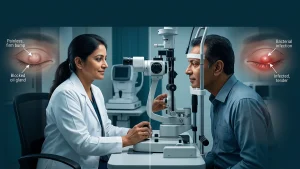
A lazy eye, medically known as amblyopia, is one of the most common vision disorders in children. It develops when one eye does not achieve normal vision because the brain begins to rely more on the stronger eye. If left untreated, amblyopia can lead to permanent vision loss in the weaker eye. The good news is that early diagnosis and timely treatment can significantly improve vision, especially in children.
Modern eye care offers several effective treatments for lazy eye, including prescription glasses, eye patching, atropine eye drops, vision therapy, and, in selected cases, surgery. While eye exercises may support treatment in some patients, they should never replace professional medical care.
In this guide, we’ll explain the causes, symptoms, diagnosis, and the most effective lazy eye treatment options available today.
What Is a Lazy Eye?
Lazy eye (amblyopia) occurs when the brain and one eye do not work together properly. As a result, the brain favors one eye while gradually ignoring signals from the weaker eye. Over time, vision in the affected eye becomes weaker.
Unlike many other eye conditions, a lazy eye is usually not caused by a problem within the eye itself. Instead, it develops because the brain does not process images from one eye normally.
Amblyopia commonly develops during infancy or early childhood and is one of the leading causes of reduced vision in children.
Common Causes of Lazy Eye
Several eye conditions can lead to amblyopia, including:
- Significant difference in vision between both eyes
- Crossed eyes (Strabismus)
- Long-sightedness (Hyperopia)
- Near-sightedness (Myopia)
- Astigmatism
- Congenital cataract
- Drooping eyelid (Ptosis)
- Eye injuries or developmental abnormalities
Children with a family history of eye disorders are at a higher risk and should undergo regular eye examinations.
Symptoms of Lazy Eye
Many children with lazy eye may not complain because they rely on their stronger eye. Parents should watch for symptoms such as:
- Poor vision in one eye
- Squinting or closing one eye
- Eyes that do not appear aligned
- Poor depth perception
- Frequent head tilting
- Difficulty reading or concentrating
- One eye wandering inward or outward
If you notice any of these symptoms, consult an ophthalmologist promptly for a comprehensive eye examination.
How Is Lazy Eye Diagnosed?
An eye specialist performs a detailed eye examination that may include:
- Visual acuity testing
- Refraction test for glasses
- Eye alignment assessment
- Binocular vision evaluation
- Dilated retinal examination
Early diagnosis is essential because treatment is generally more effective during childhood while the visual system is still developing.
Best Lazy Eye Treatment Options
Treatment depends on the underlying cause, the patient’s age, and the severity of amblyopia.
1. Prescription Glasses
Corrective glasses are often the first step in treating lazy eye caused by refractive errors. Glasses help provide a clear image to both eyes and, in some children, may significantly improve vision without additional treatment.
2. Eye Patching
Eye patching remains one of the most effective treatments for amblyopia.
A patch is placed over the stronger eye for a prescribed number of hours each day, forcing the brain to use the weaker eye. This strengthens the visual connections over time.
Consistency is essential for successful treatment.
3. Atropine Eye Drops
Instead of wearing a patch, atropine eye drops may be used in selected patients.
These drops temporarily blur vision in the stronger eye, encouraging the brain to rely on the weaker eye. They are commonly recommended for certain children under an ophthalmologist’s supervision.
4. Vision Therapy
Vision therapy is a personalized program designed to improve how the eyes work together.
It may include supervised visual activities that help enhance:
- Eye coordination
- Tracking ability
- Focusing
- Depth perception
- Binocular vision
Vision therapy is most effective when combined with other recommended treatments rather than used alone.
5. Lazy Eye Exercises
Eye exercises may help improve eye coordination and binocular vision in selected patients. However, they should only be performed under the guidance of an eye care professional.
Examples include:
- Pencil push-up exercises
- Near-far focusing
- Brock string exercises
- Tracking exercises
- Computer-based vision therapy
It is important to understand that exercises alone cannot cure amblyopia caused by significant vision differences or eye misalignment.
6. Surgery
If lazy eye is caused by conditions such as strabismus, cataracts, or drooping eyelids, surgery may be recommended to correct the underlying problem.
Surgery improves eye alignment or removes physical obstacles to vision, but additional treatment such as patching or vision therapy is often still required.
Can Adults Be Treated for Lazy Eye?
Although treatment is most successful during childhood, adults with amblyopia may also benefit from evaluation and treatment.
Depending on the cause and severity, adults may experience improvements with:
- Corrective glasses
- Vision therapy
- Treatment of underlying eye disease
- Surgical correction (when needed)
The degree of improvement varies from person to person, making early diagnosis the best approach.
Tips for Parents
Parents play a crucial role in successful lazy eye treatment.
- Follow the treatment schedule consistently.
- Encourage children to wear glasses or patches as prescribed.
- Attend regular follow-up appointments.
- Avoid skipping treatment days.
- Make patching enjoyable with games or reading activities.
- Schedule routine eye examinations from an early age.
When Should You See an Eye Specialist?
Seek immediate evaluation if your child has:
- Eyes that appear crossed
- Difficulty focusing
- Poor vision in one eye
- Frequent eye rubbing
- Persistent head tilt
- Difficulty judging distance
- Family history of amblyopia or strabismus
Early intervention can prevent long-term vision problems and improve visual development.
Why Choose ASG Eye Hospital?
ASG Eye Hospital offers comprehensive diagnosis and treatment for children and adults with lazy eye. Our experienced ophthalmologists use advanced diagnostic technology and evidence-based treatment plans tailored to each patient’s needs. From pediatric eye examinations and prescription glasses to vision therapy and surgical management, our multidisciplinary approach focuses on improving visual function and protecting long-term eye health.
Conclusion
Lazy eye is a treatable condition, especially when detected early. Modern treatments such as prescription glasses, eye patching, atropine therapy, vision therapy, and surgery have helped countless patients achieve better vision. While eye exercises may support recovery in selected cases, they should always be performed under professional guidance and as part of a comprehensive treatment plan.
If you notice symptoms of lazy eye in yourself or your child, don’t delay seeking expert care. Early diagnosis and timely treatment can make a lasting difference in preserving healthy vision.
Frequently Asked Questions
1. Can lazy eye be cured?
Early treatment can significantly improve vision, especially in children.
2. Are eye exercises enough to treat lazy eye?
No. Exercises may support treatment but should not replace medical therapies.
3. At what age is treatment most effective?
Treatment is generally most effective during early childhood, although some adults may also benefit.
4. Does every child with lazy eye need surgery?
No. Most children improve with glasses, patching, or atropine. Surgery is recommended only when necessary.
5. Can adults improve vision with lazy eye treatment?
Some adults may benefit from appropriate treatment depending on the cause and severity of amblyopia.