A painful lump on the eyelid can be alarming, especially if it appears suddenly. Many people assume every eyelid bump is a stye, but not all eyelid lumps are the same. Two of the most common eyelid conditions are chalazion and stye. Although they may look similar, they differ in their causes, symptoms, and treatment.
Understanding the difference between a chalazion and a stye can help you seek the right treatment and prevent complications. While many cases improve with simple home care, persistent or recurring eyelid lumps should always be evaluated by an ophthalmologist.
In this guide, we’ll explain the differences between chalazion and stye, their symptoms, causes, treatment options, and when you should consult an eye specialist.
What Is a Stye?
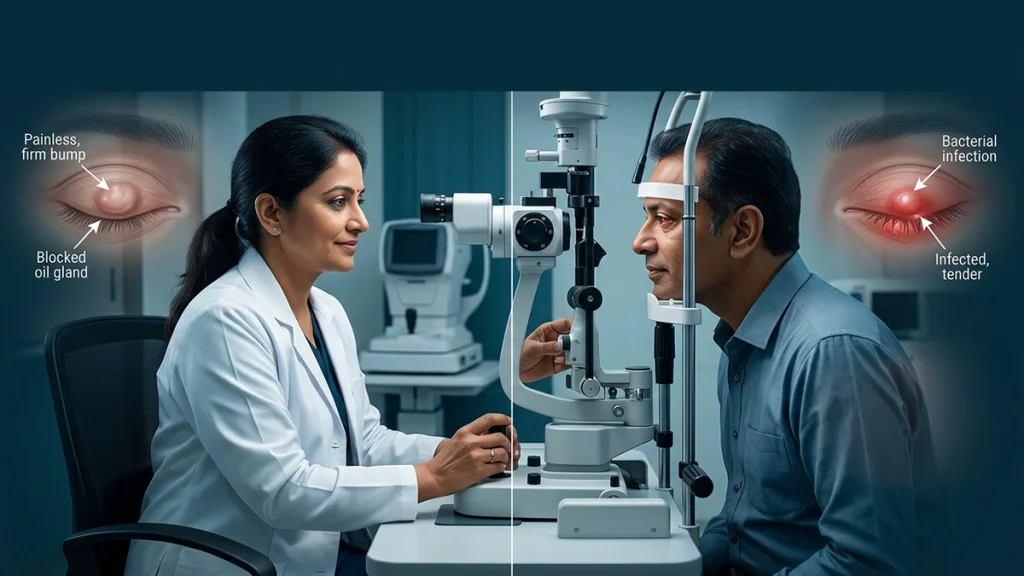
A stye, also called a hordeolum, is a painful, red bump that develops near the edge of the eyelid. It occurs when an oil gland or eyelash follicle becomes infected, most commonly by bacteria.
A stye usually appears quickly and resembles a small pimple. It may occur on the outer or inner part of the eyelid and often causes tenderness, swelling, and discomfort.
Most styes improve within one to two weeks with appropriate care.
What Is a Chalazion?
A chalazion is a painless or mildly tender lump that forms when one of the meibomian (oil) glands in the eyelid becomes blocked. Unlike a stye, a chalazion is not usually caused by an active bacterial infection.
A chalazion often develops gradually and may remain for weeks or even months if left untreated. Large chalazia can press against the eye and cause blurred vision.
Chalazion vs Stye: What’s the Difference?
| Feature | Chalazion | Stye |
|---|---|---|
| Cause | Blocked oil gland | Bacterial infection |
| Pain | Usually painless | Usually painful |
| Onset | Develops gradually | Appears suddenly |
| Location | Middle of eyelid | Edge of eyelid |
| Redness | Mild | Significant |
| Swelling | Firm lump | Red swollen bump |
| Infection | Usually absent | Present |
| Duration | Weeks to months | Few days to 2 weeks |
Causes
Causes of a Stye
A stye may develop due to:
- Bacterial infection
- Poor eyelid hygiene
- Touching the eyes with unclean hands
- Using old or contaminated eye makeup
- Blepharitis (eyelid inflammation)
- Wearing contact lenses without proper hygiene
Causes of a Chalazion
A chalazion commonly develops because of:
- Blocked meibomian gland
- Chronic blepharitis
- Rosacea
- Seborrheic dermatitis
- Thick oil gland secretions
- Previous stye
Symptoms
Common Signs and Symptoms of a Stye
- Painful eyelid lump
- Redness
- Swelling
- Tenderness
- Watering eyes
- Crusting around eyelashes
- Sensitivity to light
- Small pus-filled spot
Symptoms of a Chalazion
- Round eyelid lump
- Mild swelling
- Usually little or no pain
- Heaviness of eyelid
- Blurred vision (if large)
- Cosmetic concern
Risk Factors
You may be more likely to develop either condition if you:
- Have chronic blepharitis
- Frequently rub your eyes
- Wear contact lenses improperly
- Have oily skin
- Use expired cosmetics
- Have diabetes
- Have rosacea
How Are They Diagnosed?
Most chalazia and styes can be diagnosed through a comprehensive eye examination.
An ophthalmologist will examine:
- Eyelid swelling
- Location of the lump
- Signs of infection
- Eyelid glands
- Vision changes
Additional tests are rarely required unless the lump is recurrent, unusually large, or suspicious for another condition.
Treatment for a Stye
Most styes respond well to conservative treatment.
Warm Compress
Applying a warm compress to the affected eyelid for 10–15 minutes, 3–4 times a day, helps the blocked gland drain naturally.
Eyelid Hygiene
Keeping the eyelids clean reduces bacteria and promotes healing.
Antibiotic Medication
If a bacterial infection is significant or spreads, your ophthalmologist may prescribe antibiotic eye drops or ointment. Oral antibiotics may be needed in selected cases.
Drainage Procedure
Large or persistent styes may require a minor procedure performed by an eye specialist to drain the infection.
Treatment for a Chalazion
Treatment depends on the size and duration of the chalazion.
Warm Compress
Warm compresses remain the first line of treatment and may help soften the blocked oil gland.
Gentle Eyelid Massage
Your doctor may recommend gentle massage after warm compresses to encourage drainage.
Medications
In some cases, anti-inflammatory medications may be advised, especially if inflammation is significant.
Minor Surgical Removal
If the chalazion persists despite conservative treatment or affects vision, a simple outpatient procedure may be performed to remove it.
Can You Treat a Chalazion or Stye at Home?
Home care may help in mild cases.
You should:
- Apply warm compresses regularly
- Keep eyelids clean
- Wash hands before touching your eyes
- Avoid squeezing the lump
- Stop wearing contact lenses temporarily
- Avoid eye makeup until healing is complete
Never attempt to pop or drain a chalazion or stye yourself, as this may worsen the infection or cause complications.
Possible Complications
Although uncommon, untreated or severe cases may lead to:
- Recurrent eyelid lumps
- Spread of infection
- Eyelid scarring
- Blurred vision
- Corneal irritation
- Cosmetic deformity
Prompt treatment reduces the risk of complications.
Prevention Tips
You can reduce your risk by following these simple habits:
- Wash your hands frequently.
- Remove eye makeup before sleeping.
- Replace eye makeup regularly.
- Clean contact lenses properly.
- Avoid rubbing your eyes.
- Practice good eyelid hygiene.
- Manage blepharitis and skin conditions.
- Schedule regular eye examinations.
When Should You See an Eye Specialist?
Consult an ophthalmologist if:
- The lump lasts longer than two weeks.
- Swelling becomes severe.
- Vision becomes blurred.
- Pain increases significantly.
- The eyelid becomes very red.
- The lump keeps coming back.
- Home treatment does not improve symptoms.
Early diagnosis ensures appropriate treatment and helps rule out other eyelid conditions.
Why Choose ASG Eye Hospital?
At ASG Eye Hospital, our experienced ophthalmologists provide comprehensive diagnosis and treatment for eyelid disorders, including chalazion and stye. Using advanced diagnostic techniques and personalized treatment plans, we help patients recover quickly while protecting long-term eye health. Whether you need medical management or a minor surgical procedure, our team is committed to delivering safe, effective, and compassionate eye care.
Conclusion
Although a chalazion and a stye may appear similar, they are different conditions requiring different approaches to treatment. A stye is usually a painful bacterial infection, while a chalazion is a blocked oil gland that often develops gradually. Most cases improve with warm compresses and good eyelid hygiene, but persistent, recurrent, or painful lumps should always be evaluated by an eye specialist.
If you notice an eyelid lump that does not improve or affects your vision, schedule a consultation at ASG Eye Hospital for expert diagnosis and personalized treatment.
Frequently Asked Questions
1. Is a chalazion the same as a stye?
No. A chalazion is caused by a blocked oil gland, while a stye is usually caused by a bacterial infection.
2. Can a stye turn into a chalazion?
Yes. In some cases, a stye may leave behind a blocked gland that develops into a chalazion.
3. Are chalazia contagious?
No. Chalazia are not contagious because they are not usually caused by an active infection.
4. How long does a stye take to heal?
Most styes improve within 7–14 days with proper care.
5. Do all chalazia require surgery?
No. Many resolve with warm compresses and conservative treatment. Surgery is considered only if the chalazion is persistent, large, or affecting vision.