Iritis can come on very quickly. One day your eye is fine and the next it may be red, painful, sensitive to light and uncomfortable to open. Many think it is just conjunctivitis or eye strain but iritis is a different condition. It is an inflammation inside the eye and timely iritis treatment is important for vision and to avoid complications.
Iritis is that which affects the iris, the colored part of the eye. Also known as anterior uveitis which is a term for involvement of the front part of the uvea. This is why patients also may hear of uveitis treatment when discussing iritis. The main goal is to reduce intra ocular eye inflammation, relieve symptoms, prevent internal eye damage, and determine if it is related to some other health issue.
What Is Iritis?
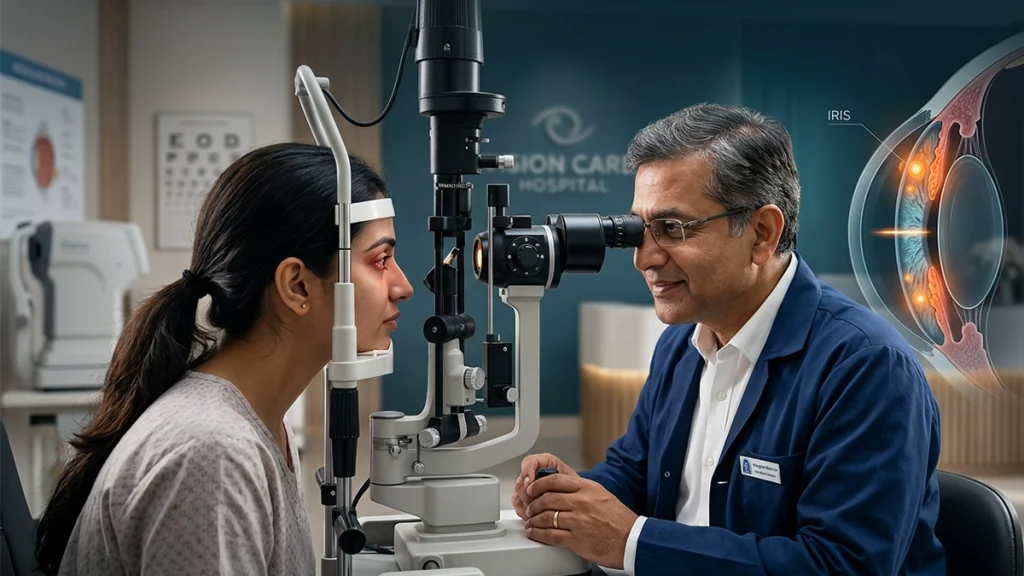
Iritis is a condition that causes inflammation of the iris. The iris which is the colored ring which also includes the sphincter pupillae muscle, a component that controls the pupil’s size which in turn, determines how much light that is able to enter the eye also has a role in this process. When this area is affected by inflammation, we may see redness in the eye, pain, and light sensitivity. Also in some patients’ vision may also become blurred. Early intervention in iritis treatment is key to put the inflammation out early before it has a chance to affect the nearby eye structures.
Iritis may present in one eye at a time or in both. It may be a single episode or it may recur in some. In a few cases it is related to autoimmunity, infection, eye injury, or other inflammatory diseases. At times a full evaluation does not produce a clear cause. What is most important is that eye inflammation within the eye not be ignored, in particular when it is associated with pain or vision changes.
Common Iritis Symptoms Patients Should Notice
The primary signs of iritis symptoms are redness, light sensitivity, blurred vision, and a pain which may be described as an aching behind the eye or above the brow. Also unlike what is seen in a mild allergy or simple redness, iritis presents with marked eye pain which in particular is noted when in bright light.
Patients report also that they may see floaters, get headaches, or have difficulty with focus. Also the eye may appear red at the cornea and the pupil may present as small or irregular in some cases. Symptoms may present suddenly, within a day for some. As the signs may also present with other eye issues a full eye exam is required before beginning iritis treatment.
| Symptom | What It May Feel Like | Why It Matters |
| Redness | Redness around the front of the eye | May indicate active inflammation inside the eye |
| Light sensitivity | Pain or discomfort in bright light | Common in iritis and anterior uveitis |
| Blurred vision | Hazy or unclear vision | Needs urgent evaluation if sudden or worsening |
| Deep eye ache | Pain around the eye or brow | Can suggest internal inflammation rather than surface irritation |
| Watering | Excess tears with discomfort | Often occurs with irritation and inflammation |
What Causes Iritis?
Iritis is a disease which may present in a variety of ways. In some it comes on after a trauma to the eye. In others we see it associated with autoimmune and inflammatory diseases like ankylosing spondylitis, rheumatoid arthritis, inflammatory bowel disease, psoriasis, or sarcoidosis. Also we note that certain infections may play a role in it. In many patients however despite testing we do not find out the exact cause of the iritis.
The issue at hand is which cause we are dealing with as that determines the safe iritis treatment for iritis. If the issue is mild inflammation which is contained in the front of the eye it may be a simple matter to treat. But if the condition is a repeat issue, very severe, or related to a systemic disease then the patient may require a more in depth evaluation and coordination of care with other specialists. Also it is for this reason that uveitis treatment does not have a one size fits all treatment.
Best Iritis Treatment: What Doctors Usually Recommend
The best course of iritis treatment is based on the severity of the inflammation, which eye or eyes are affected, and if the condition is related to another disease. In most cases treatment begins with anti-inflammatory eye drops. Steroid drops are very common to use. Also the doctor may give out pupils dilating drops to reduce pain, prevent the iris from adhering to the lens, and to make the patient more comfortable during the healing process.
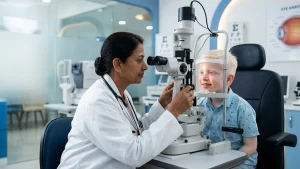
It is very important that you do not use steroid drops without medical supervision. These drugs are effective but must be used with care for they may raise the eye pressure in some patients or they may work also to certain infections when used incorrectly. That is why iritis treatment should always be performed by an ophthalmologist after a thorough slit lamp exam.
Iritis which is a type of anterior uveitis some patients may require a wider range of uveitis treatments if the flares are frequent, very severe, or affect other parts of the eye. In that case we may see oral meds, blood work, imaging or a referral to a physician or rheumatologist if there is a suspicion of an autoimmune cause.
| Treatment Option | When It Is Used | Purpose |
| Steroid eye drops | Most common first-line option | Reduces inflammation inside the eye |
| Pupil-dilating drops | When there is pain or light sensitivity | Relieves spasm and prevents internal adhesions |
| Oral medicines | Severe or recurrent cases | Controls stronger inflammation |
| Investigations | Repeated or unusual cases | Helps identify autoimmune, infectious, or systemic causes |
| Follow-up visits | During and after treatment | Checks eye pressure, inflammation, and recovery |
The best approach to iritis treatment is that which reduces redness but also at the same time the doctor has to be certain that the inflammation is going down, eye pressure is safe, and there is no damage to the cornea, lens, retina or optic nerve. Many patients see an improvement in a few days’ time but stopping medication prior to the doctor’s recommendation may cause the inflammation to return.
How Long Does Recovery Take?
Recovery from iritis is based on the degree of inflammation present and how early in the process that treatment is started. In mild cases of iritis treatment may go away within a few days of beginning medication, but full treatment may last for several weeks. Drops are typically reduced gradually instead of stopping all at once. This does also help to avoid a return of the inflammation.
If inflammation is severe or is a reoccurring issue recovery may take a longer time. In the case of repeat episodes we may put the patient on an extended monitoring plan. Also in some cases the doctor may try to determine what the root cause of the eye inflammation is this may be done if the patient has joint pain, back pain, skin issues, bowel symptoms, or a history of an autoimmune disease.
Why Follow-Up Is Important
Follow up visits are a key part of iritis treatment. Although pain and redness may improve the doctor has to confirm that the inflammation is fully gone. Also we check in on eye pressure which may be affected in iritis and also by steroid medications.
During that time between visits the doctor may change the drop schedule, wean off some medications gradually or order more tests if things aren’t getting better as we expected. Also if you miss your follow up you are at greater risk for complications which may include glaucoma, cataract, internal adhesions in the eye, or chronic inflammation.
When Is Iritis an Emergency?
Iritis must be evaluated at once, in particular when redness is present along with light sensitivity, blurred vision, or eye pain. Out of the question to treat a deep eye pain with random over the counter drops. Should vision drop suddenly, if pain is very severe, or if there is a history of eye injury, prompt evaluation is required.
Patients also see that at the first sign of a return of symptoms after having iritis, and also if the effect is in both eyes at the same time, or if they go along with the eye inflammation general health issues like joint pain, skin rashes, fever, or feeling very tired without cause. These may be the signs that the doctor will use to determine if the patient will also be put on some other tests along with the iritis treatment.
Can Iritis Come Back?
Yes, at times iritis does return in some patients. In case of an underlying inflammatory or auto immune condition recurrent iritis is more likely. Some patients may have a single episode which is isolated, while in others it may be a series of flares over months or years. As the disease comes back we may see changes in the treatment plan.
For the case of recurrent disease we may do a more in depth evaluation of the iritis treatment. The doctor may ask you about past back pain, joint stiffness, mouth ulcers, skin issues, bowel problems, infections, or past cases of inflammatory disease. This is done to identify if the eye issue is a part of a larger health issue.
What Patients Should Avoid During Recovery
During recovery patients should stay off of self medicating or stopping prescribed drops suddenly. They should also avoid wearing contact lenses unless the doctor says it is safe. Bright light may in fact increase discomfort so the use of sunglasses is advised. Screen use is at large for the most part ok but may still feel uncomfortable until the inflammation subsides.
Also it is important to not ignore repeated symptoms. If the same signs come back after finishing iritis treatment the patient should report in for a follow up instead of going back to old medications without advice. Each episode should be evaluated properly because the severity and cause may not be the same.
Iritis Treatment at ASG Eye Hospital
At ASG Eye Hospital we see patients with red eyes, light sensitivity, blurred vision, or that have what is thought to be iritis in which we do extensive evaluation to determine the type and degree of inflammation. We focus on iritis treatment which is to reduce inflammation, relieve symptoms, protect vision, and when possible to prevent recurrence.
The team may conduct in depth slit lamp exams, eye pressure checks, and retina analyses as necessary also we report that at ASG Eye Hospital which is a full service eye care facility of many eye specialties which we use to refer out to the appropriate doctor based on the patient’s health issues including wide range of uveitis treatment care and related eye issues.
The appropriate iritis treatment will see large improvement in results when initiated at the first sign of it. We tell our patients not to wait until the symptoms get worse, which is when the eye is painful, light sensitivity increases, or vision becomes blurry.
Key Takeaway
Iritis which is more serious than what is considered normal redness. It is inflammation within the eye and requires professional medical care. Early iritis treatment reduces inflammation, relieves pain, prevents complications, and protects your long term vision. If you have redness along with light sensitivity, blurred vision, or it recurs it is best to see an ophthalmologist instead of trying to treat it at home.
Frequently Asked Questions
1. What is the best treatment for iritis?
The best way to treat iritis treatment, is with steroid eye drops which also may include pupil-dilating drops for pain relief and to stop internal adhesions. What you are given will depend on the degree of your condition, its cause, and if it is your first time to experience this or a repeat episode.
2. Are iritis and uveitis the same?
Iritis is a sub-type of uveitis which in turn means it affects the front of the uvea that is why you may bring up that uveitis treatment and iritis at the same time. While uveitis may affect different elements of the eye, iritis mostly goes after the iris.
3. What are the common iritis symptoms?
Common signs of iritis symptoms are redness, light sensitivity, blurred vision, tearing, and in depth eye pain. Some individuals also report headache or pain in the brow area. If you have these symptoms see your ophthalmologist.
4. Can iritis cause permanent vision loss?
If caught early most cases do well. But if left untreated or recurring iritis it can cause issues like glaucoma, cataract, retinal swelling, or internal adhesions. Early iritis treatment is key to avoiding these issues.
5. How long does iritis take to heal?
Mild cases may see some improvement in just a few days but full recovery may take several weeks. As for the treatment plan, it should be followed exactly as prescribed because to stop the drops before time may cause a relapse.
6. Can I use regular eye drops for iritis?
No. Regular everyday lubricants or redness relievers do not treat the internal inflammation which causes iritis. For iritis treatment to be effective it requires prescription medicine and close monitoring by an eye specialist
7. When should I see a doctor for eye inflammation?
You should see your doctor if you notice redness which is accompanied by pain, light sensitivity, blurred vision, or it is a recurring issue. These symptoms may be a sign of internal eye inflammation which should not be ignored.
8. Is iritis treatment different for recurring cases?
Yes. Recurrent iriditis may require further tests for autoimmunity and inflammation. In these cases iritis treatment may be a longer term process which in some instances will require coordination with other specialists.