
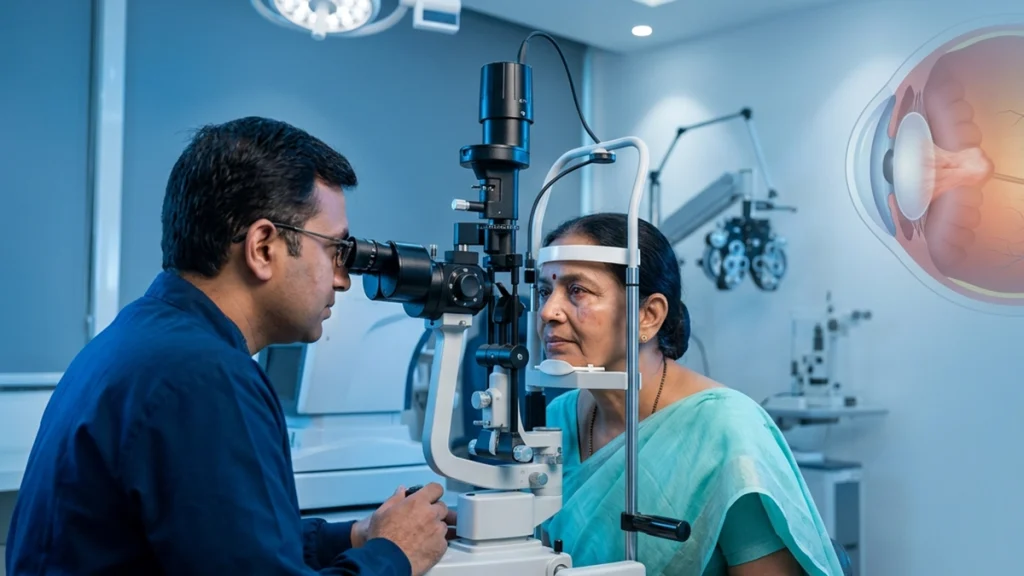
A pterygium is a raised flesh growth that starts out on the conjunctiva which is the clear tissue that covers the white part of the eye and which in turn extends onto the cornea. While this is a non cancerous growth it may at times become uncomfortable, repeatedly inflamed, a cosmetic issue, or large enough to affect vision. Also because of the association with long term exposure to ultraviolet light, wind, dust and dry conditions it is also referred to as surfer’s eye. As to the need for pterygium surgery that depends on the size of the growth, its rate of progression, its effect on sight, and how well it responds to conservative care.
Many people see no need for an operation which is good to know. We use lubricating drops, sun protection, and regular exams as measures. But should the Pterygium Symptoms persist or the tissue begin to head inwards towards the cornea we may have a talk about Pterygium Surgery. Also at early stage diagnosis is key, if a growth gets to the visual axis it can cause distortion of the cornea and in turn, makes the issue of visual recovery more difficult.
What Is a Pterygium?
A pterygium is a triangular or wing shaped area of pink tissue which mostly appears on the side of the eye by the nose. They may stay the same for years, grow slowly, or inflame from sunlight, smoke, dust, air conditioning, or dry weather. The US National Eye Institute reports that a pterygium causes redness and irritation, also a large growth may interfere with vision and require removal.
The term surfer’s eye is a misnomer which to think only surfers get it. Outdoor workers, drivers, athletes, farmers, and people living in sunny or dusty areas may also see it. For practical surfer’s eye treatment we recommend reducing environmental exposure via the use of UV blocking wraparound sunglasses, wide brimmed hats, protective eyewear and prescribed lubricating drops.
Common Signs and Symptoms
Early pterygium symptoms include dryness, burning, itching, watering, redness, or a gritty sensation. Also at the onset of inflammation the growth may be more visible because of the blood vessels which develop. Also some people report discomfort at the time of blinking or wearing contact lenses. We see these pterygium symptoms more in a day spent outdoors or in a dry air conditioned room.
As tissues progress they may pull on or flatten the cornea which in turn causes astigmatism. This may result in blurred vision, distorted vision, glare, or in frequent changes in spectacle power. MedlinePlus reports that pterygium is a noncancerous growth which extends from the conjunctiva into the cornea and that it may affect one or both eyes. When sight starts to change the ophthalmologist will determine if Pterygium Surgery is appropriate.
| Stage or finding | What the patient may notice | Usual approach |
| Small, stable growth | Mild dryness or occasional redness | Observation, UV protection and lubricating drops |
| Recurrent inflammation | Burning, soreness, watering and foreign-body sensation | Medical Pterygium Treatment and follow-up |
| Corneal distortion | Blurred vision, astigmatism or changing prescription | Corneal measurements and discussion of Pterygium Surgery |
| Growth towards the pupil | Reduced or threatened central vision | Timely surgical assessment |
| Restricted movement or marked cosmetic concern | Pulling sensation, asymmetry or persistent self-consciousness | Individual discussion of benefits and risks |
When Does a Pterygium Need Surgery?
The most common cause of Pterygium Surgery is due to visual impairment. We may see removal of the growth when it causes large scale astigmatism, repeatable blur, to approach the visual axis, or which does not respond to spectacle or contact lens correction. A report available at the US National Library of Medicine notes that visual disturbance which includes issues with the pupillary block or astigmatism is a main reason for surgery.
Persistent issues are also a reason for removal. If you see redness, burning, watering, or a foreign body sensation return after use of proper drops and environmental changes, the condition may be affecting your comfort. In this setting Pterygium Symptoms do present before major sight loss. The doctor may first look into dry eye, allergy, or lid inflammation as these can cause similar issues.
Progressive development is also a factor. In slit lamp photos, refraction, visual acuity test, and corneal topography we can see if the pterygium is growing or affecting the corneal surface. Pterygium Surgery may be recommended before the growth reaches the pupil which by that time may have altered the corneal shape.
A large scale or recurring pterygium at times will restrict eye movement or cause a pull. Also of note is the cosmetic issue which may present when redness or visible growth affects self confidence. It is also true however that the expected improvement has to be looked at in terms of healing time, scarring, and recurrence. NHS also reports constant irritation, sight issues, and appearance concern as reasons for which surgery may be had.
Can Pterygium Be Treated Without Surgery?
Yes. A small pterygium that isn’t a threat to sight is usually treated first with conservative Pterygium Treatment. Artificial tears will help with lubrication and also alleviate the grittiness. In cases of an inflamed flare up an ophthalmologist may prescribe a short term treatment. Steroid drops in no case should be started or continued without medical supervision, also each Pterygium Treatment plan has to be tailored to the health of the ocular surface.
Non surgical Surfer’s Eye treatments include wraparound sunglasses, hats, protection in dusty work environments, and reducing direct air flow. Managing associated dry eye may improve comfort. These methods do not reverse the tissue growth but they do reduce irritation and help control Pterygium symptoms.
It is important to note the boundaries of what we see in terms of drop medications. Drugs may improve redness and inflammation but do not in all cases see the growth go away. If the tissue is progressive, affecting corneal shape or vision, at some point Pterygium Treatment will have to transition from symptom management to surgery.
How Is Pterygium Surgery Performed?
During Pterygium Surgery the doctor will remove the abnormal tissue out of the cornea and the white of the eye. The affected area is which at times is covered by a thin conjunctival autograft from a different part of the same eye, usually beneath the upper eyelid. University Hospitals Sussex reports on this process in their patient information.
The graft will be secured with fine sutures, tissue adhesive, or a method which the surgeon deems fit. Pterygium Surgery we do as a day care procedure under local anaesthesia but that may vary with the patient’s health, age, anxiety, and clinical evaluation. The operation is followed by prescribed eye drops and scheduled reviews. This postoperative phase is a very important part of Pterygium Treatment, not an option.
Recurrence is a key issue in selection of treatment method. In reports from the NIH it was found that conjunctival autografting reduces but does not eliminate recurrence as compared to exposure of the sclera, also no method is without risk. For a large, aggressive, double headed, or pre-treated growth the surgeon may change the procedure.
| Option | Main purpose | When it may be used |
| Lubricating drops | Reduce dryness and grittiness | Mild Pterygium Symptoms |
| Prescribed anti-inflammatory drops | Control a short inflammatory flare | A red, sore or inflamed growth |
| UV and environmental protection | Reduce exposure and irritation | Every stage of Surfer’s Eye Treatment |
| Excision with conjunctival autograft | Remove tissue and cover the surgical area | Progression, vision change or persistent discomfort |
| Amniotic membrane or additional measures | Support reconstruction in selected eyes | Large, recurrent or complex cases |
Recovery After Surgery
After pterygium surgery it is common for the eye to present with a watery, gritty, sore or light sensitive feeling for a few days. Redness may still be present for a number of weeks and vision may change as the surface heals. Antibiotic and anti inflammatory drops will be prescribed which should be used as directed.
Patients should avoid rubbing as this disrupts the graft. In terms of post op Surfer’s Eye Treatment care beyond the initial recovery phase it is also key that surgery does not preclude you from future UV or dust exposure. The doctor may ask to delay swimming, strenuous exercise, work in the dust, use of make up or driving. Also we see that the surgeon recommends to avoid strenuous activity and swimming during early convalescence which in fact should be discussed with your treating surgeon.
The outcome of Pterygium Surgery is based on the reason for the procedure. Before advanced central corneal involvement, the pre-op planning in Pterygium Surgery will allow the surgeon to address the issue at hand which if treated in the early stages, has a better chance to have less of an issue with distortion. There will be an amelioration of irritation and the vision shall clear in cases which the growth was causing a distortion in the cornea. That said, at times the surgery is not going to correct long term issues related to corneal scarring or astigmatism which is present.
Risks and Recurrence
In any that which does procedures Pterygium Surgery out of question has issues which may arise. They include infection, bleeding, prolonged redness, discomfort, delayed healing, scarring, graft problems, double vision, and recurrence. The risk individual to each person’s situation may be determined by the size and behavior of the growth, prior surgeries, health of the ocular surface, surgical approach used, and post op care.
Recurrence is a term we use to describe the growth of fibrovascular tissue in the affected area which had been treated. That is why choice of technique for Pterygium Surgery and the quality of postoperative care both count. Also a recurrent growth may at times present more inflamed than the original pterygium. We have seen that modern graft based techniques, use of prescribed medication, regular follow up and adoption of consistent Surfer’s Eye Treatment measures are used to prevent this.
Worsening pain, sudden reduction in vision, increasing discharge, severe swelling, injury to the operated eye, or symptoms that differ from the expected recovery require prompt contact with the eye-care team.
How the Right Time Is Decided
The time for Pterygium Surgery is very much a personal issue. Pterygium Surgery does not see that we push for it at the drop of a hat without first of full assessment. Two similar looking growths may in fact require different treatments as one may be stable and the other altering the corneal shape. The ophthalmologist will look at visual acuity, refraction, astigmatism, distance from the pupil, rate of growth, inflammation, eye movement, occupational exposure, past treatment and the patient’s input.
The examination also notes differences between pterygium and pinguecula which are then compared to other conjunctival lesions. Reporting on Pterygium Symptoms over time is a way to determine if irritation is intermittent or continuous. Proper diagnosis is the base of appropriate Pterygium Treatment. For issues like increasing redness, a visible growth, recurring discomfort or changes in vision, these should be evaluated by a health care professional instead of self treating with random eye drops.
Protecting the Eyes
People which work outdoors, ride motorbikes, live in sunny climates, or have had previous surgeries should be extra careful. Consistent UV protection is key to Surfer’s Eye Treatment. For best results wear well fitting wraparound sunglasses, a hat, helmet visor, or occupational safety glasses which will also reduce the effects of wind and dust. Daily use of the Surfer’s Eye treatment is more beneficial than protection which is only used when symptoms present.
Lubricating drops will help with dry eye but it is best to go over the product and frequency with your eye care professional. Stay away from smoke and direct air flow which will reduce irritation. These tips support comfort but do not remove the need for clinical Pterygium Treatment when the growth is progressing.
Frequently Asked Questions
1. Does every pterygium require surgery?
No. Small, steady growths which do not cause much pain or vision issues are usually monitored. Lubricating drops and UV protection may be enough. Pterygium Surgery is to be considered when the growth does progress, affects vision, causes persistent irritation, limits movement, or produces a large cosmetic issue.
2. What are the early warning signs?
Early pterygium symptoms include redness, dryness, burning, itching, watering, and a gritty sensation. A visible triangular growth may slowly progress to the cornea. An eye exam is recommended when it appears to be growing larger or the discomfort is recurring.
3. Can eye drops remove the growth?
Drops are for relief of dryness, redness, and inflammation, we just don’t remove the tissue. In terms of Pterygium Treatment we are at a conservative stage which means we are trying to control symptoms and protect the eye’s surface; also if the growth is to be a problem surgery may still be required.
4. Is the operation painful?
The eye is numbed for the procedure, so significant pain is not expected during surgery. Soreness, watering, light sensitivity, and grittiness may occur during early healing and can usually be managed with prescribed care.
5. Can it return after removal?
Yes. Recurrence is possible after Pterygium Surgery. Risk varies with the technique, age, inflammation, UV exposure, and postoperative care. A conjunctival autograft is commonly used to reduce regrowth.
6. How long does healing take?
Initial inactivity is reported to improve in most cases over a few days, of which redness may extend for weeks. Recovery time varies between patients. As per the drop schedule, attending reviews, avoiding eye rubbing, and following Surfer’s Eye Treatment precautions support healing. Long term Surfer’s Eye Treatment is an issue even after redness has gone.
7. When should I see an eye specialist?
Arrange for an evaluation of worsening blur, severe pain, marked swelling, discharge, rapid growth, or tissue which is near the pupil. New or progressive Pterygium symptoms should not be treated by the patient with nonprescribed eye drops. A sudden change in Pterygium symptoms is reason to see a professional.