A red or bloodshot eye is out, but don’t judge it by color it’s a symptom of many things. From screen time to dust exposure, poor sleep, allergy, or mild irritation the list goes on. In some it is a sign of infection, inflammation, injury, or a raise in eye pressure. What is the Right Red Eye Treatment? It depends on the cause, whether vision has changed, the level of pain, and how fast the issue presents.
To determine the causes of red eye, to identify key symptoms, and to know When to See an Eye Doctor is the key to protecting your sight. It’s different between mild itching and watering which may present as severe pain, light sensitivity, nausea, or blurred vision. This guide goes into that in detail also why it may not be best to reach for random eye drops for care. Timely red eye treatment is very important when there is pain or vision change.
What Does a Red Eye Mean?
In some cases the white of the eye will present as red which is a result of small surface blood vessels that have become enlarged or more visible. Redness may affect one eye, the other, or both and may present as a general pink hue, noticeable blood vessels, or a distinct blood red spot. While these may look similar they in fact have different causes so Red Eye Treatment should be diagnosed by what is causing it rather than what it looks like.
Many Red Eye Causes affect the conjunctiva, the membrane that covers the white of the eye and inner surfaces of the eyelids are very common. Viruses, bacteria, allergens, smoke, dust, chemical vapours, contact lenses, and foreign material can irritate this surface. As for issues which affect the cornea, iris, sclera, or the drainage angle which go beyond the conjunctiva are more likely to cause pain, sensitivity to light, or reduced vision.
Common Causes of Eye Redness
Conjunctivitis is one of the best-known Red Eye Causes. In the case of viral conjunctivitis we see a lot of tearing and irritation, bacterial conjunctivitis may present with thicker discharge and sticky eyelids, and in allergic conjunctivitis we see intense itching in both eyes. Symptoms may present similarly which is why it’s still a good idea to have an eye exam before starting Red Eye Treatment.
Other Red Eye causes include dry eye and eyelid inflammation. Dry eye may cause burning, grittiness, fluctuating vision, and redness which in turn may present itself again and again after extended use of a computer or exposure to air conditioning. Blepharitis may present with red, itchy eyelids and crusted lashes. In this case the Red Eye Symptoms may return frequently instead of being a single acute incident.
A broken blood vessel in the eye causes what is known as a subconjunctival hemorrhage. It may look serious but usually isn’t associated with pain or vision changes. While these may repeat, an injury that caused it, bleeding in other places, or use of blood thinning medication should still be brought to a doctor’s attention.
When Redness May Be Serious
Redness associated with pain, reduced vision, light sensitivity, large scale swelling, severe headache, nausea, trauma, or chemical exposure is of greater concern. These symptoms may point to corneal infection, uveitis, acute angle closure glaucoma, scleritis, or serious injury. Early Red Eye Treatment may reduce the risk of complications in these conditions.
Corneal infection or what is also known as keratitis is very much an issue in contact lens users. Signs which include pain, watering, light sensitivity, blurred vision, discharge, or a white spot visible in the cornea require urgent attention. Removal of the lens is a good idea but that is not in place of professional Red Eye Treatment. Reported is that a red eye in a contact lens wearer is to be treated as an urgent warning sign.
Uveitis is inflammation within the eye. Its symptoms may also include pain, blurred vision, floaters, and sensitivity to light. If left untreated uveitis may cause loss of vision, and the National Eye Institute says to seek eye care at once. Also for Red Eye Treatment that is different from conjunctivitis may require prescription anti-inflammatory medicine after an exam.
As for acute angle closure glaucoma which may present with sudden sharp pain, redness, dim vision, headache, seeing rainbows around light, nausea, and vomiting. Pressure in the eye elevates fast which in turn may cause injury to the optic nerve. This is a medical emergency and does not include over the counter medications or a routine visit for treatment.
Common and Concerning Red-Eye Patterns
| Pattern | Possible explanation | Typical clues | Recommended action |
| Mild redness and itching in both eyes | Allergy | Watering, seasonal recurrence and puffy lids | Arrange a review if it persists |
| Redness with sticky discharge | Conjunctivitis | Crusting and irritation | Seek diagnosis if severe or worsening |
| Painless, sharply defined red patch | Subconjunctival haemorrhage | No vision change | Monitor and discuss recurring episodes |
| Painful red eye with contact-lens use | Keratitis or corneal ulcer | Light sensitivity, blurred vision and discharge | Same-day urgent eye assessment |
| Severe pain, halos, nausea and redness | Acute angle-closure glaucoma | Sudden onset and blurred vision | Emergency assessment |
| Pain, floaters or light sensitivity | Uveitis | Deep ache and blurred vision | Prompt ophthalmology examination |
In many cases we see very similar Red Eye Symptoms related conditions which is why this table isn’t enough for a diagnosis. A slit lamp exam may be required and the best approach to Red Eye Treatment is to address the specific condition present.
Warning Signs That Need Prompt Attention
Severe pain, sudden loss of vision, persistent blur, light sensitivity, an irregular pupil, unable to open the eye, or the sensation of something in the eye should not be dismissed. Note when these Red Eye Symptoms present themselves as it will help the doctor determine the urgency. Also these Red Eye Symptoms may point to damage or inflammation beneath the surface.
The answer to when to see an eye doctor is right away after a chemical splash, high speed object, sharp injury, or significant blunt trauma. In case of chemical exposure immediate rinse with clean running water is recommended until medical help is obtained. Also report to the doctor if you have persistent pain, light sensitivity, or redness which follow a possible corneal injury.
Redness that appears after eye surgery or an injection is a cause for urgent care if it is accompanied by increasing pain, eyelid swelling, discharge, or reduced vision. Endophthalmitis which is an infection inside the eye is a rare issue but one which may cause loss of sight, thus Early Red Eye Treatment is key.
Children need prompt review when redness is accompanied by fever, significant eyelid swelling, restricted eye movement, unusual behaviour, pain, or apparent visual difficulty. When to See an Eye Doctor should be decided early because young children may not explain their symptoms clearly.
How an Ophthalmologist Identifies the Cause
The doctor will ask when redness started, in which eye or eyes it is present, and if there is pain, discharge, itching, injury, contact lens use, recent surgery, or exposure to conjunctivitis. Redness pattern symptoms will guide the exam.
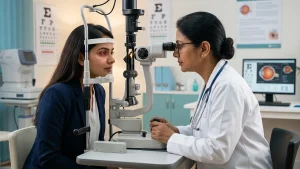
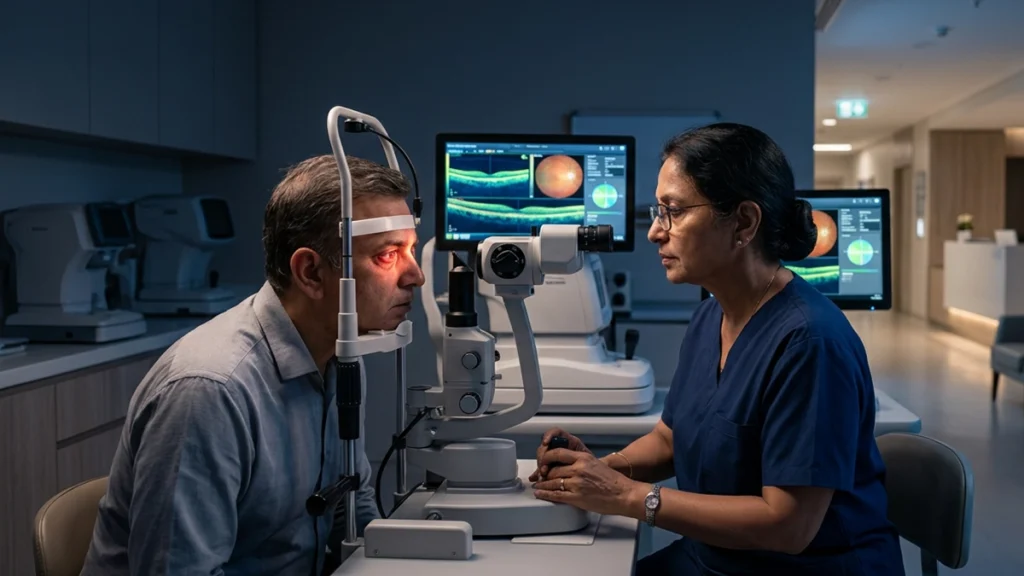
Vision is evaluated which we do because of increased worry with reduced visual acuity. We may use a slit lamp to look at the eyelids, conjunctiva, cornea, pupil, and front of the eye. Fluorescein dye will see out a scratch, ulcer, or foreign body, also we may do eye pressure measurements if glaucoma is an issue. That which we find allows us to match Red Eye Treatment to the affected structure. This diagnosis led approach we use to avoid an inappropriate Red Eye Treatment which in turn may delay recovery.
Why Treatment Must Match the Diagnosis
The aim of Red Eye Treatment is to address the base disease, not just the white of the eye. There is no one size fits all eye drop for redness. Red Eye Treatment for allergy may involve avoiding what triggers it, use of lubricants, or we may be put on anti allergy prescription medicine. Viral conjunctivitis is usually managed at home, and certain bacterial infections may require antibiotics. Dry eye and blepharitis require different care also.
A corneal ulcer will require intensive antimicrobial treatment, uveitis may need to be managed with supervised anti-inflammatory drugs, and angle closure glaucoma is a medical emergency which requires pressure to be quickly brought down. Steroids should not be put in by the patient without input from an ophthalmologist as they may worsen some infections, delay corneal repair, or cause an increase in eye pressure.
Whitening drops may decrease what is visibly red but does not address many cases of Red Eye. Also do not go around for that left over antibiotics and passing them out. May be it is a virus, allergy, inflammation from pressure or related to the cornea, and improper Red Eye Treatment may in fact hide the issue.
Safe Immediate Steps Before Medical Review
| Situation | Immediate step | What to avoid |
| Mild irritation without pain or vision change | Rest the eyes and consider preservative-free lubricants | Rubbing the eyes |
| Possible contagious conjunctivitis | Wash your hands and avoid sharing towels | Sharing cosmetics or eye drops |
| Contact-lens-related redness | Remove the lenses and seek prompt assessment | Reinserting the lenses |
| Chemical splash | Rinse continuously with clean water and seek urgent care | Waiting for symptoms to develop |
| Injury or embedded object | Protect the eye loosely and obtain urgent help | Pressing the eye or attempting removal |
| Severe pain, light sensitivity, nausea or vision loss | Seek emergency ophthalmic care | Delaying treatment for home remedies |
Hand washing, avoiding finger to eye contact, and not sharing of towels or cosmetic products will reduce spread of viral or bacterial conjunctivitis. But hygiene isn’t a substitute for Red Eye Treatment which is required in pain, visual change, or when the cornea is involved.
Routine Appointment or Urgent Eye Care?
A routine visit may be enough for mild redness which does not include pain, light sensitivity, injury, or visual change and which is a repeat issue. Recurrent Red Eye Causes may be dry eye, allergy, lid inflammation, contact lens issues, or work environment irritants.
When to see an eye doctor, health issues present if redness is severe, symptoms progress, discharge is heavy, or you don’t see improvement. The CDC says to seek medical attention for eye pain, light sensitivity, persistent blurred vision, very intense redness in the eye, or if your symptoms worsen or do not improve.
Same day assessment is recommended for a painful red eye, contact-lens related redness, suspected corneal injury, new light sensitivity, or unexplained reduced vision. Go to the emergency room for sudden severe pain, nausea with blurred vision, chemical injury, penetrating trauma, or major vision loss. Knowing When to See an Eye Doctor may prevent delay in a sight threatening condition. For in between cases which are uncertain or are changing symptoms, When to See an Eye Doctor should be decided conservatively.
Can Red Eye Be Prevented?
Contact lenses should put in, take out, store and wear as directed. Do not get them into tap water and remove when eye is red or uncomfortable. Do not share eye make up, throw out old products, take eye screen breaks, blink often, address known allergies, and wear protective eye wear around chemicals or high speed equipment. These are the Red Eye Causes and the need for urgent Red Eye Treatment. They also limit avoidable Red Eye Causes linked to contamination, dryness, and repeated irritation.
Frequently Asked Questions
1. Is every red eye conjunctivitis?
No. Conjunctivitis is a common issue, also Red Eye causes may be a result of dry eye, blepharitis, corneal injury, uveitis, glaucoma, and deeper inflammation. Pain, light sensitivity, or reduced vision require a more in depth assessment.
2. Which symptoms are most concerning?
Regarding Red Eye Symptoms present with severe pain, reduced or blurred vision, marked light sensitivity, nausea, a corneal spot, significant swelling, trauma, or chemical exposure. Prompt medical care is advised over home treatment.
3. Can I use antibiotic drops for any red eye?
No. Antibiotics are used for certain bacterial infections. For viral, allergic, inflammatory, dry eye, and pressure related issues we have other treatments. An evaluation helps us determine the appropriate Red Eye Treatment and whether that Red Eye Treatment requires urgent follow-up.
4. When should a contact-lens wearer seek help?
When to see an eye doctor is at that time which a contact lens wearer reports in pain, redness, light sensitivity, discharge or blurred vision. Take out the lenses and do not put them back in until told to do so by a health professional.
5. Can red eye permanently affect vision?
Mild surface irritation is a rare issue but corneal infection, uveitis, angle closure glaucoma, severe injury and infection post surgery can cause sight loss. Timely diagnosis and Red Eye Treatment reduce the risk of these complications.
6. Why does redness keep returning?
Recurrent Red Eye causes may be from allergy, dry eye, eyelid inflammation, environment exposure, or contact lens issues. A full exam will catch what may be missed in a single episode.
7. When should a child be examined?
When to See an Eye Doctor includes redness with pain, poor vision, light sensitivity, injury, swelling, fever, unusual behavior, or any red eye in a newborn.
8. Is redness after eye surgery normal?
Some mild redness may occur after a procedure, but increasing pain, worsening redness, discharge, eyelid swelling, or reduced vision needs urgent review. When to See an Eye Doctor after surgery is immediately when these warning signs appear.