A thyroid issue may cause weight changes, fatigue, heat intolerance or a rapid heart beat and also goes after tissues around the eyes. Thyroid eye disease is an autoimmune inflammatory condition which may cause dry eyes, redness, swelling, protrusion of eyes, double vision and in rare severe cases loss of sight. It is related to Graves’ disease although eye problems and thyroid hormone levels do not always correlate.
Many of the time what we see is that a patient reports of constant irritation in the eye or a change in the way it looks and they are not sure if it is related to their thyroid affecting vision. Also some patients by the time they come in may already have a diagnosis of an over active thyroid and are coming in to report on the thyroid eye symptoms. This guide we put together does not assume that every case of a dry, red or puffy eye has the same cause. We look at the thyroid eye connection, diagnosis and treatment options.
What Is Thyroid Eye Disease?
Thyroid eye disease is a condition that results from the immune system’s attack on eye tissues. We see inflammation of the eye muscles, connective tissue and fat which is behind the eyes. As that tissue swells up the eye may protrude forth, lids may retreat and normal movement of the eye may be impaired. Also the National Eye Institute refers to the disease as Graves’ eye disease, Graves’ ophthalmopathy or TED.
Although Graves eye disease is the name many of us recognize, this disease isn’t what you may think it is in terms of its cause. Grav’s disease is an autoimmune disorder which sees the production of antibodies that attack the thyroid thus causing hyperthyroidism. Also a related immune reaction may go after the eye tissue. While we must treat the thyroid issue that is present, sometimes that isn’t enough for the eye problem.
A person may note that they have thyroid affecting vision issues even when their routine thyroid tests come back normal. While Thyroid eye disease most often goes hand in hand with Graves’ hyperthyroidism it also at times presents when thyroid function is normal or low. Thus when symptoms present an ophthalmic exam and endocrine evaluation may be put forward.
How the Condition Affects the Eyes
In the case of Graves eye disease, inflammation and tissue expansion takes place within a rigid eye socket which does not easily give way. The pressure may cause the eye to protrude, lids to appear more open than normal and certain eye muscles to be affected. When the eyes do not move in unison double vision may present. Also the front of the eye may be exposed which in turn may cause burning, grittiness, tearing and light sensitivity.
Visual changes present in many forms. We may see temporary blur from an unstable tear film, and double vision which is a result of weak eye muscles. Also rare is the case of severe swelling which in turn may compress the optic nerve that carries visual info to the brain. This is a sight threatening emergency.
Common Thyroid Eye Symptoms
At first the thyroid eye symptoms may present very subtly. You may notice dryness, sandiness, soreness or that your eyes are unusually watery. Puffy eyelids may be more obvious in the morning. Also some see redness, pressure behind the eyes, discomfort when moving the eye up or to the side, or sensitivity to bright light. The upper eyelid may sit higher than before which results in a more staring appearance.
As the progression of thyroid eye disease is noticed, one or both eyes may present as protruding, the eyelids may not close fully and double vision may occur. The condition which usually affects both eyes may at first appear to only involve one side.
| Symptom or change | What it may indicate | Recommended response |
| Dryness, grittiness, watering or mild redness | Surface exposure or tear-film disturbance, often among the earlier eye signs | Arrange an eye assessment if symptoms persist |
| Puffy or retracted eyelids | Inflammation around the eyelids and socket associated with Graves eye disease | Discuss with an ophthalmologist and thyroid doctor |
| Bulging or increasingly prominent eye | Swelling behind the eye in thyroid eye disease | Seek timely specialist examination |
| New or worsening double vision | Restricted or misaligned eye muscles, sometimes experienced as thyroid affecting vision | Obtain prompt ophthalmic review |
| Reduced vision, faded colours, a new blind area or inability to close the eye | Possible optic-nerve pressure or corneal exposure | Seek urgent eye care |
These warning distinctions are based on National Eye Institute guidance and current clinical reviews.
Causes and Risk Factors
The cause at present time for thyroid eye disease is an abnormal immune response which may not be that of an infection. It is put forth by researchers that genetic predisposition and environmental factors may play a role. Also in the orbital area we see immune signaling which results in swelling, tissue expansion and eventually scarring.
The most at risk for Graves’ disease are those with a family history of the disease or of another autoimmune condition. Grav’s disease is more common in women but any adult may be affected by significant eye involvement.
Smoking is an important modifiable risk factor. Government eye-health guidance states that it increases the risk of eye problems in Graves’ disease and can worsen existing disease. Anyone worried about thyroid affecting vision should tell the treating clinician about smoking or nicotine exposure and seek support to stop.
Thyroid control is also an issue. In some patients radioactive iodine may bring out or aggravate eye disease which is a factor to consider along with the thyroid disorder in choosing between anti thyroid medicines, radioactive iodine and thyroid surgery.
Active and Inactive Phases
Thyroid eye disease also presents with a period of active inflammation which is followed by a stable stage. During the active phase which may see pain, redness, swelling, eyelid changes or double vision progress. Later in the course of the disease the inflammation may improve but proptosis, restricted eye movement or eyelid retraction may be left. Treatment options vary between these stages thus doctors assess the degree of activity and severity separately.
This is why two people with similar thyroid eye symptoms may receive different plans. Maybe one requires treatment for inflammation and another may require lubricants, prism glasses or in some cases reconstructive surgery for the stable changes.
How Diagnosis Is Made
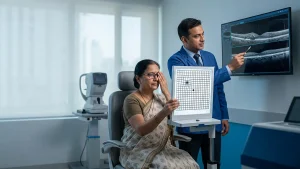
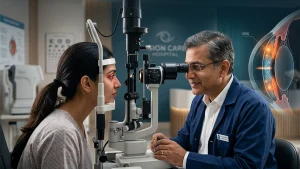
Diagnosis starts with a patient history and in depth eye exam. At the ophthalmologist’s office visual acuity, color vision, pupils, eye pressure, lid closure, corneal health, eye movements, alignment, eye prominence and the optic nerve are assessed.
When thyroid affecting vision is suspected, blood tests which include thyroid stimulating hormone and thyroid hormones are ordered; also antibody tests may confirm a diagnosis of Graves’ disease. For symptoms which are not the same in each eye, which involve restricted movement, in which the diagnosis is in question, or when there is pressure on the optic nerve that is when CT or MRI may be recommended.
Not at all times do we see what Graves eye disease does that is present with bulging eyes, redness or double vision. In fact other issues like infection, different inflammatory conditions, vascular issues, tumors and nerve disorders may present with the same signs. A full professional evaluation is the safe bet over self diagnosis which is had from looking at the skin or reports from thyroid tests.
Treatment for Thyroid Eye Disease
Treatment is tailored to disease activity, severity, corneal exposure, double vision, optic nerve function, thyroid control and general health. Care may include an ophthalmologist, endocrinologist and in some cases an oculoplastic or orbital surgeon. Treatment for thyroid eye disease and treatment for the thyroid disorder are coordinated but not the same.
For mild thyroid eye symptoms, preservative-free artificial tears without preservatives, gels or ointments may bring relief from dryness and grittiness. Also we find that sunglasses do well against glare. In the case of incomplete eyelid closure at night time protection is recommended. Also raising the head while sleeping goes a long way in reducing puffiness. We note that these measures improve the symptoms but do not remove the need for follow up as the condition changes.
When active inflammation is at moderate to severe degree specialists may put forward corticosteroids or other immune modifying medicines. In the U.S. Teprotumumab is approved for TED, however suitability, availability, cost and monitoring needs vary by country and patient. It is to be used only after specialist evaluation.
Radiotherapy used in some cases. Urgent orbital decompression may be required when intra-ocular pressure is threatening vision or when there is severe exposure which puts the cornea at risk. Once Graves eye disease has become stable, elective procedures can be done for issues like proptosis, double vision, or lid position.
| Clinical situation | Common treatment direction | Main purpose |
| Mild, stable irritation | Lubricating drops, gels or ointments; glare protection; review | Relieve surface discomfort and monitor changes |
| Active inflammation with functional problems | Specialist-directed corticosteroids or other immune therapy | Reduce inflammation in thyroid eye disease |
| Double vision without immediate sight threat | Prism lenses or selected treatment; later alignment surgery when stable | Improve single vision when thyroid affecting vision affects daily tasks |
| Sight-threatening optic-nerve compression or severe corneal exposure | Urgent medical treatment and sometimes orbital decompression | Protect vision |
| Stable residual prominence, misalignment or eyelid retraction | Staged orbital, eye-muscle or eyelid surgery | Rehabilitate function and appearance after Graves eye disease settles |
This table is a general framework, not a prescription.
Everyday Care and Follow-Up
Use appropriate eye drops that are recommended for your condition, don’t use your hand to rub at your eyes if they are irritated and wear sunglasses which will help when you are sensitive to light. Also keep your thyroid doctor’s appointments and take your prescribed medicine as directed. As smoking can make thyroid eye disease worse, to help in care it is important that you stop smoking or using nicotine.
Track in changes like increase in prominence, more frequent double vision, worse pain, reduced eyelid closure or new blur. As for patient reports of thyroid eye symptoms note if colors appear less bright or vision seems dimmer which is a sign to seek prompt assessment.
People concerned about thyroid affecting vision should not adjust thyroid medicines, steroids or supplements without first seeing a doctor. Eye treatment has to match the issue’s activity and severity and blood tests are needed for proper thyroid treatment.
When Is Urgent Eye Care Needed?
Urgency of evaluation is present in cases of vision loss which has also included color which appears washed out, dark or absent areas which develop, eye pain that has acute onset, eye which is unable to close fully or double vision which presents acutely. These may be signs of severe corneal exposure, great inflammation or pressure on the optic nerve. While sight loss from thyroid eye disease is a rare thing, to wait for a routine thyroid visit is not appropriate when these signs are present.
A sudden change should not be immediately diagnosed as Graves eye disease, even in a person that has Graves’ thyroid disorder. Other acute eye and neurological conditions may present with the same symptoms.
Frequently Asked Questions
1. Can thyroid problems cause blurred vision?
Yes. Thyroid affecting vision may cause blur through dry-eye disrupted tear film, double vision or in rare cases pressure on the optic nerve. Persistent or worsening blur should not be assumed to improve when thyroid levels correct.
2. What are the first thyroid eye symptoms?
The early signs of thyroid eye symptoms may present as a foreign body sensation, dryness, watering, redness, puffy eyelids, eye pressure, or light sensitivity. Also at this stage changes in the appearance of the eyelid may be noted.
3. Is thyroid eye disease the same as Graves’ disease?
No. Graves’ disease mainly affects the thyroid thyroid eye disease, by contrast, involves the tissues surrounding the eyes. They are closely connected, so the eye condition is also known as Graves eye disease, but they can require separate treatments.
4. Can it occur with normal thyroid levels?
Yes. Thyroid eye disease does in fact present a case which is atypical in that it may happen when thyroid blood tests are normal or when the thyroid is underactive. A team up of eye and endocrine assessment is still recommended.
5. Does controlling the thyroid cure the eye condition?
Good thyroid management is key, but that doesn’t always fix eye issues. For someone that has thyroid affecting vision problems they may require separate ophthalmic care as the orbital inflammation and structural changes may persist even as thyroid levels improve.
6. Can the condition cause permanent vision loss?
In most cases the disease is mild and does not lead to sight loss. But in severe cases of Graves eye disease vision may be threatened if inflamed tissue compresses the optic nerve or the cornea becomes very exposed. Early intervention reduces the risk of permanent damage.
7. How long do symptoms last?
The active phase may run for one to two years which is variable. Some patients see improvement in thyroid eye symptoms as inflammation subsides, while in some cases there will remain issues with lid, eye position or movement.
8. Which doctor should I consult?
A patient with thyroid eye disease should see an ophthalmologist and is to be under the care of the health care provider which is treating the thyroid issue. Double vision, proptosis, lid lag or nerve involvement may require a referral to an orbital, oculoplastic or neuro-ophthalmic specialist. At ASG Eye Hospital we provide online appointment setting and neuro-ophthalmology services for evaluation of thyroid eye disease at our many locations.
Conclusion
Thyroid eye disease is more than a cosmetic change. It can affect comfort, eye movement, eyelid closure and visual function. Early recognition of thyroid eye symptoms, good thyroid control, smoking cessation and coordinated follow-up can help protect the eyes. When a patient notices thyroid affecting vision, especially reduced sight, faded colours or worsening double vision, a timely examination is the safest next step. Graves eye disease is treatable, but the right plan depends on careful assessment.
This article is educational and does not replace personalised medical advice.