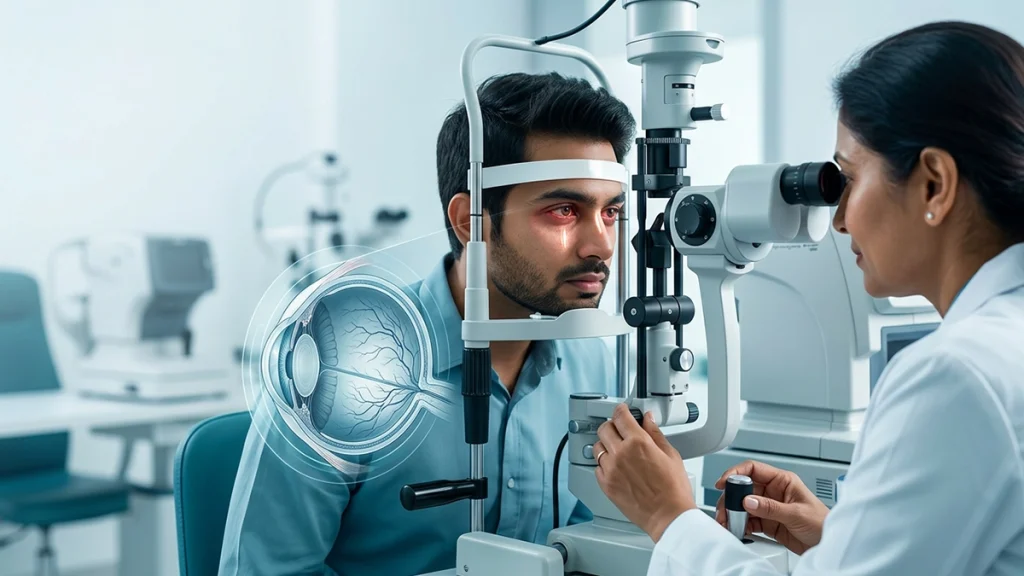
Redness is a result of tiredness, dust, screen use, or smoke which will usually go away once the cause is removed. But persistent redness with pain, discharge, light sensitivity, or blurred vision may require medical attention. In identifying the Red Eyes Causes we help you to tell the difference between temporary irritation and a problem which should be seen by an ophthalmologist.
People usually report red looking eyes as Bloodshot Eyes but what they see is not always what is causing the issue. Redness is a result of tiny blood vessels on or around the eye surface which become enlarged, inflamed, or more visible. Dryness, allergy, infection, eyelid inflammation, injury, and certain pressure related conditions present in a similar way. The best way is to look at the other symptoms and know When to See an Eye Doctor. MedlinePlus reports dry eyes, allergies, infection, injury, dust, and sun exposure as common causes also we pay special attention to pain or vision changes.
What Does Eye Redness Mean?
The white part of the eye is covered by a thin, translucent tissue that we call the conjunctiva. When blood vessels in this tissue dilate, the surface appears pink or red. The redness may be present over large areas of the eye, around the cornea, in one eye alone, or as a well defined patch. While Red Eye causes do overlap these patterns can be noted by an ophthalmologist which in turn helps in diagnosis, they are not reliable for self diagnosis.
Mild bloodshot eyes with no pain and normal vision may result from tiredness, air conditioning, pollution, or dryness. Redness with itching and watering is more indicative of an allergy, while sticky discharge is a symptom of conjunctivitis or some other eye infection. A bright red patch without pain may be a subconjunctival hemorrhage which happens when a small surface blood vessel breaks. It may also present with a subconjunctival hemorrhage which MedlinePlus reports will remain visible as the blood is slowly absorbed, similar to a bruise.
Common Red Eyes Causes
Dry eye is a very common issue related to Red Eyes Causes. Tears play a key role in lubricating the eye which in turn supports clear vision. Prolonged computer use, reduced blinking, air conditioning, wind, aging, and some medications can disrupt the tear film which in turn may cause burning, a foreign body sensation, tearing, fluctuating blurriness and Bloodshot Eyes. Reoccurring symptoms should be brought in for evaluation instead of repeatedly self treating.
Allergens are a large group of Red Eyes causes. Eye Allergy may present itself after exposure to pollen, dust mites, mold, animal dander, cosmetic products or other triggers. Itching is the main symptom which presents itself, also both eyes are affected at the same time and rubbing usually makes it worse. MedlinePlus reports to stay away from what you know will set off your symptoms and they also say that cool compresses and lubricating drops may provide relief of symptoms for the mild stuff, but in the case of persistent or severe reactions you will need to seek in person health care.
Infective conjunctivitis is also a very common cause. An Eye Infection which is brought on by a virus or a bacteria may cause irritation, watering, mucus, or a pus like discharge. The CDC reports that viruses, bacteria and allergens are the main causes of conjunctivitis which in turn may spread via contaminated hands, towels, cosmetics or through close contact. This is the reason Red Eye Treatment should be based on the cause and not the color.
Among other causes of Red Eyes Causes, inflammation at the eyelid edge which is what we call blepharitis can cause crusting, burning, and a gritty sensation. Blocked oil glands in the lid may break down tears and also play a role in Bloodshot Eyes. Other Red Eyes Causes included are a scratched cornea, foreign bodies, contact lens related keratitis, chemical exposure, smoke, ultraviolet exposure, or internal eye inflammation.
Symptoms That May Point to the Cause
The below is a general guide which is not to be used for diagnosis. Different conditions may present with similar symptoms and a physical exam may be required before determining a Red Eye Treatment.
| Redness pattern or symptom | Possible explanation | What it may suggest |
| Itching, watering, and puffiness in both eyes | Eye Allergy | Exposure to pollen, dust, mould, pets, or another allergen |
| Sticky or pus-like discharge | Eye Infection or bacterial conjunctivitis | Lids may stick together, especially after sleep |
| Watery redness after a cold | Viral conjunctivitis | May begin in one eye and spread to the other |
| Burning, grittiness, or fluctuating vision | Dry eye | Tear-film instability, screen use, wind, or air conditioning |
| Crusts around the eyelashes | Blepharitis | Eyelid-margin inflammation or blocked oil glands |
| Bright red patch without pain | Subconjunctival haemorrhage | A small broken surface blood vessel |
| Pain, light sensitivity, or reduced vision | Corneal or internal eye problem | Needs prompt eye assessment |
A useful review of Red Eyes Causes is to note which are the main symptoms of itching, discharge, dryness, pain, or visual change. Itch is a sign of Eye Allergy. Thick discharge is a cause for an eye infection. Burning after screen use is a symptom of dry eye. Severe pain, light sensitivity, or blurred vision is not what you see in simple tiredness and is When to See an Eye Doctor.
Can Contact Lenses Cause Redness?
Contact which is related to the use of red lenses is a key element in the group of Red Eyes causes which also includes pain, excessive production of tears, light sensitivity, discharge, and blurred vision. Also a factor is poor hygiene, sleeping in the contacts, and swimming without proper protection which in turn increases the risk of corneal infection. The National Eye Institute reports that contact lens related issues are a very common cause of keratitis.
If you get Bloodshot Eyes while wearing your lenses remove them and do not put them back in until you see an eye care professional which in this case may be immediate. Also do not use up any of your saved antibiotic or steroid drops. A contact lens related Eye Infection may progress faster than normal conjunctivitis, so this situation affects When to See an Eye Doctor and deserves prompt evaluation.
Eye Allergy or Eye Infection: How Are They Different?
An Eye Allergy can present with very itchy eyes, tearfulness, and in both eyes. Also you may see sneezing, nasal congestion or a seasonal trigger at the same time. In contrast an Eye Infection will start in one eye, produce mucus or pus, and then may spread to the other eye.
Different Red Eyes causes require different care, thus Red Eye Treatment has to be diagnosis specific. The CDC reports that antibiotics do not improve viral conjunctivitis, in some bacterial cases though may be treated with antibiotic drops or ointment which will be based on the clinical picture. Allergic conjunctivitis often remedies itself with reduction in allergen exposure also it may respond to proper anti allergy treatment. Use of an antibiotic for an allergy, or a steroid for what is in fact an infected eye, may delay getting appropriate care.
Safe Care for Mild Redness
For which we have mild Red Eyes Causes with normal vision and no severe pain we may recommend at home care as we watch for changes. Get plenty of rest for the eyes, reduce exposure to smoke and dust, take breaks from the screen, avoid rubbing the eyes, and stop contact lens use. For cases of redness related to eye allergy a clean cool compress may do the trick. Preservative free lubricating drops may help with dryness but in the case of recurring red Red Eyes Causes evaluation is still required.
Good hygiene plays a key role in the prevention of Eye Infection. Wash your hands before and after handling the affected area, do not share towels or pillowcases and do not use the same make up. These actions support Red Eye Treatment and also reduce the spread of conjunctivitis. The CDC says frequent hand washing, use of separate towels and avoidance of close contact which may also apply to viral conjunctivitis.
Avoid the pitfall of using continuous doses of whitening drops that only address surface issues of redness. These may hide the Red Eyes Causes without treating them and also we may see a return of redness when they are over used. Also, never begin on steroid eye drops without first consulting an ophthalmologist which is very important because steroids may in fact make certain infections worse or increase eye pressure in some people.
When to See an Eye Doctor
Knowing that when to see an eye doctor is key in that some red eyes causes what you may not see coming. If symptoms persist, come back repeatedly, affect only one eye for no reason, present with sticky discharge, eyelid swelling, increasing discomfort, or are related to contact lens use then get in to see your eye care professional.
Seek out emergency care for pain, reduced vision, light sensitivity which is severe, a very bad headache, nausea, halos, an unequal pupil, chemical exposure, a penetrating injury, or an embedded object. The NHS reports pain, vision change, light sensitivity, severe headache with vomiting, injury, chemical exposure, and a very dark red eye as indicators that you should get urgent or emergency care. The National Eye Institute also says go in for an immediate evaluation for intense pain, blurry or changed vision, very red watery eyes, or a foreign object in the eye.
The table below summarises When to See an Eye Doctor according to symptom severity.
| Situation | Recommended response |
| Mild redness after fatigue or environmental exposure, with normal vision and no pain | Remove the trigger, rest the eyes, avoid lenses, and monitor |
| Recurring redness, dryness, itching, or eyelid crusting | Book a routine eye examination |
| Redness with discharge, swelling, or symptoms lasting more than a few days | Arrange an early consultation for diagnosis and suitable Red Eye Treatment |
| Bloodshot Eyes in a contact lens wearer | Remove lenses and seek prompt professional advice |
| Redness with pain, light sensitivity, blurred vision, halos, severe headache, or nausea | Seek urgent eye care |
| Chemical splash, penetrating injury, or embedded object | Begin appropriate emergency first aid and obtain immediate medical care |
How an Ophthalmologist Finds Red Eyes Causes
An ophthalmologist will ask about when the redness started, what eyes are affected whether it’s one or two, if there is itching or discharge present, and if you wear contact lenses. These questions help to tell apart simple irritation from more serious Red Eyes Causes.
The diagnosis will be of dry eye, eye allergy, conjunctivitis, blepharitis, a corneal abrasion, keratitis, uveitis or a pressure related issue. Although acute angle closure glaucoma is rare, it is a health emergency; the National Eye Institute reports sudden intense pain, nausea, red eye, and blurred vision as signs to go to the emergency room. An accurate diagnosis allows Red Eye Treatment to put the cause to rest as opposed to just temporarily covering up the redness.
Reducing Recurrent Eye Redness
Prevention of repeat episodes is a result of identifying Red Eyes causes and their triggers. For dry eye issues try to take frequent breaks from the screen, fully blink, avoid the use of fans directed at the face, stay hydrated, and speak to your eye care professional about suitable lubricants. For Eye Allergy issues minimize exposure to what you know to be triggers, wash the face after being outdoors, and do not rub. To reduce infection risk keep hands clean, do not share eye products, and follow proper contact lens hygiene.
Repeated bloodshot eyes may not be a sign of tiredness at all. They may in fact point to a case of lid disease, unstable tear production, chronic allergy, poorly fit lenses, medication side effects, or some other issue.Reviewing Red Eyes Causes with an ophthalmologist before trying out a new set of drops without a diagnosis.
Conclusion
Occasionally redness is a normal thing, but persistent or painful redness does require attention. As it stands, appearance is not enough to tell between dry eye, allergic conjunctivitis, infection, corneal disease, or internal inflammation. What we see most of the time are pain, discharge, itching, light sensitivity, contact lens use, and any change in vision.
At ASG Eye Care we see that an exam can diagnose Red Eyes Causes and also put together the best Red Eye Treatment. Don’t delay care if redness is accompanied by pain, blurred vision, light sensitivity, injury, or a severe headache. We put out a guide on When to See an Eye Doctor which also helps to prevent complications and protect vision.
Frequently Asked Questions
1. Why do I wake up with red eyes?
Morning redness is a symptom of dryness, incomplete eyelid closure at night, air conditioning, allergy, blepharitis, or contact lens misuse. If you have Bloodshot Eyes most mornings an exam can determine the cause which in turn will guide Red Eye Treatment.
2. Are red eyes always caused by infection?
No. Dryness, fatigue, smoke, dust, an Eye Allergy, eyelid inflammation, injury, and a broken blood vessel are also reported as Red Eyes Causes. An Eye Infection is more often seen when redness is associated with discharge or exposure to someone with conjunctivitis.
3. What is the fastest red eye treatment?
There isn’t a single best Red Eye Treatment which is true for all cases as treatment is based on what is causing the redness. For dryness use of a lubricant may bring relief, in case of Eye Allergy identifying and avoiding the trigger is key, and in some cases of bacterial infection we may have to go in for a prescription. Viral conjunctivitis doesn’t respond to antibiotic use.
4. Can I use antibiotic drops for any red eye?
No. Antibiotics are used for bacterial infections and do not treat dryness, allergy, or in most cases of viral conjunctivitis. Do not use up old prescriptions for eye drops, as it may delay a proper diagnosis. See an ophthalmologist to determine that your eye infection is bacterial and that antibiotics are the appropriate course of treatment.
5. When should contact lens users seek help?
Remove the contact lenses and report to an eye care professional at the first sign of redness which may be accompanied by pain, blur, discharge, or light sensitivity. This is When to See an Eye Doctor as early treatment may be required for a corneal infection.
6. Can lack of sleep cause red eyes?
Lack of sleep may cause dryness, irritation, and to see more of the blood in the eyes which in turn may cause Bloodshot Eyes. Persistent redness should not be immediately attributed to lack of sleep when there is pain, discharge, or visual symptoms present.