
ASG Eye Hospital

Mucormycosis Explained | Deadly Fungal Infection Guide

The images will remain etched in the minds of all those who have seen the second wave of COVID-19 in India. Days later, patients who had survived the virus who had returned home and begun to recover were going back to hospitals with swollen eyes, blackened tissue around their noses, and in the worst cases, losing their lives or their vision due to what medical professionals were calling Black Fungus Disease. It was not a new infection. But the scale at which it appeared was something Indian medicine had never seen before.

The Fungus That Was Always There

Mucormycetes, which are organisms found in dirt, waste, and the air most people breathe on a daily basis without any bad affects, are the cause of mucormycosis. Immune systems in good health handle this contact without noticing it. Uncontrolled diabetes, high-dose steroids given during COVID treatment, haematological tumours, and organ transfers are examples of situations when immunity fails or is deliberately weakened. The same fungus that doesn’t cause any problems in healthy tissue finds an open entrance site in those patients and grows at a rate that truly astounds medical workers who come into touch with it for the first time.

The name Black Fungus Disease is well justified. As mucormycosis invades blood vessels, the tissue turns black and becomes nonfunctional. Within days, what initially appears to be a chronic sinus infection might spread to the eye socket. The brain is not far from there.

When Mucormycosis Becomes a Fungal Infection in Eyes

Rhino-orbital-cerebral mucormycosis is the type that eye doctors fear the most. The infection spreads into the orbit (bony tube surrounding the eye).

Mucormycosis-related fungal diseases of the eyes don’t always make a big effect. Patients first experience some swelling around the eye socket, a droopy eyelid, and stiffness in the face. They think it to be healing from COVID-19. They wait. By the time vision starts blurring or eye movement becomes restricted, the infection has already moved further than they realise.

Any patient who recently had COVID-19, was hospitalised, received steroids, or has poorly controlled diabetes and develops these signs needs to be at an eye clinic the same day — not the next morning, not after a phone consultation.

Mucormycosis Symptoms That Get Missed Too Often

The initial symptoms of mucormycosis may be confused with a sinus congestion or antibiotic-resistant diseases. The ones that should give instant cause for worry are black crusting inside or around the nose, pain in the face on one side, swelling around the eye, toothache with loose teeth, headaches that will worse instead of improving and change in vision.

Once one is aware of what to look for, these are hardly subtle signs. The problem is that most patients and families do not know what to look for — and some doctors outside specialist settings miss the window too.

Mucormycosis Treatment Is Not Gentle

There is no mild version of Mucormycosis treatment. Liposomal amphotericin B, the recommended fungicide, is expensive, injected, and hard on the liver. It is used in combination with thorough surgery debridement, which includes the real removal of dead and sick tissue. When the orbit is involved, an eye doctor may face the decision to remove the eye entirely — a procedure called exenteration — to stop the infection reaching the brain.

This is the reality of what a deadly fungal infection does when it is not caught early. The surgery is not a failure of medicine. It is medicine working under conditions where the alternative is worse.

What the Eye Doctor’s Role Actually Is

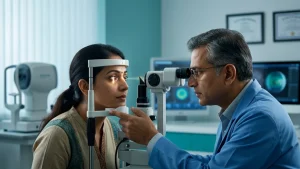
At a serious eye hospital managing these cases, the ophthalmologist is not a peripheral consultant — they are central to the assessment from the first presentation. Grading orbital involvement, determining how far the deadly fungal infection has spread, coordinating with ENT and neurosurgery in parallel — this is not a condition that allows for sequential consultations spaced over days.

Eye care in the context of Black Fungus Disease is emergency medicine. Patients who reached an eye clinic early, before orbital spread was established, avoided the most radical interventions in a significant proportion of cases. That outcome difference is entirely explained by time.

The One Thing That Changes Everything

Fungal infection in eyes progresses on its own timeline, not the patient’s convenience. Mucormycosis symptoms in a high-risk patient are not something to monitor at home. Black Fungus Disease, once it has reached the orbit, is operating under a deadline that no one can negotiate with.

Speed of recognition. Speed of referral. Speed of treatment. That sequence, more than any drug or surgery, is what determines who keeps their vision.

FAQ Section

1. What is Mucormycosis?

Mucormycosis is a rare but dangerous fungal infection caused by fungi called mucormycetes.

2. Why is it called Black Fungus Disease?

It is called Black Fungus because infected tissue may turn black due to loss of blood supply and tissue death.

3. What are the early symptoms of Mucormycosis?

Early symptoms include facial pain, nasal congestion, headache, swelling near the eyes, and black discharge or crusting from the nose.

4. Who is at high risk for Mucormycosis?

People with uncontrolled diabetes, recent COVID-19 infection, steroid use, cancer, or weakened immunity are at higher risk.

5. Can Mucormycosis affect the eyes?

Yes. The infection can spread from the sinuses to the eye socket, causing swelling, drooping eyelids, double vision, and vision loss.

6. How is Mucormycosis treated?

Treatment usually includes antifungal medicines like liposomal amphotericin B and surgical removal of infected tissue.

7. Is Mucormycosis contagious?

No. Mucormycosis does not spread from person to person.

8. Why is early treatment important?

The infection spreads rapidly and may reach the brain within days. Early treatment greatly improves survival and vision outcomes.

Overview

Job Title: Consultant Ophthalmologist

Location: Pan India
Job Category: Medical Healthcare

Work Employment:  Full time

What you work:

  • Diagnose and treat patients with a focus on Ophthalmologist.
  • Collaborate with senior doctors and multidisciplinary teams.
  • Ensure patient-centric care and follow clinical protocols.
  • Contribute to research, training, or hospital initiatives (if applicable).

Mandatory skills:

  • Relevant medical degree / certification.
  • Strong knowledge of ophthalmology practices / healthcare protocols.
  • Excellent communication and patient-handling skills.
  • Ability to work in fast-paced healthcare environments.

Preferred Qualifications:

  • Experience: 3 to 6 years of experience
  • Prior experience in eye care / multi-speciality hospitals.
  • Fellowship or advanced training in Ophthalmologist.
  • Familiarity with advanced diagnostic tools and surgical techniques.
  • Passion for innovation, patient care, and continuous learning.

Apply For This Positions

This will close in 0 seconds

Overview

Job Title: Optometrist

Location: Amritsar, Punjab 

Job Category: Optometry

Work Employment:  Full time

What you work:

  • Conduct comprehensive eye examinations and vision assessments for patients of all ages.
  • Prescribe and fit spectacles, contact lenses, and low-vision aids.
  • Perform diagnostic tests including refraction, tonometry, perimetry, and OCT imaging.
  • Support consultant ophthalmologists in pre-operative and post-operative patient workups.
  • Counsel patients on eye care, lens hygiene, and follow-up schedules.
  • Maintain accurate clinical records and adhere to hospital protocols.

Mandatory skills:

  • Bachelor’s or Master’s degree in Optometry (B.Optom / M.Optom) from a recognised institution.
  • Valid registration with the relevant state or national optometry council.
  • Proficiency in refraction, slit-lamp examination, and contact lens fitting.
  • Working knowledge of autorefractors, tonometers, fundus cameras, and OCT equipment.
  • Strong communication skills in English, Hindi, and Punjabi.
  • Ability to manage high patient volumes in a fast-paced clinical setting.

Preferred Qualifications:

  • Experience: 1 to 5 years of clinical optometry experience.
  • Prior experience in an eye care or multi-speciality hospital in Punjab.
  • Exposure to paediatric optometry, binocular vision, or low-vision rehabilitation.
  • Familiarity with advanced diagnostic imaging and dry-eye management.
  • Passion for patient care, community eye-health camps, and continuous learning.

Apply For This Positions

This will close in 0 seconds

Overview

Job Title: Optical In-charge 

Location: Panjim, Goa / Mumbai-Worli (Lower Parel) 

Job Category: Optical

Work Employment:  Full time

What you work:

  • Manage day-to-day operations of the optical outlet, including sales, dispensing, and inventory.
  • Guide customers on frame selection, lens options, and coatings based on their prescription and lifestyle.
  • Take accurate frame measurements and ensure precise fitting, adjustments, and after-sales service.
  • Drive optical sales targets and monitor daily, weekly, and monthly business performance.
  • Maintain optimum stock levels, coordinate with vendors, and control shrinkage through periodic audits.
  • Supervise and train optical staff on product knowledge, dispensing standards, and customer service.
  • Coordinate with optometrists and consultants to ensure smooth prescription-to-delivery flow.
  • Ensure visual merchandising, display hygiene, and adherence to brand and hospital standards.

Mandatory skills:

  • Diploma or Bachelor’s degree in Optometry (D.Optom / B.Optom) or equivalent optical dispensing qualification.
  • Minimum 3 years of experience in optical supervisory or in-charge role.
  • Sound knowledge of lens types, coatings, frame materials, and dispensing principles.
  • Hands-on experience with edging, fitting, and basic optical workshop equipment.
  • Proven ability to achieve sales targets and manage inventory and billing systems.
  • Strong communication and interpersonal skills in English, Hindi, and Konkani or Marathi.
  • Working knowledge of POS / retail software and MS Office.

Preferred Qualifications:

  • Experience: 3 to 7 years in optical retail or an eye care hospital optical division.
  • Prior experience managing an optical outlet in Goa or the western region.
  • Exposure to premium and progressive lens brands and specialty eyewear.
  • Familiarity with contact lens dispensing and after-care support.
  • Team leadership, customer relationship management, and continuous learning mindset.

Apply For This Positions

This will close in 0 seconds

Overview

Job Title: Optometrist

Location: Pan India 


Job Category: Optometry

Work Employment:  Full time

What you work:

  • Conduct comprehensive eye examinations and vision assessments for patients of all ages.
  • Prescribe and fit spectacles, contact lenses, and low-vision aids.
  • Perform diagnostic tests including refraction, tonometry, perimetry, and OCT imaging.
  • Support consultant ophthalmologists in pre-operative and post-operative patient workups.
  • Counsel patients on eye care, lens hygiene, and follow-up schedules.
  • Maintain accurate clinical records and adhere to hospital protocols.

Mandatory skills:

  • Diploma / Bachelor’s or Master’s degree in Optometry (D.Optom / B.Optom / M.Optom) from a recognised institution.
  • Valid registration with the relevant state or national optometry council.
  • Proficiency in refraction, slit-lamp examination, and contact lens fitting.
  • Working knowledge of autorefractors, tonometers, fundus cameras, and OCT equipment.
  • Ability to manage high patient volumes in a fast-paced clinical setting.

Preferred Qualifications:

  • Experience: 1 to 5 years of clinical optometry experience.
  • Exposure to paediatric optometry, binocular vision, or low-vision rehabilitation.
  • Passion for patient care, community eye-health camps, and continuous learning.

Apply For This Positions

This will close in 20 seconds