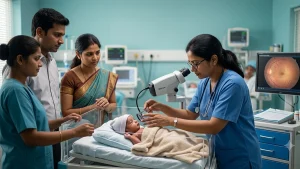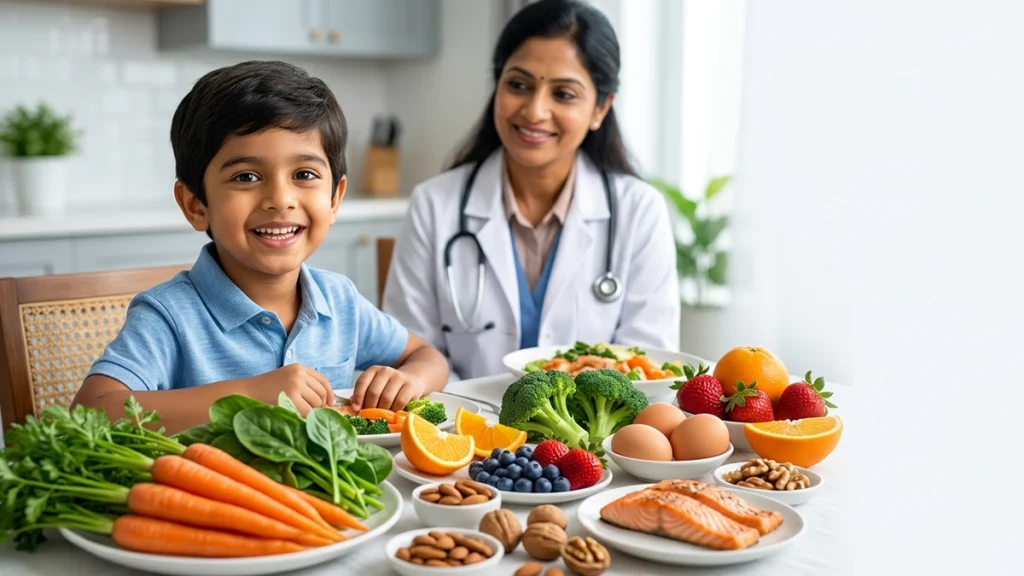
Good health of the eyes is very important for all children’s learning, confidence in themselves, play, and in fact their total development. While parents pay attention to which school their kids get into, how much time they spend on screens, and that they have eye check ups, what they put in their kids’ bodies also plays a large role in supporting eye health. A balanced diet does not take the place of regular eye care or medical treatment when a child has an issue with their eyes, but it does support normal vision growth and long term eye health.
When we talk about Foods for Eye Health in Children, we aren’t putting all our eggs in one basket. A child’s vision requires a mix of vitamins, minerals, antioxidants, healthy fats, and proteins. These nutrients play a role in the health of the retina, cornea, tear film, eye muscles, and in overall growth. Thus including a variety of Foods for Eye Health in Children should be a daily practice for parents.
Why Eye Nutrition Matters in Childhood
Children as they grow into adulthood their eyes also develop. In school years they put their eyes to work for reading, writing, screen based learning, outdoor play and sports. While a poor diet doesn’t immediately bring about an eye disease it can play a role in overall health, immunity, growth and the body’s support of healthy tissue which includes the eyes.
The idea of Foods for Eye Health in Children is simple: give the body the nutrients it needs to maintain healthy vision. Carrots are the first thing that comes to mind for many, but they are only a piece of the puzzle. Leafy greens, colorful fruits, eggs, nuts, dairy, fish, pulses, and whole grains also play a key role.
Parents should know that Foods for Eye Health in children don’t work like medicine. They do not remove spectacles, cure cross eye, reverse lazy eye, or treat serious eye disease. However, the right healthy diet for eyes does support normal vision health and may also reduce the risk of nutritional deficiencies which in turn affect eye health.
Best Nutrients for Kids’ Vision
A child’s plate should have a range of nutrients which support the retina, protect eye tissue from oxidative stress, and which help with normal growth. The best nutrients for kids vision include in their diet vitamin A, lutein, zeaxanthin, vitamin C, vitamin E, zinc, omega 3 fatty acids, and protein.
Vitamin A is a very important eye vitamins for children which supports normal vision in low light. Lutein and zeaxanthin which are found in green leafy vegetables are antioxidants that support the retina. Also, we see that Omega 3 fatty acids do for the tear film what they do for health in general and also may be useful for kids that have dryness or irritation which is a result of increased screen time.
A balanced healthy diet for eyes is not to be had from supplements alone. Most children can get the required nutrients out of food which is planned well. In that case, if at all there is a need to give supplements, do present it to your pediatrician or eye doctor first, also note that too much of certain vitamins is harmful.
| Nutrient | Why It Supports Children’s Eyes | Food Sources |
| Vitamin A | Supports normal vision and eye surface health | Carrots, sweet potatoes, pumpkin, spinach, eggs, dairy |
| Lutein and Zeaxanthin | Help support retinal health | Spinach, kale, broccoli, peas, corn |
| Vitamin C | Supports blood vessels and tissue repair | Oranges, guava, lemon, amla, strawberries |
| Vitamin E | Helps protect cells from oxidative stress | Almonds, sunflower seeds, peanuts, vegetable oils |
| Omega-3 Fatty Acids | Supports tear film and retinal function | Fish, walnuts, flaxseeds, chia seeds |
| Zinc | Helps vitamin A function properly in the body | Beans, lentils, nuts, dairy, whole grains |
Top Foods for Eye Health in Children
The best way to plan Foods for Eye Health in Children is to include variety. Also a colorful plate is a good indicator which is in fact a good thing as different colors of food usually bring in different nutrients. Carrot, pumpkin, and sweet potato which are orange in color provide beta carotene that the body transforms into vitamin A. And green foods like spinach, methi, broccoli, and peas which are green in color provide lutein, zeaxanthin and other antioxidants.
Fruits are also important Foods for Eye Health in Children. Guava, oranges, amla, strawberries, papaya, and mango are loaded with vitamin C and other nutrients that support total eye and immune health. For those little ones who aren’t into raw fruits you can present them in a fun way in smoothies, fruit bowls, or as a small fun sized serving at breakfast time.
Eggs do well in the Foods for Eye Health in Children group as they have vitamin A, lutein, zeaxanthin, and protein. As for growth and overall development we see milk, curd, paneer and other dairy products which do great. In the case of vegetarian children pulses, beans, nuts, seeds, and whole grains are the stars which really put together a strong nutrition base.
Fish which include salmon, sardines and tuna are great sources of omega-3 fatty acids. For families that don’t eat fish we suggest walnuts, chia seeds, flaxseeds and fortified foods. These topics often come up in talks about eye care nutrition which in turn support healthy tissues and tear film function.
| Food Group | Eye-Friendly Choices | Simple Serving Ideas |
| Orange vegetables | Carrot, pumpkin, sweet potato | Add to paratha stuffing, soup, sabzi, or khichdi |
| Leafy greens | Spinach, methi, kale, amaranth | Add to dal, dosa batter, thepla, or rice |
| Fruits | Guava, orange, papaya, mango, amla | Serve as fruit bowl, smoothie, or school snack |
| Protein foods | Eggs, dal, chana, beans, fish | Add to breakfast, lunch, or evening snacks |
| Nuts and seeds | Almonds, walnuts, chia, flaxseed | Use powdered form in milk, porridge, or laddoos |
| Dairy | Milk, curd, paneer | Include in breakfast, lunch, or evening meals |
Foods Parents Should Not Ignore
Some of the most practical Foods for Eye Health in Children are already available in Indian kitchens. Dal, green veggies, seasonal fruits, curd, peanuts, eggs, and home cooked meals make up a great base. We are not talking about breaking the bank for these foods but we are talking about a balanced diet.
Children that are picky eaters may turn up their nose at veggies which you present to them the same way every day. Parents can get creative by mixing spinach to parathas, adding grated carrot to dosa batter, using pumpkin in soups, or adding powdered nuts and seeds to porridge. This makes Foods for Eye Health in Children easier to include without forcing the child.
For kids that use screens a lot, we should see to it that they also have a good diet which includes lots of fruits and veggies, get in some outdoor play, have proper sleep, and take in regular eye check ups. While a good healthy diet for eyes is great and does support eye health, it is no cure for undetected vision issues. If you notice your child is reporting headaches, eye strain, frequent blinking, rubbing at their eyes, or having trouble seeing the board at school, then it is time for an eye exam.
Can Eye Vitamins Replace Food?
Many parents wonder about the need for eye vitamins for children. In the majority of healthy kids a balanced diet is the best source of nutrition. Supplementation may be recommended when a child has a deficiency, poor appetite, restricted diet, medical condition, or a particular nutritional issue.
It is critical to get medical advice before starting any eye vitamins for children. Many parents assume that vitamins are always safe, but that’s not true in fact unsupervised use may not be of benefit and at times can cause issues. Also food based nutrition is the best which includes natural balance of nutrients along with fiber, protein and other protective elements.
This is that Foods for Eye Health in Children should continue to be the primary focus. Supplementation may support care in some cases but it should not replace healthy meals, eye exams, or that which is put forth by an ophthalmologist.
Eye Care Nutrition and Lifestyle Go Together
Good eye care nutrition is a wide field which goes beyond what a child puts in their body. Also important is how a child lives day to day. Kids should be encouraged to play outside, to stay hydrated, to get enough sleep, and to break up screen time. While nutrition gives the body what it needs, it is the healthy habits which protect the eyes from stress.
Parents also should note that Foods for Eye Health in Children do not prevent all eye issues. We see issues like refractive error, lazy eye, cross eye, allergies, infections, and inherited eye diseases which require proper diagnosis and treatment. But that said when we instill good food choices along with routine eye checkups we are giving our kids a better base for healthy vision.
At ASG Eye Care which is what we at the company are all about we encourage a total approach to a child’s eye health. A child that has a great diet, does their studies in well lit areas, takes breaks from the screens, plays outside and has that which is recommended for eye check ups has a better chance of having great eye health and also of us catching at early stage any of the common eye issues.
Practical Meal Ideas for Children’s Eye Health
A simple breakfast may consist of milk, fruit, eggs, poha with vegetables, or paratha with curd. At lunch you may have dal, rice or roti, green veggies, a salad, and curd. For evening snacks try fruit, nuts, makhana, chana, or home made options instead of packaged foods. For dinner the choice may be of vegetables, pulses, paneer, fish, or eggs as per what your family prefers.
The healthiest Foods for Eye Health in Children are the ones that children will actually eat regularly. Consistency is key over that perfect meal. Parents may slowly improve their child’s diet by adding one eye friendly food at a time.
Key Takeaway
The right Foods for Eye Health in Children supports healthy vision, growth, and general well being. What a child eats should include colorful fruits, leafy greens, dairy, eggs, pulses, nuts, seeds, whole grains, and healthy fats. The best nutrients for kids’ vision come from variety, not from a single food.
A healthy diet, regular eye exams, and a good lifestyle base what we do in pediatrics for ophthalmic health. Parents should pay attention to Table of Foods for Eye Health in Children and bring in professional medical help if they notice any issue with their child’s vision.
Also Read :
Best Vegetables for Eye Health: Improve Eyesight Naturally ,
10+ Eye Health Tips for Kids and Adults,
Best Foods for Eye Health: Top Nutrients That Help Protect Your Vision,
10 Best Juices for Eye Health,
Best Diet Plan for Healthy Eyes and Vision,
Best Vegetables for Eye Health
Frequently Asked Questions
1. What are the best foods for eye health in children?
The best Foods for Eye Health in Children include carrots, spinach, pumpkin, sweet potatoes, eggs, dairy products, fish, nuts, seeds, pulses, and in season fruits. These foods supply vitamin A, lutein, zeaxanthin, vitamin C, vitamin E, zinc, omega 3 fatty acids, and protein which in turn promote normal eye function and growth.
2. Which are the best nutrients for kids vision?
The best nutrients for kids vision include vitamin A, lutein, zeaxanthin, vitamin C, vitamin E, zinc, omega 3 fatty acids, and protein. These nutrients which in turn support the retina, eye surface, blood vessels, tear film, and full development.
3. Do children need eye vitamins?
Most children do not need eye vitamins for children if they are eating well balanced meals. But supplements may be put forward if a child has a diagnosed deficiency, restrictive diet, poor appetite, or a medical condition. Before giving any supplement parents should see a doctor.
4. Can a healthy diet improve eyesight?
A healthy diet for eyes supports normal vision and eye health. It doesn’t remove the need for glasses or fix eye disease. If a child has blurred vision, headaches, eye rubbing, or has trouble seeing the board an eye exam is important.
5. How does eye care nutrition help children?
Eye care nutrition provides your body with the required nutrients for healthy eye tissue, normal growth, immune support, and retinal health. It works best in conjunction with regular eye check ups, outdoor play, quality sleep, and managed screen time.
6. Are carrots enough for children’s eye health?
Carrots do provide beta-carotene which is great but they are not enough by themselves. he best Foods for Eye Health in Children include orange veggies, leafy greens, fruits, dairy, eggs, nuts, seeds, pulses, and fish or vegetarian sources of omega 3.