Glaucoma is also referred to as a silent eye disease which people may not notice at all in the early stages. This is why it is so important to know the early signs of glaucoma. It may damage the optic nerve slowly before daily vision appears to be affected at all.
At ASG Eye Care we see many that ask if there will be pain or that they will notice something out of the ordinary with glaucoma. For the most part early changes are very subtle. Only when the disease has progressed do some people note changes in side vision, night driving, or in the face of glare.
Why Glaucoma Is Easy to Miss
The primary form of glaucoma is a slow progressing disease. What we see is that central vision may stay normal for a long time as peripheral vision begins to go. This makes the early signs of glaucoma different from infection or injury, where pain and redness quickly push people to visit a doctor.
Many of our patients report they are just living with these changes which they attribute to age, tiredness, screen time or a change in their glasses which in turn delays them seeking care. It is important to not ignore repeated or unexplained vision changes. For proper glaucoma detection we can’t rely on a basic vision test, instead a full assessment of eye pressure, health of the optic nerve, the drainage angle and field of vision is what we require.
| Change people often ignore | Why it matters |
| Difficulty noticing objects from the side | May suggest early peripheral vision loss |
| Halos around lights | Can occur with pressure or angle-related issues |
| Frequent change in glasses number | May hide a deeper eye condition |
| Poor confidence while driving at night | May indicate reduced contrast or field awareness |
| Mild eye heaviness or pressure | Should be checked if repeated or associated with blur |
Common early signs of glaucoma
One out of the many neglected early signs of glaucoma is the progressive loss of side vision. A person may see clearly what is right in front of them but will miss seeing things at the periphery like steps or a person approaching from the side. Also because this degeneration is a slow process the brain adapts to the change which also causes the patient to be late in noticing it.
At the early stages of glaucoma you may notice issues with night time driving. Headlights will appear to be very bright, glare will be more apparent, and the road will seem less defined. Also some patients report seeing halos around lights, having mild eye discomfort, or a heavy pressure in the eyes. These glaucoma symptoms do not always mean glaucoma, but they should be checked.
Frequent shifts in prescription are also a tell tale early signs of glaucoma which many ignore. If vision is still unstable post getting new glasses it is better to get a full eye exam in instead of thinking the number has changed again.
When Glaucoma Can Become Urgent
Most glaucoma is a slow process but there are some which present suddenly. Severe eye pain, redness, headache, nausea, vomiting, blurred vision, and halos around lights may point to acute angle closure glaucoma which requires urgent care as eye pressure may rise very fast and cause vision loss.
Even at a slow progression, the early signs of glaucoma matter as optic nerve damage is usually permanent. Treatment is to manage the condition and to reduce further damage, which in turn makes it hard to reverse lost vision. Timely testing is what you want to do rather than to wait for clear vision loss.
| Test used in evaluation | What it helps check |
| Eye pressure test | Measures intraocular pressure |
| Dilated optic nerve exam | Looks for optic nerve damage or cupping |
| Visual field test | Finds side vision loss not noticed by the patient |
| OCT scan | Measures nerve fibre and optic nerve thickness |
| Gonioscopy | Checks the drainage angle of the eye when needed |
Who Should Be More Careful?
Anyone is at risk for glaucoma but some require more attention to early signs of glaucoma. At age 40 and beyond, risk also includes people with a family history of glaucoma, diabetes, high intraocular pressure, high myopia, past eye injury, long term steroid use, or certain vascular conditions.
If glaucoma is in your family, don’t wait for symptoms. A full eye exam will support early glaucoma detection which in turn will help identify changes before vision loss sets in.
ASG Eye Care Approach to Early Evaluation
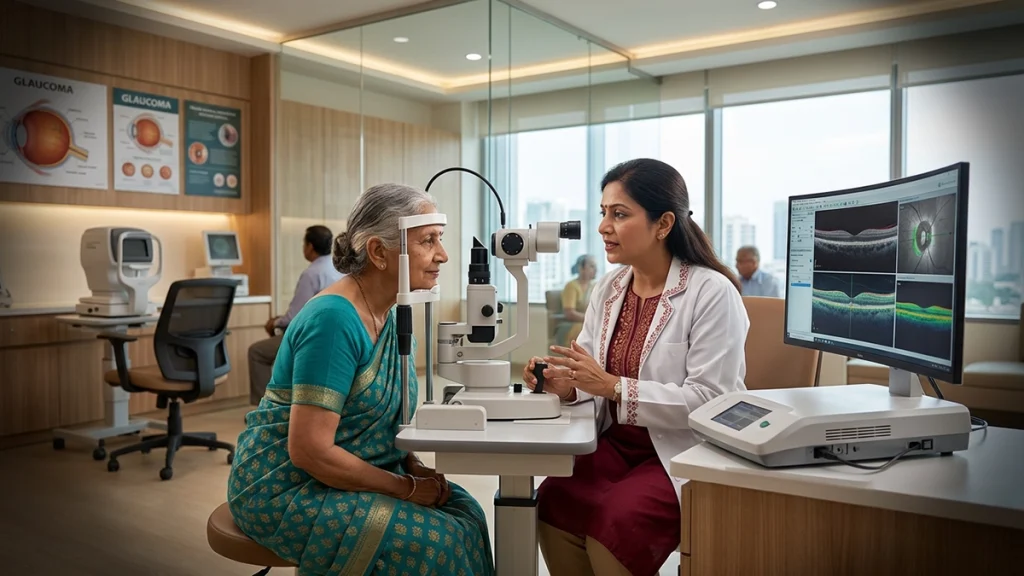
At ASG Eye Care, the focus is not only on treating advanced disease but also on identifying the early signs of glaucoma before they affect daily life. We may perform a full evaluation which includes measurement of eye pressure, optical nerve assessment, visual field testing, OCT imaging, and angle assessment as needed. These tests in turn support accurate glaucoma diagnosis and help determine the best care approach.
If at the first sign of change in the disease process treatment is based out of the stage of the disease and risk involved. Some patients may only require close monitoring, while for others we may use eye drops, laser treatment, or surgery. We are focused on the preservation of present vision and prevention of silent progression.
Why You Should Not Wait
Waiting for obvious vision loss is risky because the early signs of glaucoma often appear late or remain unnoticed. By the time reading, face recognition, or confidence in navigation is affected the disease may be well along.
Should you see side vision issues, halos, frequent changes in your prescription, night time driving problems, or unexplained eye pressure do not dismiss these as early signs of glaucoma. May it be something small, a full eye exam is the only way to know. If it is glaucoma early intervention can play a large role in protecting your vision for years.
Key Takeaway
The early signs of glaucoma in its early stages are very subtle, in fact at first many do not see any at all. This is which annual eye exams are so important, especially for those at greater risk. Early screening, proper diagnosis, and prompt care for the early signs of glaucoma play a large role in protecting long term vision.
Also Read : Glaucoma Prevention for Seniors: Awareness and Prevention Guide, Glaucoma Awareness: Protecting Your Optic Nerve Health
Frequently Asked Questions
1 What are the early signs of glaucoma?
The early signs of glaucoma may include subtle side vision loss, halos around lights, night time driving difficulty, frequent changes in glasses or low eye pressure. Some patients may not notice any symptoms in the early stage.
2 Are glaucoma symptoms always noticeable?
No. Glaucoma symptoms in its early stages do not show up which is a characteristic of open angle glaucoma. That is why we see the value in having a regular eye exam even if your vision appears to be fine.
3 How is glaucoma diagnosis done?
It includes a full eye exam. The doctor may check pressure within the eye, look at the optic nerve, do a visual field test, use OCT imaging, and also look at the drainage angle as needed.
4 Can early glaucoma be treated?
Yes. If at the first early signs of glaucoma which present themselves they are brought to our attention, we may be able to put in a treatment that will slow disease progression. We may use eye drops, laser procedures, surgery, or regular monitoring.
5 When should I visit ASG Eye Care?
You should bring in a case of which you think may be early signs of glaucoma if you notice any possible early signs of the disease, have a family history of glaucoma, are over 40, have diabetes, or have been told that you have high eye pressure.