There is a particular cruelty to losing something slowly. Not the sharp pain of sudden loss which at least announces itself but the quiet, undramatic disappearance of something that was always there. That is what glaucoma does to vision. It takes the edges first. Then a little more. Then more again. And the person it is happening to rarely notices until a significant portion of what they once saw is simply gone.
The optic nerve does not send distress signals. As one strand at a time breaks, it stops working.
What Is Glaucoma?
Glaucoma is a group of eye diseases that damage the optic nerve, often due to increased eye pressure. It usually develops slowly and may not show symptoms in the early stages. Without timely glaucoma treatment, the condition can lead to permanent vision loss or blindness. Regular eye checkups help detect glaucoma early and protect long-term vision.
The illness that gets worse when it’s ignored
Glaucoma is not rare. It is estimated to affect millions of Indians and ranks among the leading causes of irreversible blindness globally. What makes those numbers particularly troubling is that a large proportion of people currently living with glaucoma have never been diagnosed. They are not in denial. They genuinely do not know because the disease has given them no reason to suspect anything.
The peripheral vision that glaucoma destroys first is the vision the brain is most efficient at compensating for. Without realising it, people adjust their head position, widen their gaze, rely more heavily on central vision all without consciously registering that the field around them has narrowed. This compensation is so seamless that by the time glaucoma becomes detectable to the patient without specialist testing, the optic nerve damage behind it has typically been progressing for years.
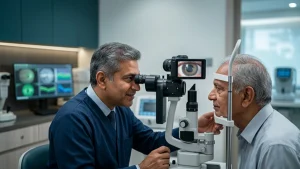
An eye doctor catching glaucoma at this late stage is not catching it early. Regular evaluation at a proper eye clinic is what early detection actually looks like.
Pressure Is Part of the Story — Not All of It
Most people who have heard of glaucoma associate it with high eye pressure. That association is not wrong — elevated intraocular pressure is the most well-established risk factor and the primary target of treatment. But it is incomplete in a way that misleads patients into false reassurance.
Normal-tension glaucoma exists. Optic nerve damage progresses in some patients despite eye pressure that registers within the accepted normal range. Conversely, plenty of people live with elevated intraocular pressure for years without developing glaucomatous damage. Pressure matters but it is not the whole story, and an eye doctor who screens only with a pressure check is missing the diagnostic picture.
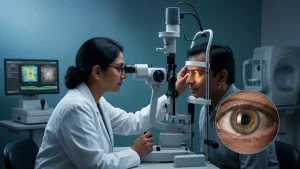
A thorough glaucoma evaluation at a qualified eye hospital includes visual field testing, high-resolution imaging of the optic nerve fibre layer, corneal pachymetry, and gonioscopy. That combination catches what a pressure reading alone cannot.
Glaucoma Diagnosis & Treatment Overview
| Factor | Details |
|---|---|
| Disease Type | Optic Nerve Disorder |
| Main Cause | Increased Eye Pressure (Commonly) |
| Early Symptoms | Usually none |
| Vision Affected First | Peripheral Vision |
| Risk of Blindness | High if untreated |
| Common Tests | Visual Field Test, OCT, Tonometry |
| Initial Treatment | Eye Drops |
| Advanced Treatment | Laser Therapy / Surgery |
| Vision Recovery | Existing damage cannot be reversed |
| Prevention | Regular Eye Checkups |
Glaucoma Treatment Is a Lifelong Commitment
This part of the conversation needs to be honest. When you treat glaucoma, your vision does not get better. Once damaged, the visual nerve never fully heals. What glaucoma treatment does — consistently and effectively when followed properly — is protect what remains.
For most patients, that begins with daily pressure-lowering eye drops. The medication works. The challenge is adherence because a patient who feels no symptoms has no daily reminder of what is at stake. People skip doses. People stop refilling prescriptions. And glaucoma, which punishes nothing in the short term, eventually punishes everything.
When drops prove insufficient, laser-based glaucoma treatment offers a well-tolerated next step. Selective laser trabeculoplasty improves drainage without incisions and can sustain pressure reduction over several years.
When Glaucoma Surgery Becomes Necessary
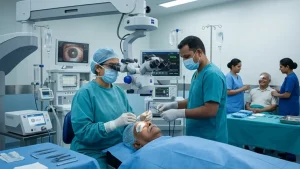
Glaucoma surgery is the intervention of last resort in the sense that it is reserved for cases where other approaches have not achieved the pressure targets needed to protect the remaining nerve. It is not, however, a sign of failure. Some glaucoma presentations require surgical pressure control from earlier in the disease course and for those patients, glaucoma surgery performed at a specialist eye hospital is the most reliable long-term solution available.
At ASG Eye Hospital, glaucoma surgery is handled by specialists who manage the full disease spectrum — from newly detected early cases to complex presentations that have moved through prior treatment stages. The surgical plan is always built around what the optic nerve can still afford to lose, which in advanced cases is very little.
The Only Window That Does Not Close Is the One Used Early
Eye care for glaucoma is not dramatic. It involves regular appointments, consistent medication, and periodic imaging at a capable eye hospital like ASG Eye Hospital. None of that is exciting. All of it is what keeps people seeing.
The eye clinic visit that catches glaucoma before a patient has noticed anything wrong is the most important medical appointment they will never feel the significance of — until, years later, they still have the vision to appreciate that it happened.
FAQ Section
1. What is glaucoma?
Glaucoma is an eye condition that damages the optic nerve and can cause permanent vision loss if untreated.
2. What are the early symptoms of glaucoma?
Early glaucoma often has no noticeable symptoms. Peripheral vision loss usually occurs gradually over time.
3. Can glaucoma cause blindness?
Yes. Untreated glaucoma is one of the leading causes of irreversible blindness worldwide.
4. Is glaucoma caused only by high eye pressure?
No. Although high eye pressure is a major risk factor, glaucoma can also develop in people with normal eye pressure.
5. How is glaucoma diagnosed?
Glaucoma diagnosis includes eye pressure measurement, optic nerve imaging, visual field testing, corneal thickness testing, and gonioscopy.
6. What is the best treatment for glaucoma?
Treatment depends on the stage of disease and may include eye drops, laser therapy, or glaucoma surgery.
7. Can glaucoma vision loss be reversed?
No. Damage caused by glaucoma is permanent, but treatment can help prevent further vision loss.
8. Who should get tested for glaucoma?
People over 40, diabetics, individuals with family history of glaucoma, and those with high eye pressure should undergo regular eye exams.