Many people that are after freedom from glasses or contact lenses first hear of LASIK. But not all eyes are a go for a flap based laser procedure. In which case PRK Surgery may be put forth as a safe and proven alternative. It is one of the early forms of laser eye treatment and still used today for its role in correcting vision without production of a corneal flap.
In other words PRK Surgery what we do is we use an excimer laser to reshape the cornea which in turn causes light to focus better on the retina. It may also be correct for nearsightedness, farsightedness, or astigmatism. But that’s not all there is to it. A detailed eye exam is required to see if the cornea is in good health, eye power is stable, and that the patient has reasonable expectations from the treatment.
At ASG Eye Care we determine the care plan after looking at the patient’s eye structure, lifestyle, work requirements, and healing capacity. For many appropriate patients PRK Surgery is a good solution to reduce dependency on glasses. The right candidate is not a person who just wants to get out of wearing glasses. The right candidate is one which the procedure is right for from a medical stand point and also one in which we are very likely to see a safe visual improvement.
What Is PRK?
PRK Surgery which is short for photorefractive keratectomy is a surface laser surgery which we use to correct refractive errors. In the procedure the thin outer layer of the cornea which is the epithelium is gently removed. The laser then goes in and reshapes the cornea that’s underneath. Post treatment the epithelial layer repairs and grows back as part of the natural healing process.
This is different from LASIK, which creates a flap in the cornea before laser treatment PRK is for certain patients with thin corneas, certain occupations, or lifestyle choices which may want to avoid a flap. The trade off is that healing takes longer and early discomfort may be more present than with LASIK.
The treatment itself is quick but what follows is not. We ask that patients familiarize themselves with the procedure, after care, and what to expect during the healing process before choosing this treatment.
Who Is a Good Candidate?
A good candidate is out to be an adult which has had the same spectacle or contact lens power for at least a year. Stability is key as in which if the power is still changing the results may also. Most doctors have the patient be over 18 years of age although age is not the only factor in the decision.
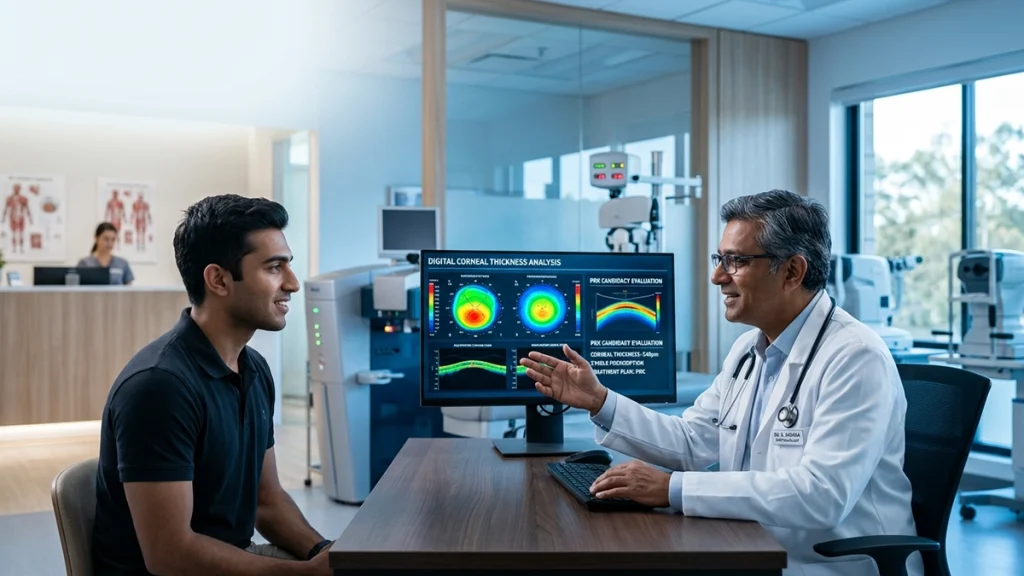
PRK Surgery Eligibility is a function of mainly corneal thickness, corneal shape, tear film health, prescription range and overall eye health. Also the doctor will look for early signs of keratoconus, severe dry eye, active infection, retinal issues and any condition that may affect healing.
In contact sports, defense services, police work, or very physical jobs people may be good candidates for PRK Surgery which also does away with issues related to the flap. Also it is recommended when for some reason LASIK is not the best option for instance if corneal thickness is on the thin side. At the same time each case has to be looked at very much on an individual basis.
| Evaluation Factor | Why It Matters |
| Stable eye power | Helps maintain long-term correction |
| Corneal thickness | Confirms whether laser reshaping can be done safely |
| Corneal mapping | Rules out irregular cornea or keratoconus risk |
| Tear film health | Helps reduce discomfort during healing |
| Retinal examination | Ensures vision issues are not due to another eye disease |
| Lifestyle and work needs | Helps the doctor choose the safest vision correction option |
Who May Not Be Suitable?
Not all patients are fit for PRK. Eye power that is unstable, thin corneas, abnormal corneal maps, and severe dry eye may cause a doctor to advise against it. Also people with uncontrolled diabetes, autoimmune disease, poor wound healing, active eye infection, or certain corneal diseases may do better with other treatment options.
Pregnancy and lactation may bring on changes in eye power and dryness which is why we ask that elective refractive procedures be delayed at this time. Also we may ask that patients with unrealistic expectations think again. The surgery will reduce your need for glasses but it is important to have realistic expectations this treatment does not prevent natural age related changes like presbyopia.
PRK Surgery Eligibility must be determined by in depth testing which we should do instead of through online self assessment or by comparing spectacle numbers.
Benefits of PRK
One of the key benefits of PRK Surgery is that it is a no flap procedure. This is useful for patients which are at high risk of eye injury or that have cornea which does not do well with LASIK. Also since there is no flap in PRK there is no issue of flap displacement post treatment.
Another benefit of this is that it has a large clinical track record. We have seen improvement with modern laser platforms, better diagnostic imaging, and advanced post-operative care. In the right patient PRK Surgery may provide for clear distance vision and reduced dependence on glasses or contact lenses.
Also in the case of Laser Vision Correction we have at our disposal an additional option which doctors may use when LASIK or SMILE are not the best choices. What may be the quickest procedure isn’t always the best. What we are after is the one which is safest for the patient’s eye.
PRK and LASIK: What Is the Difference?
Both PRK and LASIK are for the correction of refractive errors which we achieve by reshaping the cornea. What differentiates the two is how the laser gets to the treatment area. In LASIK we make a flap and lift it. In PRK we remove the surface layer which then heals naturally.
| Point of Comparison | PRK | LASIK |
| Corneal flap | No flap is created | A thin flap is created |
| Early comfort | More irritation for a few days | Usually more comfortable early |
| Visual recovery | Gradual improvement over days to weeks | Faster early improvement in many cases |
| Thin cornea suitability | Often useful in selected cases | May not be suitable |
| Flap-related risk | No flap displacement risk | Flap issues are possible but uncommon |
| Long-term result | Good with proper screening | Good with proper screening |
The decision between which to use is for the ophthalmologist to make after performing a full evaluation. Some patients do better with LASIK, while for others PRK is the safer option.
How the Procedure Is Done
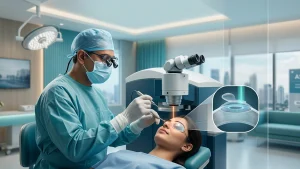
On the day of PRK surgery anesthetics are used for numbing the eye. The patient is kept awake, but should not feel pain. The surgeon will remove the outer layer of the cornea which is the corneal epithelium and then apply the laser correction as per the patient’s prescription.
The laser procedure is a quick process. Post treatment we place a soft bandage contact lens on the eye to protect the healing surface. We also provide eye drops and at home care instructions.
Even though the procedure is short in duration, patients should rest for the first few days. Dust, eye rubbing, swimming, and heavy screen use should be avoided until the doctor reports that healing is going well.
What to Expect During Recovery
PRK Recovery is a slower process than that of LASIK as the cornea’s surface has to regenerate. For the first few days patients may see that they have increased tearing, light sensitivity, burning, irritation, or that their vision is blurry. While these symptoms are to be expected they also usually improve as the wound heals.
Vision usually improves over time. In some patients we see better focus in a few days’ time, in others it may take several weeks for the vision to improve enough that they feel at ease. Mild variation is not a sign that the treatment did not work. That is part of the normal healing process.
During the healing phase it is very important to have follow up visits. The doctor will check the condition of the cornea, remove the bandage contact lens at appropriate times, and also watch out for signs of dryness, inflammation, or haze. Steroid and lubricating drops may be given out for a while.
Patients be aware that your body may take time to heal. The visual results of that healing may change over weeks or even a few months which is dependent on how your body responds.
Care Tips After PRK
After PRK Surgery, as prescribed, patients will have to use all medicines at the exact times. Drops for lubrication to ease dryness, anti inflammatory drops to aid healing. Also, wearing sunglasses is encouraged for light sensitivity and at the same time getting enough rest also is found to be a great help in the recovery process.
It is key that the eyes are not rubbed in this stage. Also patients should stay out of the pool, out of makeup, away from dust, and off of extra screen time during the first phase of healing. Also do not skip your follow up visits, which may be at a time that the eyes are already feeling better.
Good care post procedure increases comfort and supports the long term success of the treatment. Follow the doctor’s instructions closely until the eye has fully stabilized.
PRK at ASG Eye Care
At ASG Eye Care we only recommend PRK Surgery after we do a full refractive evaluation. We put safety, suitability, and long term comfort at the fore, not just quick removal of glasses. Each patient goes in for in depth testing which we use to develop a treatment plan for them.
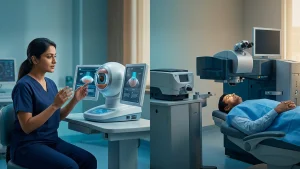
The evaluation may include prescription testing, corneal topography, pachymetry, tear film assessment, pupil measurement, and retinal screening. If PRK Surgery Eligibility is determined we will go over the benefits, risks, recovery time frame and also what to expect in simple terms.
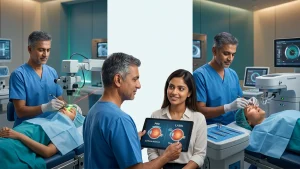
ASG Eye Care also provides info to patients on which PRK, LASIK, SMILE or any other Laser Vision Correction method is best for their eyes. PRK is a great and safe option for the right candidate which in turn will achieve you better vision.
Key Takeaway
PRK Surgery is a reliable surface laser option which does well to correct refractive errors in proper candidates. It may also be of great benefit for those with thin corneas, flap issues, or lifestyles that prefer a non flappy method.
The key step is proper screening. Eye power or age alone do not determine eligibility. We must look at corneal health, tear quality, prescription stability, and lifestyle. While PRK Recovery does take more time than that of LASIK, PRK Surgery may present very satisfactory long term results to many appropriate patients with the right care and follow up.
Frequently Asked Questions
1 Who is a good candidate for PRK?
A large group of patients which do well with PRK Surgery are adults that have stable eye power, healthy corneas, adequate corneal thickness, and no active eye disease. Also it may be a solution for people who do not do well with LASIK because of thin corneas or lifestyle related flap issues.
2 Is PRK better than LASIK?
PRK does not automatically outperform LASIK. In some cases both are very effective but which is best for you will depend on your corneal thickness, eye health, prescription, occupation, and what you expect in terms of recovery. Your doctor will determine the safest option after they evaluate.
3 How long does PRK recovery take?
Recovery is seen in the first few days as the surface layer heals, but vision improves over a number of weeks. Some patients report minor changes which may last for a few months until the final result is achieved.
4 Is PRK painful?
During PRK Surgery anesthetic drops are used to keep the eye comfortable. Post procedure symptoms may include irritation, watering, soreness and light sensitivity which may last for a few days. Medications and protective measures help to manage these.
5 Can PRK remove glasses permanently?
PRK which is a permanent procedure that changes the cornea, but it does out of natural age related changes in the eye. Many patients report prolonged freedom from the need for distance glasses, though reading glasses may still be required at later stage in life.