Symptoms of Corneal Dystrophy
Symptoms may vary depending on the type and severity of the condition, but common signs include:
Blurred or cloudy vision
Eye pain or irritation
Sensitivity to light (Photophobia)
Glare and halos around lights
Recurrent eye redness
Feeling of something stuck in the eye
Excessive tearing
Difficulty seeing clearly at night
Gradual vision loss
Some patients may remain symptom-free in the early stages.
Causes of Corneal Dystrophy
Corneal dystrophies are generally inherited genetic conditions that run in families. These disorders occur when abnormal proteins or deposits accumulate in different corneal layers.
Risk factors may include:
Family history of corneal dystrophy
Genetic mutations
Previous corneal injuries or surgeries (in rare cases)
Aging-related corneal changes
Unlike infections, corneal dystrophies are not contagious.
Types of Corneal Dystrophy
Fuchs’ Endothelial Dystrophy
This common form affects the innermost corneal layer (endothelium), leading to corneal swelling and blurry morning vision.
Lattice Corneal Dystrophy
Protein deposits form lattice-like patterns in the cornea, causing vision problems and recurrent corneal erosions.
Granular Corneal Dystrophy
Small opaque deposits appear in the cornea, gradually affecting vision clarity.
Map-Dot-Fingerprint Dystrophy
Also known as epithelial basement membrane dystrophy, this condition affects the outer corneal layer and may cause recurrent pain and irritation.
Macular Corneal Dystrophy
A rare inherited disorder causing progressive corneal clouding and severe vision impairment.
Diagnosis of Corneal Dystrophy
At ASG Eye Hospital, advanced diagnostic technology helps identify the type and severity of corneal dystrophy.
Slit Lamp Examination
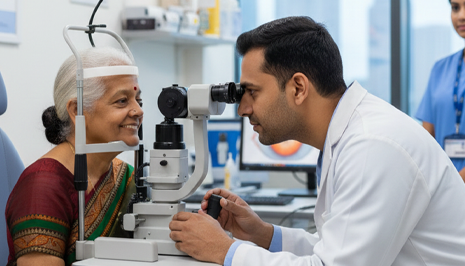
A slit lamp microscope allows specialists to examine corneal layers and detect abnormal deposits or swelling.
Corneal Topography
This imaging test maps the shape and curvature of the cornea to detect irregularities.
Pachymetry
Pachymetry measures corneal thickness and helps assess corneal swelling.
Specular Microscopy
This advanced imaging technique evaluates endothelial cell health in conditions such as Fuchs’ dystrophy.
Genetic and Family History Evaluation
Family history assessment may help identify inherited corneal conditions.
Corneal Dystrophy Treatment Options
Treatment depends on the type, severity, and symptoms of the disorder.
Lubricating Eye Drops
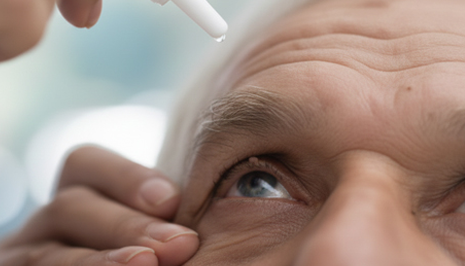
Artificial tears help reduce dryness, irritation, and recurrent corneal erosions.
Hypertonic Saline Eye Drops
These specialized drops reduce corneal swelling in endothelial dystrophies like Fuchs’ dystrophy.
Therapeutic Contact Lenses
Bandage contact lenses may help protect the cornea and reduce discomfort.
Laser Treatment (PTK)
Phototherapeutic Keratectomy (PTK) uses laser technology to remove abnormal corneal deposits and improve surface smoothness.
Corneal Cross-Linking
In selected cases, corneal strengthening procedures may help stabilize corneal structure.
Corneal Transplant Surgery
Advanced or severe corneal dystrophies affecting vision may require partial or full-thickness corneal transplant surgery.
Recovery After Corneal Dystrophy Treatment
Recovery time varies depending on the treatment type and severity of the condition.
Mild cases may improve with regular eye drops and monitoring
Laser procedures usually recover within a few weeks
Corneal transplant recovery may take several months
Regular follow-up visits are important to monitor disease progression and vision changes
Early diagnosis and ongoing care help maintain better long-term vision outcomes.
Complications of Untreated Corneal Dystrophy
Without proper treatment, corneal dystrophy may lead to:
Progressive vision loss
Persistent corneal swelling
Recurrent corneal erosions
Corneal scarring
Increased glare and light sensitivity
Need for advanced surgical treatment
Timely diagnosis and specialist care are essential to protect vision.
Advanced Technology for Cornea Care at ASG Eye Hospital
ASG Eye Hospital uses advanced ophthalmic technology for accurate diagnosis and treatment planning:
Corneal Topography
Specular Microscopy
Pachymetry
Optical Coherence Tomography (OCT)
Advanced Corneal Transplant Techniques
High-Precision Laser Systems
Why Choose ASG Eye Hospital for Corneal Dystrophy Treatment?
Experienced cornea specialists
Advanced diagnostic and imaging technology
Personalized treatment plans
Expertise in corneal laser and transplant surgeries
Comprehensive care for inherited corneal diseases
Network of 180+ eye hospitals across India