What Should You Do First If Holi Colours Enter Your Eyes?
Holi celebrations throughout India showcase their full beauty when people use colourful powders and water-based celebrations. The synthetic colors which people buy from stores contain chemical substances and heavy metal particles, together with materials that can trigger eye problems. People must take immediate, correct steps to handle eye color contact because this will help them stop additional eye damage.
The blog provides a detailed explanation of five essential actions that need to be taken when Holi colours enter your eyes. These eye care solutions provide you with practical methods to handle emergency situations with your eyes.
Rinse Your Eyes Immediately With Clean Water
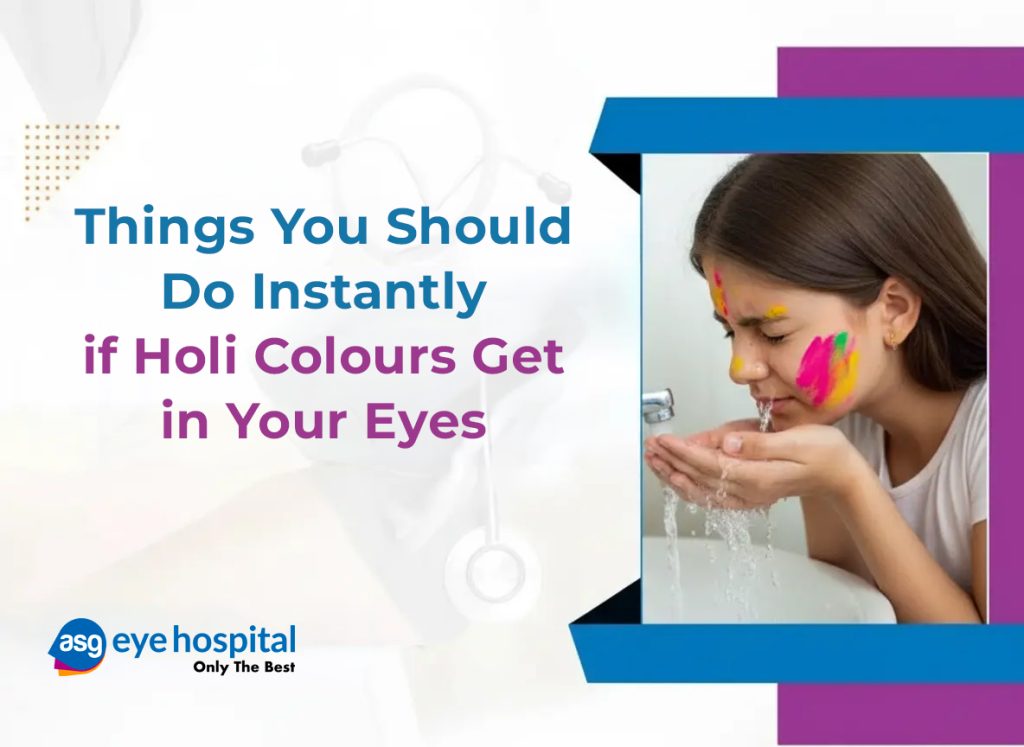
The first and most important step is to rinse your eyes thoroughly with clean, preferably running water.
Use room-temperature, clean water to flush the eyes for at least 10–15 minutes. This helps dilute and remove colour particles and chemical irritants from the eye surface. Keep your eyelids gently open while rinsing to allow water to wash across the entire eye.
If available, sterile saline solution can also be used. Avoid using rose water, eye drops without medical advice, milk, or any home remedies, as these may worsen irritation or introduce infection.
Prompt washing is one of the most effective eye care tips during Holi. Acting quickly reduces the risk of redness, burning, and inflammation.
If discomfort persists even after rinsing, it is advisable to consult an eye specialist hospital for professional evaluation.
Avoid Rubbing Your Eyes
Rubbing the eyes can cause further injury.
Particles of color will enter your eyes and remain between your eyelid and cornea. Rubbing causes increased friction which leads to corneal abrasions creating scratches on your eye surface. The medical condition creates multiple symptoms which include patients experiencing pain and tearing and light sensitivity and blurred vision.
Children have a strong tendency to rub their eyes whenever they experience any kind of discomfort. Staff members need the room to be quiet because they must help students wash their eyes with water.
People who follow the essential eye care instructions can protect themselves from developing serious medical conditions through their minor eye problems. People who experience persistent pain and excessive tearing and blurred vision should visit an ophthalmologist at an eye hospital in India.
Remove Contact Lenses Immediately
If you are wearing contact lenses when colour enters your eyes, remove them as soon as possible.
Contact lenses can trap colour particles and chemicals against the eye surface, increasing the risk of irritation or infection. Wash your hands thoroughly before removing the lenses. Once removed, do not reuse them unless they are properly disinfected and approved by your eye doctor. In many cases, it is safer to discard disposable lenses.
If you experience redness, discomfort, or blurry vision after removing the lenses, seek medical care at a reputable eye specialist hospital or among established eye care hospitals in india.
As part of preventive eye care tips, it is advisable to avoid wearing contact lenses while playing Holi. Protective eyewear is a safer alternative.
When Should You Seek Medical Attention?
Not all situations that involve color exposure need emergency medical treatment. Medical professionals should examine patients who show these particular symptoms:
- Severe or persistent eye pain
- Blurred or reduced vision
- Eye redness that persists despite all efforts to treat it
- Swelling around the eyes
- Sensitivity to light
The eyes experience nonstop tears or discharge
Ophthalmologists should be consulted immediately when any of these symptoms arise. The examination process at an Indian eye hospital allows medical professionals to detect conditions that include corneal abrasions and chemical conjunctivitis and allergic reactions.
India has multiple eye hospitals that offer emergency ophthalmic services throughout the festive period because they possess complete medical facilities. Patients who visit an eye specialist hospital that holds certification will receive precise diagnostic results together with suitable medical care.
The condition will become more severe if patients wait too long to see a doctor for chemical irritant exposure.
How Can You Protect Your Eyes Before Playing Holi?
Prevention is always better than treatment. Knowing how to protect eyes during Holi can significantly reduce the risk of injury.
Here are 5 ways to protect your eyes before stepping out to celebrate:
- Wear Protective Eyewear: Use sunglasses or protective glasses to create a physical barrier against colours and water splashes.
- Apply a Light Layer of Oil Around the Eyes: Applying coconut oil or petroleum jelly around (not inside) the eyelids may help prevent colours from sticking to the skin.
- Avoid Direct Colour Application on the Face: Request others not to forcefully apply colours near your eyes.
- Use Herbal or Certified Colours: Opt for skin-friendly and eye-safe colours from reliable sources.
- Avoid Contact Lenses During Celebrations: Glasses provide better protection compared to lenses during Holi.
- These preventive steps are practical eye care advice that can reduce the chances of irritation and injury. Understanding how to protect eyes effectively allows you to celebrate responsibly.
Following these 5 ways to protect your eyes is especially important for children, elderly individuals, and those with pre-existing eye conditions.
Why Is Eye Safety Important During Holi?
The eyes are delicate organs. Even minor injuries can cause discomfort and temporary visual disturbance. In rare but serious cases, untreated chemical exposure may lead to complications.
Festivals bring joy, but they also require awareness and responsibility. Reliable eye care tips and professional eye care advice can make a meaningful difference in preventing avoidable damage.
If symptoms do not improve after basic first aid, visiting an eye hospital in India or consulting specialists at established eye care hospitals in India is a prudent step.
What Is the Right Approach If Holi Colours Affect Your Eyes?
- You should remain calm when Holi colours reach your eyes because you must start treatment.
- You should wash your eyes with clean water until complete rinsing.
- You must avoid rubbing your eyes.
- You should handle contact lenses with caution to perform their removal.
- You should observe your symptoms to determine their development.
- You need to visit a doctor when your discomfort continues without stopping.
The festive celebrations become safer through these preventive measures combined with eye protection knowledge.
People at ASG Eye Hospital believe that your health protection requires continuous effort beyond special events. Festivals require safe enjoyment through the implementation of necessary safety measures and the execution of effective safety protocols.
You can keep your vision safe during Holi by using eye care tips and learning about five protective methods while getting immediate eye care when needed.
Your awareness will lead to your safety.
If you need immediate eye care during Holi or any festival, ASG Eye Hospital has convenient locations across India. We serve patients in ASG Hospital in Ahmedabad, ASG Hospital in Bhopal, ASG Hospital in Indore, ASG Hospital in Jaipur, ASG Hospital in Kolkata, ASG Hospital in Lucknow, ASG Hospital in Mumbai, ASG Hospital in Noida, and many other cities. Our emergency eye care services operate throughout festive seasons, ensuring you receive prompt professional attention when eye injuries occur. Find your nearest ASG Eye Hospital location for quick access to experienced ophthalmologists and advanced eye care facilities.
Frequently Asked Questions
1. Do Holi colours have the potential to create permanent damage to human eyes?
The body will recover from irritation most of the time when people receive treatment without delay. The chemical-based colours should be washed away immediately because they create potential life-threatening dangers. The risk of developing complications decreases when people seek professional eye care services without delay.
2. How long should I rinse my eyes after colour exposure?
The process requires continuous rinsing with clean running water for a duration of 10 to 15 minutes. This eye care recommendation stands as one of the most essential methods to reduce eye irritation.
3. Is it safe to use over-the-counter eye drops after Holi?
Medicated eye drops need to receive medical approval before patients can use them. The patients need to visit an eye specialist hospital to see an eye doctor when they experience persistent redness and pain.
4. Should children be treated differently if colours enter their eyes?
The first step requires people to rinse their eyes with clean water in a gentle manner. Indian eye hospitals provide professional evaluation services for symptoms that continue after treatment.
5. What is the safest way to prevent eye injuries during Holi?
People can protect their eyes during celebrations by using protective glasses, while they should not apply colour directly on their eyes.