Do road signs appear blurry while driving? Do you experience headaches after reading or using digital screens for long periods? These symptoms may indicate astigmatism, a common refractive error that affects how light enters the eye.
Astigmatism can occur in children and adults and often develops alongside other vision conditions such as nearsightedness or farsightedness. The good news is that early diagnosis and proper treatment can help restore clear and comfortable vision.
In this guide, we explain the early signs of astigmatism, its causes, diagnosis, and when you should consult an eye specialist.
What Is Astigmatism?
Astigmatism is a refractive error that occurs when the cornea or lens of the eye has an irregular shape. Instead of being perfectly round, the surface becomes uneven, causing light rays to focus at multiple points inside the eye.
As a result, objects may appear blurred, distorted, or stretched at both near and far distances.
Astigmatism may be present from birth or develop later in life. It can affect one or both eyes and may occur together with myopia (nearsightedness) or hyperopia (farsightedness).
Early Signs of Astigmatism
Many people ignore the early symptoms of astigmatism because they develop gradually.
Common warning signs include:
- Blurred vision at all distances
- Difficulty focusing on fine details
- Frequent headaches
- Eye strain after reading or screen use
- Squinting to see clearly
- Difficulty driving at night
- Increased sensitivity to light
- Seeing glare or halos around lights
Children may not always complain about blurred vision. Instead, they may sit closer to screens, rub their eyes frequently, or struggle with classroom activities.
What Causes Astigmatism?
Several factors can contribute to the development of astigmatism.
Genetics
Astigmatism often runs in families. Individuals with a family history of refractive errors may be more likely to develop the condition.
Irregular Corneal Shape
Most cases occur due to an uneven curvature of the cornea, preventing light from focusing correctly on the retina.
Eye Injury
Trauma to the eye may alter the shape of the cornea and affect vision.
Eye Surgery
Certain eye procedures can occasionally change corneal curvature.
Keratoconus
Keratoconus is a progressive eye condition that causes thinning and bulging of the cornea, leading to irregular astigmatism.
Age-Related Changes
Changes in the natural lens of the eye over time can contribute to lenticular astigmatism.
Who Is at Higher Risk of Astigmatism?
You may have a greater risk of developing astigmatism if:
- One or both parents have astigmatism
- You have other refractive errors
- You have keratoconus
- You have experienced an eye injury
- You have undergone previous eye surgery
Regular eye examinations are particularly important for individuals in these categories.
Common Signs of Astigmatism and What They Mean
| Astigmatism Symptom | What You May Experience |
|---|---|
| Blurred Vision | Difficulty seeing clearly at near and far distances |
| Frequent Headaches | Headaches caused by constant focusing effort |
| Eye Strain | Tired or uncomfortable eyes after reading or screen use |
| Squinting | Narrowing the eyes to improve focus |
| Night Vision Problems | Difficulty driving or seeing clearly in low light |
| Light Sensitivity | Discomfort in bright environments |
| Halos Around Lights | Rings or glare around headlights and lamps |
| Difficulty Focusing | Trouble seeing fine details clearly |
How Is Astigmatism Diagnosed?
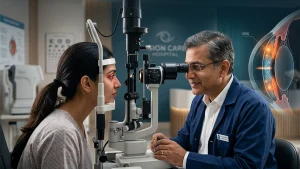
Astigmatism can be detected through a comprehensive eye examination.
Visual Acuity Test
Measures how clearly you can see letters and objects at different distances.
Refraction Test
Determines the exact prescription needed for vision correction.
Keratometry
Measures the curvature of the cornea.
Corneal Topography
Creates a detailed map of the corneal surface to identify irregularities.
Advanced Diagnostic Imaging
Modern diagnostic systems provide highly accurate measurements for treatment planning.
When Should You See an Eye Doctor?
You should schedule an eye examination if you experience:
- Persistent blurry vision
- Frequent headaches
- Eye strain during daily activities
- Difficulty seeing at night
- Changes in vision quality
- Increased glare around lights
Early diagnosis can help prevent visual discomfort and improve overall quality of life.
Can Astigmatism Be Treated?
Yes. Astigmatism can be effectively managed using:
- Prescription eyeglasses
- Toric contact lenses
- Laser vision correction procedures
- Advanced refractive surgery options
The most suitable treatment depends on your eye health, prescription, lifestyle, and visual requirements.
Conclusion
Astigmatism is a common vision condition that can affect daily activities if left untreated. Recognizing the early signs and seeking timely eye care can help maintain clear vision and prevent unnecessary eye strain.
If you are experiencing symptoms of astigmatism, a comprehensive eye examination can help determine the cause and identify the most appropriate treatment options.
FAQs
1. What is astigmatism?
Astigmatism is a common refractive error caused by an irregularly shaped cornea or lens, leading to blurred or distorted vision.
2. What are the first symptoms of astigmatism?
Common early symptoms include blurred vision, headaches, eye strain, squinting, and difficulty seeing at night.
3. Can astigmatism worsen over time?
Yes. Astigmatism may change gradually over time, making regular eye examinations important for monitoring vision.
4. Is astigmatism hereditary?
Yes. Genetics is one of the most common risk factors, and the condition often runs in families.
5. How is astigmatism diagnosed?
Eye specialists diagnose astigmatism through visual acuity testing, refraction testing, keratometry, corneal topography, and comprehensive eye examinations.
6. Can children have astigmatism?
Yes. Astigmatism can occur in children and may affect learning, reading, and overall visual development if left uncorrected.
7. Can astigmatism be corrected?
Yes. Astigmatism can be treated with prescription glasses, toric contact lenses, or laser vision correction procedures.
8. When should I see an eye doctor for astigmatism symptoms?
You should schedule an eye examination if you experience persistent blurry vision, headaches, eye strain, or difficulty seeing at night.