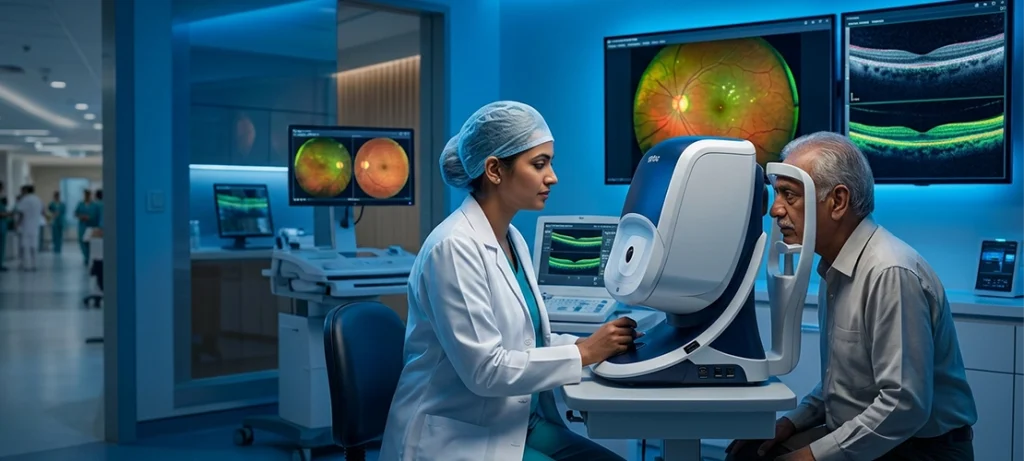
Bhopal balances its fast-changing urban lifestyle with its rich cultural heritage. Beneath this change, however, is diabetic retinopathy, a slowly developing health issue that most adults do not take seriously enough. More and more adults in Bhopal are unknowingly risking their sight as the cases of diabetes in Madhya Pradesh continue to increase. For those seeking diabetic eye care in Bhopal. The challenge begins with awareness itself. When something is wrong in the eyes, they hardly hurt, and this is exactly what makes this disease so fatal and so easy to ignore until it is too late.
What Is Diabetic Retinopathy and Why Is It Dangerous?
Diabetic retinopathy is a diabetes-related eye disease that damages the blood vessels of the retina. It often develops without pain or noticeable symptoms in the early stages, making regular retinal examinations essential. If left untreated, diabetic retinopathy can lead to permanent vision loss or blindness. Early diagnosis and timely treatment can help preserve eyesight and prevent complications.
Understanding What Diabetic Retinopathy Actually Is
Diabetic retinopathy is a side effect of diabetes which directly damages the blood vessels of the retina which is the light sensitive layer at the back of the eye. When the blood sugar level is sustained over a lengthy period of time, these small capillaries begin to leak, swell, and form abnormally. This ultimately disrupts the manner the eye perceives and delivers visual information to the brain. Since the condition is painless and does not necessarily impair vision in the early stages, most people delay visiting an eye doctor until significant damage has already occurred. It is one of the main causes of adult blindness worldwide, making timely eye doctor consultations essential for anyone living with diabetes.
Why Bhopal Adults Are Particularly at Risk
In the last decade, lifestyle diseases have tremendously risen in Bhopal. Sedentary work cultures, changing diets, high stress levels along with lack of awareness of annual health screening have often caused type 2 diabetes to take years before it is diagnosed. The number of adults in the city diagnosed with diabetes is only diagnosed after a complication has occurred, and in a disturbing number of cases, the complication is one that impacts their vision. Fortunately, advances in eye technology are now enabling earlier detection of such complications, yet the eye problems of diabetic retinopathy are still gaining urgency in Bhopal because of the delayed diagnosis of diabetes and the lack of regular eye health check-ups.
The Four Stages Nobody Talks About Clearly Enough
The four stages of diabetic retinopathy are mild non-proliferative, and moderate non-proliferative, along with severe non-proliferative, in addition to proliferative retinopathy. During the first three phases, the retina’s blood vessels deteriorate and start to leak. New, brittle blood vessels begin to form across the retina and into the vitreous gel of the eye by the fourth and most dangerous stage. Permanent eyesight deterioration is more likely at each level. The majority of individuals in Bhopal who reached the later stages were unaware that the illness was getting worse because they had not previously felt any discernible discomfort.
The Direct Connection Between Blood Sugar Control and Eye Health
The extent of retinal damage suffered by a diabetic person over time is directly proportional to their blood sugar control effectiveness. It is also possible to delay the onset of retinopathy when adults regularly keep their blood sugar levels within a healthy range. It is not only medication but also it involves stress management, healthy food, physical activities, and periodic check-ups. Realizing that the eyes are on the frontline in uncontrolled blood sugar levels should be able to make adults in Bhopal manage their diabetes and make improved everyday eye care choices.
Diabetic Retinopathy: Stages and Their Impact on Vision
| Stage of Diabetic Retinopathy | What Happens |
|---|---|
| Mild Non-Proliferative Retinopathy | Small retinal blood vessels begin to weaken and leak |
| Moderate Non-Proliferative Retinopathy | Blood vessel damage increases, affecting retinal nourishment |
| Severe Non-Proliferative Retinopathy | Significant blockage of retinal blood vessels occurs |
| Proliferative Diabetic Retinopathy | Abnormal new blood vessels develop, increasing the risk of severe vision loss |
| Diabetic Macular Edema | Fluid accumulates in the macula, causing blurred central vision |
| Advanced Retinal Damage | Increased risk of permanent vision impairment or blindness |
Diagnosis and What a Retinal Examination Involves
Dilated eye examination is a simple, painless examination that is used to diagnose diabetic retinopathy by the eye specialist. Following the enlargement of the pupil using special eye drops, an ophthalmologist examines the retina to determine whether the eye has been injured, or there is leakage or unusual vascular formation. In more complicated cases, a fluorescein angiography scan or optical coherence tomography scan can be recommended to accurately establish the scope of damage. Whether their eyesight appears normal or not, adults in Bhopal with known diabetes are highly advised to undergo this testing at least once annually.
Treatment Options and the Importance of Not Waiting
Diabetic retinopathy can be detected early and the eyes closely monitored and the underlying diabetes treated. The best eye surgeon treat advanced cases with anti-VEGF injections, which are injected directly into the eye to stop unwanted growth of vessel; laser photocoagulation, which is used to seal leaking blood vessels; and, in severe cases, with vitrectomy, which removes blood or scar tissue in the eye. Prolonged high blood sugar can also affect the eye lense, causing cloudiness that compounds vision damage over time. All these eye treatments are far more effective when instituted at a young age. The largest error adults in Bhopal still do is to wait until their vision significantly deteriorates before getting assistance.
Conclusion
Diabetic retinopathy is a preventable and manageable disease instead of a side effect of diabetes when handled with care and timely interventions. Diabetic adults in Bhopal have a role to play in ensuring they take care of their eyes as much as they do their blood sugar levels. Seeking retina treatment Bhopal via top eye hospital like ASG Eye Hospital at the earliest sign of vision changes can make all the difference between preserving sight and facing irreversible loss. No amount of self-evaluation can ever disclose what one yearly eye test can. As the eyes fail to communicate distress signals as the rest of the body does, the protection of the eyes only depends on pre-emptive, informed choices before the damage is done.
FAQs
1. What is diabetic retinopathy?
Diabetic retinopathy is a complication of diabetes that damages the retina’s blood vessels and can lead to vision loss if not treated.
2. What are the early symptoms of diabetic retinopathy?
Early stages often have no noticeable symptoms. As the condition progresses, symptoms may include blurred vision, floaters, dark spots, and vision loss.
3. Why are diabetic retina problems increasing in Bhopal?
Rising diabetes rates, sedentary lifestyles, delayed diagnosis, and lack of regular eye screenings contribute to increasing cases of diabetic retinopathy.
4. How often should diabetic patients get an eye examination?
People with diabetes should undergo a comprehensive dilated retinal examination at least once a year or as advised by their eye specialist.
5. Can diabetic retinopathy cause blindness?
Yes. If left untreated, diabetic retinopathy can lead to severe vision impairment and permanent blindness.
6. How is diabetic retinopathy diagnosed?
Diagnosis involves a dilated retinal examination, retinal imaging, Optical Coherence Tomography (OCT), and sometimes fluorescein angiography.
7. What treatments are available for diabetic retinopathy?
Treatment options may include anti-VEGF injections, laser photocoagulation, vitrectomy surgery, and improved diabetes management.
8. Can diabetic retinopathy be prevented?
Maintaining healthy blood sugar levels, controlling blood pressure, following a healthy lifestyle, and attending regular eye screenings can significantly reduce the risk.