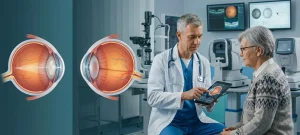
What is the meaning of that grade, also should I be worried? That is what cataract grading is for. Cataract grading is a standard practice which ophthalmologists use to determine the stage of a cataract. Instead of just reporting that a cataract is present they use grading to report on the degree the natural lens has become opaque, the extent vision is affected, and if treatment is indicated. By understanding cataract grading patients may make better informed health care decisions and also know the timing for when they may want to pursue treatment.
What Is Cataract Grading?
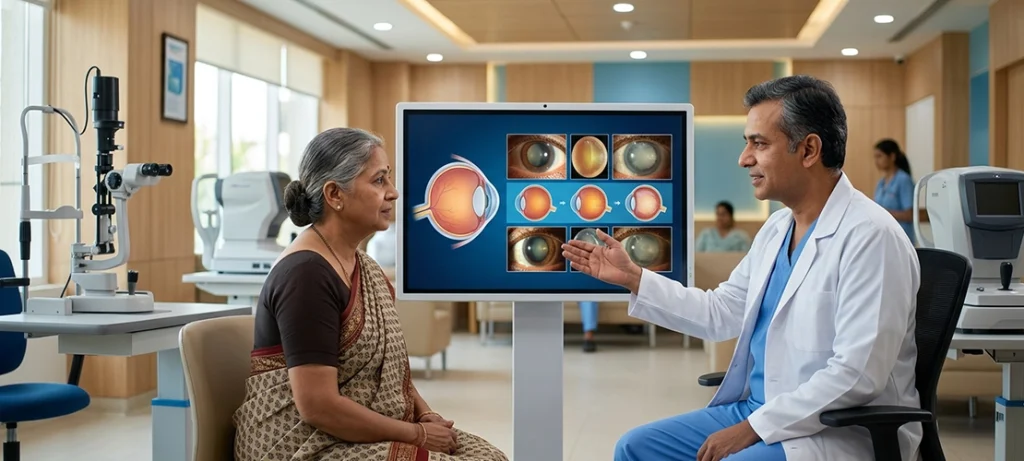
A cataract forms when the natural lens of the eye slowly goes cloudy, thus light has a hard time passing through clearly. As the cloudiness increases so does the blurriness of vision which in turn may become dim or foggy. To determine the extent of this we use cataract grading systems which put the degree of lens change into perspective.
The goal of cataract grading is to not only report what the cataract looks like but also to see how it is affecting a patient’s day to day life. Reading, driving, identifying faces, and the use of digital screens all may become more difficult as cataracts progress.
In the eye exam the doctor uses special equipment to look at the lens and gives a grade according to the cataract’s density and where it is located. This process of cataract grading in turn helps to put together a treatment plan and to track the progress over time.
Why Do Doctors Perform Cataract Grading?
Not all cataracts require prompt treatment. Some cataracts may stay at a low grade for years while others may progress fast. This is what cataract assessment does for the most part. Through cataract assessment which is a key element in ophthalmic care we are able to compare notes between eye exams and tell if the cataract is stable or getting worse. Also with the help of cataract assessment we are able to plan out procedures and pick the best surgical approach when treatment is needed. What we see is that patients think cataracts are only diagnosed when vision is very impaired. But in fact routine cataract assessment allows us to see early signs of change before we see large scale vision loss.
Understanding the Cataract Grading Scale 1 5
Many clinics use a simplified cataract grading scale 1 5 to explain cataract severity to patients. While advanced classification systems exist, the cataract grading scale 1 5 provides an easy-to-understand framework.
| Grade | Cataract Severity | Typical Vision Impact |
| Grade 1 | Very Mild | Minimal or no noticeable symptoms |
| Grade 2 | Mild | Slight blurring, glare in bright light |
| Grade 3 | Moderate | Noticeable vision difficulties |
| Grade 4 | Advanced | Significant reduction in vision quality |
| Grade 5 | Severe/Mature | Major visual impairment, daily activities affected |
The cataract grading scale 1 5 helps patients understand where they fall on the spectrum of cataract development. However, treatment decisions are never based solely on the grade. Visual needs and lifestyle factors are equally important.
What Happens at Each Stage of Cataract Grading?
In the early stage of cataract grading lens changes will be noticed by the doctor which at this point do not cause great vision issues. Patients may not see any symptoms at all. As cataract grading progresses into moderate stages individuals often see increase in glare, night time driving difficulty, color-fading, and reduced contrast sensitivity. Reading may require brighter lights, and prescription changes may become more frequent. In advanced stages of cataract grading vision does become very impaired. Daily activities may become a challenge and many patients at this stage begin to look into cataract surgery to restore vision. At the highest levels of the cataract grading scale 1 5 we see very mature cataracts which have become very dense and opaque. At this point surgery is usually recommended.
Types of Cataracts Doctors Grade
Different cataracts affect different parts of the lens. During cataract grading, ophthalmologists evaluate the type as well as the severity.
| Cataract Type | Area Affected | Common Symptoms |
| Nuclear Cataract | Center of the lens | Gradual vision blur, color changes |
| Cortical Cataract | Outer edges of the lens | Glare, halos, light sensitivity |
| Posterior Subcapsular Cataract | Back of the lens | Difficulty reading, glare in bright light |
| Mature Cataract | Entire lens | Significant vision loss |
Each type progresses differently, making accurate cataract grading essential for treatment planning.
How Is Cataract Grading Performed?
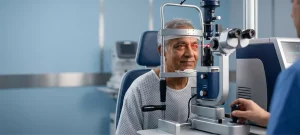
The process of cataract grading is a pain free event which usually takes place at the time of a routine eye exam. At the slit lamp microscope the ophthalmologist goes into great detail in the examination of the lens. During the exam the doctor notes the density, location and appearance of the cataract. That data is then recorded and is put against set cataract grading criteria. In many cases we use pupil dilation to get a better view of the lens. The results of the cataract grade are then put in relation to the patient’s visual issues and overall eye health.
Does a Higher Cataract Grade Mean Surgery Is Necessary?
A popular mistake is the thought that surgery is a last option at the point of the most advanced cataract grading scale 1 5. In fact it is the degree to which the cataract is affecting daily life that determines the go ahead for surgery. Some patients with mid level cataract may go for the op as their job, driving, or leisure are impaired. Also at the very advanced stages some do fine and still opt to watch and wait. Thus ophthalmologists look at the cataract grade report also the patient’s quality of life before putting forth a recommendation.
What Doctors Check Beyond Cataract Grading
Although we have cataract grading which is very useful doctors look at many other issues before they determine a treatment plan. This includes visual acuity, glare sensitivity, retinal health, corneal condition, and also the presence of other diseases like glaucoma or diabetic retinopathy. We are trying to figure out if the cataract is really the cause of the patient’s symptoms and if in fact cataract surgery will improve vision. A full assessment is done in order to tailor the treatment to each individual’s needs.
Cataract Symptoms That Should Not Be Ignored
Many patients present for evaluation which they have noticed to be a while after the onset of persistent cataract symptoms that may include blurred vision, headlight glare, difficulty with reading, faded color vision, or a need for frequent changes in their prescription. What we see at the time of the grade of the cataract may in large part determine the degree of visual impairment which is present which is very much a per person issue. If you are seeing your cataract symptoms progress you should schedule a comprehensive eye exam.
When Should You Consider Cataract Surgery?
Modern cataract surgery is a very safe and successful procedure which we see played out around the world. As cataracts progress and vision related quality of life issues present themselves, surgery may be the best solution. In the course of cataract eye surgery the cloudy natural lens is removed and we put in a clear artificial intraocular lens. Most patients see great improvement in their vision post procedure. Today we see in the field of cataract eye surgery which lenses to use are tailored to the patient’s lifestyle and visual needs.
Cataract Care at ASG Eye Hospital
At our ASG Eye Hospital we have specialists that use advanced diagnostic technology to perform in depth cataract assessment and also look at overall eye health. From early lens changes to advanced cataracts we give each patient personalized advice based on clinical results and visual requirements. We do comprehensive assessments, we use the best surgical methods and also we are into ongoing patient education which in turn helps us to see that each individual gets the most appropriate care at the right time.
Frequently Asked Questions
1 What is cataract grading?
Cataract grading is the assessment of the degree of lens clouding. It also is what ophthalmologists use to determine the stage of a cataract and if treatment is needed.
2 What is the cataract grading scale 1 5?
The cataract grading scale 1 5 is a put together system which puts cataracts into very mild (Grade 1) to severe or mature (Grade 5).
3 Does a Grade 3 cataract require surgery?
Not always. Although at Grade 3 a person may notice changes in their vision, the requirement for surgery is based on how daily life is affected.
4 How often should cataract grading be performed?
Patients that have been diagnosed with cataracts should have regular eye exams. The frequency will depend on age, symptoms, and rate of cataract progression.
5 Can cataract grading predict vision after surgery?
Grading does help to determine severity but in the end visual results also depend on retinal health, corneal condition and other eye health issues.
6 What are the most common cataract symptoms?
Common symptoms of cataract include blurred vision, glare, halos around lights, poor night vision, faded colors, and frequent changes in eyeglass prescriptions.