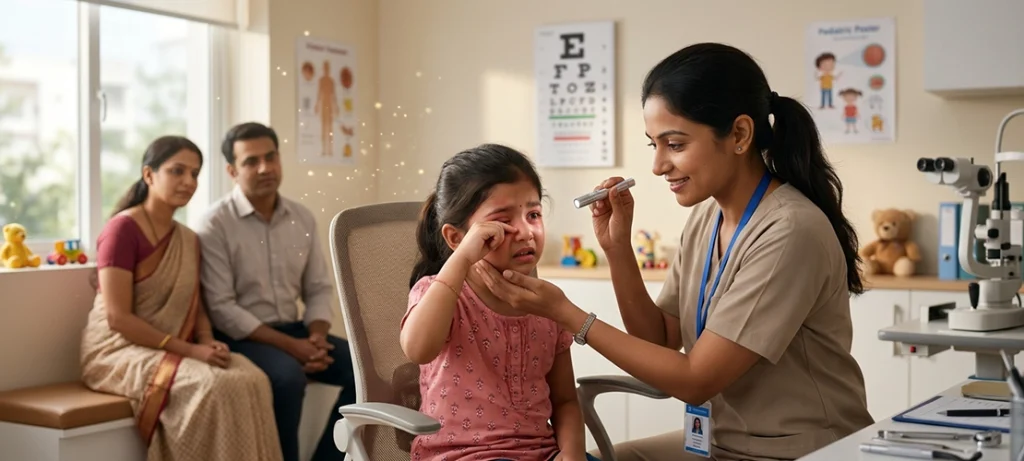
When a child reports that their eyes are itchy and puffy upon waking or is seen to be a lot of eye rubbing what may present as a case of eye infection at first is very often not. In most of these cases the issue is that of allergic conjunctivitis which is a very common eye allergy which in turn affects the clear tissue of the white of the eye and the inside of the eyelids. It may look very concerning especially when the eyes also turn red and swollen, but in general is very much a treatable issue with proper care.
In the case of allergic conjunctivitis as opposed to that which is caused by bacteria or virus this is an allergic reaction which is also non contagious. A child does not pass it to playmates as they go about their business in the class. Though the discomfort is great it does still affect school work, reading, sleep, outdoor play, and screen use. That is why it is important for parents to recognize the allergic conjunctivitis symptoms early and not to reach for random eye drops without first consulting a medical professional.
What Is Allergic Conjunctivitis in Children?
In certain situations a child may have an over reaction of the immune system to what is in fact a harmless substance which includes pollen, dust, pet dander, mold, or air pollution. Upon contact of the eye surface with the allergen the body releases chemicals which in turn cause itchy, red, teary and swollen eyes. Also the child may resort to constant rubbing of the eyes which in turn may worsen the irritation.
The issue may present at certain times of the year, in particular when there is a rise in pollen counts but also throughout the course of the year in which the child has been in contact with indoor allergens like dust mites, pets, or mold. Also some kids have sneezing, a runny nose, asthma, or skin allergy. In these cases the eye issue may be a part of a large-scale allergy issue.
Although it is a common issue, don’t dismiss frequent or severe allergic conjunctivitis symptoms. Repeat rub of the eye can irritate the eye surface which in turn may cause more inflammation. A visit to the eye specialist will help determine what type of care your child requires eye allergy treatment, eye infection treatment, or some other care.
Common Symptoms in Children
The most typical sign is itching.It is that kids rub both eyes out at the time of coming home from school, playing outdoor games, cleaning a dusty room, or being around pets. We see redness and tearing also as very common symptoms but it is the intense itching which is the best indicator that the issue is an allergy and not an infection.
Allergic conjunctivitis may present itself in varying degrees from mildly uncomfortable to quite severe. Some kids only experience itchiness and tearfulness, others get swollen eyelids, burning sensation, gooey discharge, and sensitivity to light.The allergic conjunctivitis symptoms usually affect both eyes, although one eye may look worse if the child rubs it more.
| Symptom | How it may appear in a child | What parents should notice |
| Itching | Child rubs the eyes often | Usually the strongest allergy clue |
| Redness | Eyes look pink or bloodshot | Often affects both eyes |
| Watering | Tears keep coming without crying | May worsen outdoors or around dust |
| Puffy eyelids | Eyelids look swollen, especially in the morning | Can make the child look tired |
| Burning or gritty feeling | Child says something is in the eye | May occur with dryness or rubbing |
| Stringy mucus | Sticky, thread-like discharge | More common in stronger allergic reactions |
| Light sensitivity | Child avoids bright light | Needs attention if severe |
Allergic conjunctivitis symptoms should be reported early when they affect reading, school performance, or daily comfort. If there is pain, reduced vision, thick yellow discharge, injury, or severe light sensitivity in the child it may not be a simple allergy which should be evaluated by an ophthalmologist.
What Causes Eye Allergy in Children?
The root cause is exposure to allergens. We see that grass and tree pollen, dust mites in bedding and on curtains, pet dander, mold, second hand smoke, strong fragrances, air pollution and at times cosmetics or eye make up used near the child’s eyes are common triggers. Also, kids with allergic rhinitis, asthma, eczema or a history of allergy in the family are at a greater risk of getting this eye allergy. Also very importantly, although eye rubbing may provide some relief at the time it usually does more harm by increasing the swelling and redness.
| Trigger | Common source | Practical prevention tip |
| Pollen | Trees, grass, flowers, outdoor air | Wash face after outdoor play |
| Dust mites | Bedding, carpets, curtains, soft toys | Wash bedding regularly and reduce dust collection |
| Pet dander | Cats, dogs, animal fur | Keep pets away from pillows and study areas |
| Mold | Damp walls, bathrooms, humid spaces | Keep rooms dry and well ventilated |
| Smoke and pollution | Traffic, cooking smoke, tobacco smoke | Avoid direct exposure and use protective eyewear outdoors |
| Strong fragrances | Perfumes, sprays, room fresheners | Avoid spraying near the child’s face |
How Is It Different from Eye Infection?
A red eye in a child may be due to allergy, infection, dryness, irritation, or injury. That is why it is not always true that a red eye is a sign of infection. Allergy usually brings about very itchy and watery eyes, on the other hand bacterial infection may present with thick yellow or green discharge which sticks the eyelids together. Viral conjunctivitis may also be very contagious and at times is associated with cold or fever symptoms.
This issue is that antibiotics do not in fact treat eye allergies in the absence of an infection. Also, it is out of question that we use steroid drops in kids without care. They do require close medical attention. If the diagnosis is not clear at all, an ophthalmologist will determine if the child has an issue with eye allergy or eye infection.
Best Treatment Options for Children
Treatment is based on the child’s age, symptom severity, allergy pattern, and results of the eye exam. In mild cases we see improvement with avoidance of allergens, use of cold compresses, lubricating eye drops, and better hygiene. Also we encourage that the child not rub the eyes and ask parents to keep the child’s nails short to reduce irritation from scratching.
In children who have recurrent allergic conjunctivitis symptoms the doctor may prescribe anti allergy eye drops which include antihistamine or mast cell stabilizer drops. These medicines will put out the allergic reaction and reduce itchy, red, watery eyes. In very severe cases of the issue short term use of mild steroid eye drops may be used but that is to be done under medical supervision.
Parents should think beyond redness and discharge. If the child is having sneezing, runny nose, asthma, or skin allergy it may require a team approach to care. By managing the total allergy picture we may see less eye based allergy issues and improved quality of life for the child.
Home Care That Can Help
Home care is best for allergic conjunctivitis symptoms which do not progress to serious conditions. For itchy swollen eyes we recommend a cold compress over closed lids. Also after outdoor play a face wash will remove pollen and dust. Also we clean pillow cases, practice regular hand washing and avoid sharing towels which in turn will reduce irritation and the risk of secondary infection.
Artificial tears which are also known as lubricating drops may help to wash out allergens from the eye surface and reduce dryness. But medicated drops should be used only as per that which is advised by a health professional. If you are still experiencing allergic conjunctivitis symptoms on a recurring basis it is best to visit an eye specialist rather than to continue with self treatment.
When Should Parents Visit an Eye Doctor?
Parents should take your child in for an eye exam if they are presenting with recurring allergic conjunctivitis symptoms which also include lasting more than a few days or which are affecting your child’s comfort and routine. Also bring them in if there is pain, blurred vision, marked swelling, one sided very red eyes, thick discharge, injury, or light sensitivity.
In little ones eye health requires extra attention as at times they don’t put into words what is ailing them. May just avoid reading, blink a lot, rub at their eyes, or report to have a headache. That which they are doing is in response to allergy, refractive error, dry eye, infection or other eye issues. A full eye exam is the way to determine the exact issue.
At ASG Eye Hospital, children with this condition are evaluated carefully to confirm the diagnosis and rule out other causes of red eye. The plan may include home care guidance, safe prescription drops, prevention advice, and follow-up when needed.
Can It Affect Vision?
Most in the mild cases permanent vision damage does not present. But we see that which is an ongoing issue of rubbing, severe inflammation, or untreated recurring allergy which in turn irritates the eye surface and affects daily comfort. In some kids persistent allergy may be that which leads to more serious forms of eye allergy which in turn require specialist care. Parents shouldn’t panic but also should not ignore allergic conjunctivitis symptoms that keep coming back. At the first sign of it you should seek treatment which will in turn control inflammation, reduce rubbing, and help the child get back to school, reading, screen use and play more comfortably.
ASG Eye Care
At ASG Eye Care we have a child centered approach which goes beyond just treating redness. Our doctors will look at the full picture which includes the pattern of symptoms, allergy history, health of the eye surface, condition of the eyelid and signs of infection. This in turn will determine if the child requires allergy drops, lubricants, a hygiene regime or some other form of care. We aim to safely reduce allergic conjunctivitis symptoms and at the same time prevent recurrence. Also we guide parents on when to resume prescribed drops, when to bring the child in for a follow up and what signs to look out for which may require attention. For families that are in search of eye allergy or eye infection treatment a visit to a trusted eye hospital is recommended which in turn will help to avoid self medication which may be unsafe.
Key Takeaway
Allergic conjunctivitis in kids is a common issue, uncomfortable and very recurrent, but in most cases it may be very much under control if the correct diagnosis is made early on with the right treatment. It’s the itch that is the main symptom in fact with redness, swelling in which also the eyes will be very watery. Also the allergic conjunctivitis symptoms present similarly so it is best that parents take their child out of school rather then self diagnose and to get a proper medical evaluation when the symptoms are at all persistent, severe or out of the ordinary.
With timely care, allergen control, and proper follow-up, most children feel better and return comfortably to normal activities. A visit to an eye hospital can make a big difference when red, itchy eyes keep coming back.
Frequently Asked Questions
1. What are the common allergic conjunctivitis symptoms in children?
The most common signs are itchy eyes, redness, watering, puffy eyelids, burning, and at times stringy mucus. Itch is usually the strongest sign. If the child has pain, blurred vision, or thick discharge, an eye doctor should be seen.
2. Is allergic conjunctivitis contagious?
No, in general what we see is that allergic conjunctivitis is not a contagious condition as it is a result of an allergy which in turn is brought on by non-infectious agents like pollen, dust mites, mold, pet dander, smoke, pollution, and strong fragrances. Also we see that red eyes from an infection can be passed around which is why an accurate diagnosis is important when symptoms are not clear.
3. What causes allergic conjunctivitis in children?
As for what causes allergic conjunctivitis in kids, well it can be set off by pollen, dust mites, mold, pet dander, second hand smoke, pollution, and also strong perfumes. Also it is more prone to repeat in kids with asthma, eczema, seasonal allergies, rhinitis, atopic dermatitis or a history of allergies in the family.
4. How is allergic conjunctivitis treated in children?
Treatment may help you avoid triggers, use of cold compresses, lubricating drops, and anti allergy eye drops as prescribed by an ophthalmologist. In severe cases stronger medication may be required for a short time but steroid drops in particular should be used under medical supervision.
5. When should I take my child to an eye hospital?
You should visit an eye hospital if symptoms are severe, keep coming back, last more than a few days, or are associated with pain, reduced vision, thick discharge, injury, or strong light sensitivity. Early care helps prevent wrong treatment and gives faster relief.