A gonioscopy eye test is simple but a very important diagnostic procedure is the gonioscopy eye test which we use to look at the eye drainage angle that is the part of the eye which is responsible for the outflow of fluid. Many patients are hearing this for the first time at their eye examination, in particular when we are trying to determine their glaucoma risk. The name may sound technical but the procedure is usually very quick, painless and very useful for us to see how the front of the eye is doing.
At ASG Eye Care we report that which gonioscopy eye test is very much a part of what we do when an ophthalmologist requires a better look at the eye drainage angle during a glaucoma screening. We use this to determine if the angle is open, narrow or closed. What we see there is important: a blocked or narrow outflow tract can cause pressure to build up in the eye which in turn may cause glaucoma which is why early diagnosis and treatment is so important.
What Is a Gonioscopy Eye Test?
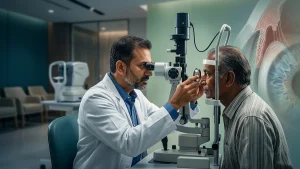
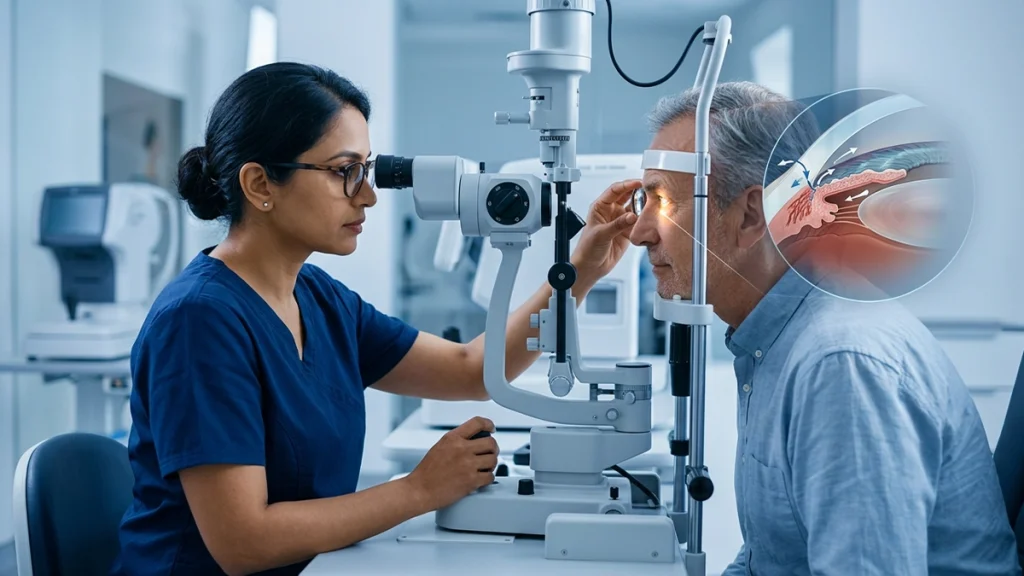
A gonioscopy eye test procedure is used by the doctor to see the angle between the cornea and the iris. That area does not present well in a routine torchlight exam or basic slit-lamp eye examination. To do this properly the ophthalmologist will put a special mirrored contact lens which also numbs the eye. This lens reflects the hidden angle elements and gives the doctor a view of the eye drainage angle.
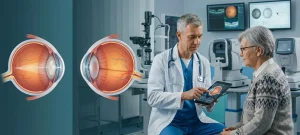
During a gonioscopy eye test, the doctor will look at what we call the drainage angle which is where the fluid leaves the eye and goes out. This fluid which is produced within the eye and what we term the aqueous humor also leaves through the eye drainage angle. If that angle is too narrow or closed off pressure may build up in the eye which is what we see in glaucoma screening so this is when the test is of great importance.
The test does not serve the purpose of a vision power check. In a routine eye examination what is assessed is if you need glasses, have cataracts, or if there is any sign of eye disease, but in a gonioscopy eye test we look at the eye’s drainage system in detail. The gonioscopy results the doctor is able to determine if the patient has open angle glaucoma, narrow angles, is at risk for angle closure or is affected by some other condition which pertains to the eye’s angle.
Why Is Gonioscopy Done?
A gonioscopy eye test is for the most part to assess glaucoma risk, also we use it for other eye issues. What we look at is the structure of the eye drainage angle and to see if the patient has an open angle, narrow angle or closed angle. That info is key because the treatment for open angle glaucoma and angle closure glaucoma will differ.
In many of the cases glaucoma develops silently. There may not be pain, redness, or marked change in vision at the early stage. That is the reason glaucoma screening is important , especially for people over 40, those with a family history of glaucoma, diabetics, persons with high intraocular pressure or those with narrow angles. Gonioscopy eye tests can identify risk related to the angle before symptoms present.
Doctors also order this test post eye injury, before certain laser procedures, before glaucoma surgery, or when eye pressure is out of the ordinary. Also a patient may present for a routine eye examination and the doctor may see signs which put into question the angle which will require evaluation. In which case the gonioscopy eye test provides clarity and rules out guesswork.
| Reason for Gonioscopy | Why It Matters |
| High eye pressure | Helps identify whether pressure is linked to open or narrow drainage angles |
| Glaucoma suspicion | Supports accurate glaucoma screening and diagnosis |
| Narrow angle risk | Shows if the eye drainage angle may close suddenly or gradually |
| Eye injury history | Checks for angle damage after trauma |
| Before laser or glaucoma treatment | Helps plan the safest and most suitable treatment |
| Unclear eye pressure changes | Improves interpretation of gonioscopy results with other tests |
How the Gonioscopy Procedure Is Performed
In the clinic as part of a full eye examination the gonioscopy gonioscopy eye test is conducted. First the doctor will put in numbing drops which make the surface of the eye comfortable. Then a short while after the drop is put in the eye, a little gel may be applied to the lens at which point the lens is gently placed on the eye. Maybe a bit of a touch or pressure sensation, but the test should not be painful.
While the lens is in place the patient seats at the slit lamp which is the microscope an ophthalmologist uses. The doctor uses light and magnification to look at the eye drainage angle. At times the patient will be asked to look in various directions for a few seconds which in turn allows for proper assessment of the angle. The actual gonioscopy eye test is a very quick process and takes only a few minutes for each eye.
After the removal of the lens vision may be a little blurry for a short while due to the gel or drops. Some patients report a little watering or irritation which goes away fast. As the test doesn’t include cutting, injection or surgery most people are able to get back to their routine right after the eye examination unless the doctor gives special instructions.
What Do Gonioscopy Results Mean?
In the case of gonioscopy results what we see is the drainage angle which it is the doctor’s guide. If the angle is open that means there is room for fluid to pass but the patient may still have glaucoma for other reasons. If the angle is narrow the patient may be at risk of angle closure. Should the angle be closed that is a sign that fluid is not draining properly and we may see an increase in eye pressure. This is the reason why gonioscopy eye test is very much a key test in glaucoma screening.
At times during gonioscopy results we may see abnormal blood vessels, scar tissue, pigment deposits, results of trauma, or signs of past inflammation. These notes will help the doctor determine what is causing high eye pressure, or what the next step in treatment should be. Also at play are other tests like eye pressure measurement, optic nerve assessment, visual field testing, and OCT.
| Gonioscopy Finding | What It May Indicate |
| Open angle | Fluid pathway is visible; glaucoma may still need monitoring |
| Narrow angle | Higher risk of angle closure, especially in certain eye shapes |
| Closed angle | Drainage pathway is blocked or nearly blocked |
| Peripheral anterior synechiae | Scar-like adhesions affecting the eye drainage angle |
| Increased pigment | May suggest pigment dispersion or other pressure-related conditions |
| New vessels in the angle | May be linked to retinal disease or advanced glaucoma risk |
| Trauma signs | May explain pressure changes after an eye injury |
Benefits of a Gonioscopy Eye Test
The greatest benefit of a gonioscopy eye test is that it provides for a look at a part of the eye which cannot be determined from symptoms alone. Many patients with narrow angles do not realize they have a risk of the condition until it is brought to notice during a glaucoma screening. Early identification which the test brings to light helps the doctor to determine if the patient requires watchful waiting, medicine, laser treatment, or surgery.
Another benefit is that the gonioscopy eye test helps avoid incorrect classification of glaucoma. If a patient is labeled with open angle glaucoma without a check of the eye drainage angle it is possible the angle closure element is left out. Thus gonioscopy results are very much a part of determining the best treatment and in turn protect long term vision.
In glaucoma present in a patient the test helps to see angle changes over time. Also a repeat gonioscopy eye test may be recommended when pressure changes suddenly, when the doctor thinks the angle is narrowing, or when the treatment is not doing what is expected. In this also the test plays a role in diagnosis and long term monitoring.
Who Should Consider Gonioscopy?
Not all patients require a gonioscopy eye test at every visit, but some do. Your doctor may recommend it if you have high intraocular pressure, a history of glaucoma in your family, narrow anterior chamber, past eye injury, unexplained headaches which include pain in the eye, or if you have signs of angle related glaucoma. Also it may be done before some laser procedures or glaucoma treatments.
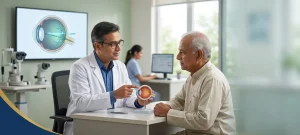
During routine eye examination many eye issues are identified but we do not get an in depth picture of the drainage angle. If your ophthalmologist suggests gonioscopy it does not mean that you have glaucoma for sure. It is just that the doctor is looking at your eye anatomy and pressure risk in more detail. In fact in most cases the gonioscopy results are a relief and also put to rest the risk of acute angle closure.
People at age 40 and over, diabetics, those with a large family history of glaucoma, and individuals which had prior eye injuries should pay special attention to regular glaucoma screening. If any of these risk factors are present your doctor may include the use of gonioscopy in a more in depth evaluation.
Is Gonioscopy Painful or Risky?
A gonioscopy is usually a very comfortable procedure which we use numbing drops for at the start of the test before the lens touches the eye. What most patients report is experiencing a small pressure sensation rather than pain. The test is brief and we do it very carefully to minimize any discomfort.
There is temporary watering out of the eyes, mild irritation, or blurred vision which usually sort themselves out quickly after the test. We do not see serious complications when the test is performed by a trained eye specialist. If a patient has an active infection, severe corneal disease, or great pain in the eye we may put off the test or take extra care during the eye examination.
The test’s benefit is for the most part greater than that of mild temporary discomfort. For glaucoma at risk patients the gonioscopy may put forward info which in turn helps to prevent future vision loss. Also accurate gonioscopy results from the procedure may reduce what may be unnecessary anxiety by which at that time we can see if the angle is open, narrow or closed.
Gonioscopy and Glaucoma Screening
Gonioscopy is very much a part of glaucoma screening which is important to note as glaucoma is not a single disease. We see open angle glaucoma in some patients and angle closure glaucoma or narrow angles in others which may become a problem in the future. The treatment for each type may differ, thus determining the angle status is key.
During the course of glaucoma evaluation doctors typically look at eye pressure, optic nerve health, visual field, and retinal nerve fiber thickness. But in some patients the evaluation may be left out if the drainage angle is not checked. The gonioscopy results help to correlate pressure with eye anatomy.
If the angle is small the doctor may bring up options for preventive laser treatment, closer follow up, or other measures. If the angle is open the focus may be on pressure control, optic nerve monitoring, and long term glaucoma management. This is to say that gonioscopy is not just a diagnosis tool but also a treatment planning tool.
Eye Care at ASG Eye Care
At ASG Eye Care we perform gonioscopy when our ophthalmologist determines that it is necessary for an accurate diagnosis or to do disease monitoring. We usually do this as a part of a full eye exam which includes eye pressure measurement, slit lamp evaluation, optic nerve study and other related glaucoma tests as needed.
Our doctors use the gonioscopy results to explain the condition in simple language We tell patients if their drainage angle is open, narrow, or closed and what that means for their health going forward. If glaucoma evaluation suggests a risk, the treatment plan is discussed clearly, including observation, medicines, laser procedures, or surgery depending on the case.
The aim is to detect disease also to see that patients are made aware of their eye health. At the early stage we have the chance to do a gonioscopy which plays a great role for people at risk of glaucoma which is improved by early diagnosis and right treatment which in turn protects vision.
Key Takeaway
Gonioscopy is a quick useful procedure which we do to see the drainage angle better and to determine glaucoma risk more accurately. Also it is not a painful procedure for the most part and it is usually included in a thorough eye examination when glaucoma or narrow angles are present. The test findings help us to determine what to do next which may be routine follow up, medication, laser treatment or surgery.
If you have high eye pressure, a family history of glaucoma, eye pain, narrow angles, or unexplained vision issues, do not put off a full eye check-up. Proper glaucoma evaluation with the right tests which may include a gonioscopy when needed can help to protect your long term vision.
Frequently Asked Questions
1 What is a gonioscopy?
A gonioscopy is a clinic based assessment in which an ophthalmologist uses a special lens to look at your drainage angle. This may be performed during a routine eye check-up in the case of high risk of glaucoma, narrow angle issues, or if there are high levels of intraocular pressure for no known reason.
2 Why is gonioscopy important for glaucoma evaluation?
Gonioscopy is important in glaucoma evaluation which is done to note if the drainage angle is open, narrow, or closed. This information is useful to the doctor in identifying the type of glaucoma risk present and in choosing the appropriate treatment based on the results of the test.
3 How long does a gonioscopy take?
A gonioscopy usually takes only a few minutes for each eye. The total visit may stretch out more time if it is also including a full eye check-up, measurement of eye pressure, assessment of the optic nerve or other glaucoma evaluation tests.
4 Are test findings available immediately?
Yes the test findings are usually at the time of your visit because the doctor views the angle during the test. We also go over your eye pressure, optic nerve health and the results of the full eye check-up.