Many think that we are to check eye pressure only in order to detect glaucoma. Eye pressure is a factor which is true, but it is not a full picture of the eye’s drainage system. In fact what may be required for a thorough glaucoma evaluation is a procedure called gonioscopy which allows us to see how fluid is flowing out of the eye.
A gonioscopy test which the doctor performs to look at the drainage angle between the cornea and the iris. This angle is key as the eye is constantly producing clear fluid which has to drain through this passage. Should the angle be found to be open, narrow, blocked, or abnormal the risk of glaucoma may increase.
Why the Drainage Angle Matters
Inside the eye, ocular fluid is produced daily. If the drainage systems which are present in the eye are working well, pressure in the eye usually remains in a healthy range. But when the angle is narrow or becomes blocked that fluid can back up and increase pressure inside the eye.
An eye pressure test reports out the pressure at that time which is noted by the doctor, but it does not tell us why the pressure is high. In gonioscopy we get to see if the drainage angle is open or blocked which we in turn use to determine the type of glaucoma diagnosis as open angle glaucoma and angle related glaucoma are treated differently.
How the Test Is Done
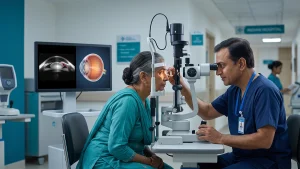
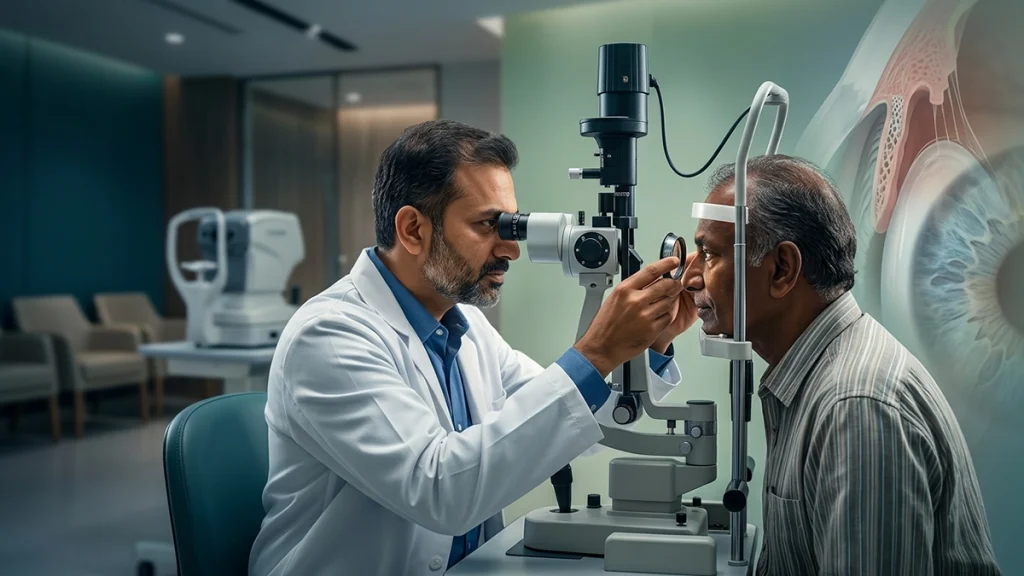
Gonioscopy procedure is a brief procedure which we perform at your eye care visit as an out patient. We put in numbing drops which will make you comfortable throughout the process. We will then place a special contact lens that has a little gel in it which we put on your eye. Using a slit lamp microscope we will get a clear view of the angle.
Most at the time patients do not report pain during the exam. There may be what is barely noticeable pressure from the lens, which in large part is short term. In terms of immediate post test results, some patients experience blurred vision for a while due to the gel or drops, and that which also in most cases resolves on its own.
Gonioscopy and Other Glaucoma Tests
A complete glaucoma work-up usually involves more than one test. Each test gives different information about the eye, and the results are interpreted together.
| Test | What It Checks | Why It Is Useful |
| Gonioscopy | Drainage angle of the eye | Shows whether the angle is open, narrow, or closed |
| Pressure measurement | Pressure inside the eye | Helps identify raised intraocular pressure |
| Optic nerve examination | Health of the optic nerve | Looks for glaucoma-related nerve damage |
| Visual field test | Side vision | Detects functional vision loss |
| OCT scan | Nerve fibre thickness | Helps track early structural changes |
The doctor will order these tests when glaucoma is present, when intraocular pressure is high, or when the optic nerve does not look as it should. This combined approach is to reduce the chance of missing the disease at an early stage.
Why Doctors Use It for Glaucoma Detection
The primary aim of gonioscopy is to determine the type of drainage angle which a patient has. This allows the doctor to see if it is open angle, narrow angle, or closed angle. That distinction is very important as treatment options may vary based on the angle which is present.
With angle closure glaucoma what we see is a very narrow or closed drainage angle which at times causes sudden eye pain, redness, blurred vision, headaches, nausea, and a quick rise in pressure. Also in some patients the narrowing may be a gradual and silent process. We may catch this early via gonioscopy which in turn helps us to identify patients that require either preventive or acute care.
Who May Need This Examination?
In some cases your ophthalmologist may order a gonioscopy test if you have high intraocular pressure, a family history of glaucoma, certain abnormal optic nerve findings, unexplained eye pain, narrow angles which were noted at the initial exam, or past eye injury. Also this test may be performed as a pre op evaluation when the doctor wants to better understand the drainage angle.
For glaucoma diagnosis, this test is also useful when pressure readings, optic nerve findings, and visual field results do not correspond. At that point angle assessment provides another key piece of info.
| Situation | Why Angle Assessment Helps |
| High eye pressure | Shows whether drainage blockage may be involved |
| Suspected narrow angle | Confirms whether the angle is open, narrow, or closed |
| Family history of glaucoma | Helps identify risk before major vision loss |
| Eye pain with blurred vision | Helps check for angle-related pressure problems |
| Before laser or cataract planning | Supports safer treatment planning in selected patients |
Is the Test Safe?
Gonioscopy is a routine ophthalmic exam which is very safe. Anesthesia in the form of eye drops is used which most patients are tolerant to. There may be some watering, temporary blurriness or slight irritation which is a short lived issue.
The lens is cleaned and handled with care for safety. Patients should out of the way of eye rubbing post procedure, especially while the numbing is still present. As for pain, redness, or vision change post exam that is an uncommon occurrence but report it to the eye hospital.
What Do the Results Mean?
After the gonioscopy the doctor reports the angle as open, which means the drain is visible, though glaucoma may still present with other issues. A narrow angle indicates the drain area is congested and may close up in the future. A closed angle is when the iris is in fact blocking the drain.
The result is a component of a larger evaluation which includes eye pressure, optic nerve appearance, corneal thickness, OCT, visual field testing, symptoms reported by the patient, and overall eye health
Gonioscopy at ASG Eye Care
At ASG Eye Care during which the doctor may order gonioscopy to have a better look at the eye’s drainage angle. The test also plays a role in early glaucoma detection and in determining which of the options of monitoring, medicines, laser treatment, or surgery may be required.
The assessment also may put patients at risk for angle closure glaucoma before they present with serious symptoms. This is where a full glaucoma work up must not fall back on pressure measurement. The aim is to protect vision by looking at the eye structure very early and very accurately.
Key Takeaway
Gonioscopy which is a very important eye exam that doctors use to see the drainage angle of the eye. Also used when glaucoma is suspected, when eye pressure is high, or when the doctor needs to determine if the angle is open, narrow, or closed.
If your doctor has recommended the gonioscopy procedure it is not to indicate that you have glaucoma already. Instead it is to get better information on how your drain angle is doing which in turn will better inform the diagnosis and treatment plan.
Frequently Asked Questions
1 What is gonioscopy?
Gonioscopy is a type of eye exam which allows the doctor to see the drainage angle between the cornea and iris. We use this test when we are assessing glaucoma risk.
2 Is the test painful?
Usually no, the test does not cause pain. We put numbing drops in the eye before we use the lens. You may feel a little pressure, but for the most part patients report that they are comfortable during the examination.
3 Is it the same as pressure measurement?
No. An eye pressure test measures out the pressure within the eye, and angle assessment looks at the drainage passage. While both tests are useful they present different info.
4 Can the test detect angle-related glaucoma risk?
Yes. We use this exam to identify narrow or closed drainage angles which in turn may put a patient at risk of a sudden pressure rise or long term optic nerve damage.
5 Why is it important for glaucoma?
It helps doctors understand the type of glaucoma risk present. This is important because open-angle disease and angle-related disease may require different treatment plans.