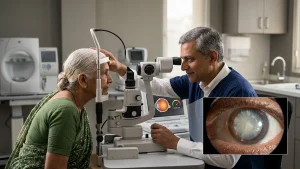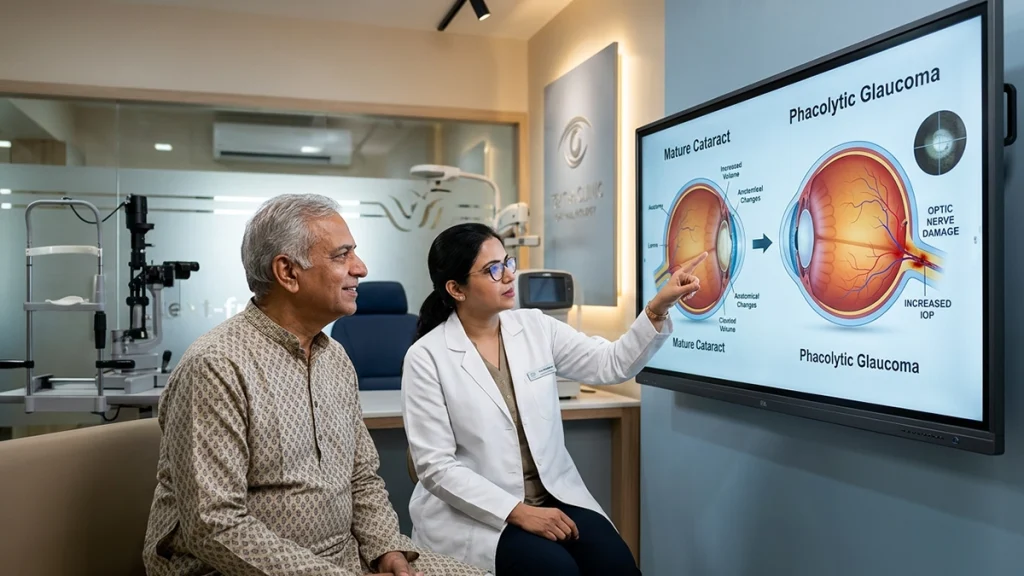
Many patients think cataracts and glaucoma are separate eye problems Typically they are. Cataract is a clouding of the natural lens, whereas glaucoma results from optic nerve damage that is at times related to increased eye pressure. Also in advanced cataract stages cataracts and glaucoma may present together. For instance in phacolytic glaucoma we see an overripe cataract which releases lens protein into the eye and causes a sudden pressure increase.
This is also that we should pay attention to cataracts and glaucoma when vision has gone very poor, the cataract is mature, or the eye is painful and red. Timely diagnosis in this case of phacolytic glaucoma treatment allows us to reduce inflammation, control pressure, and preserve what useful vision remains.
What Is the Link Between Cataracts and Glaucoma?
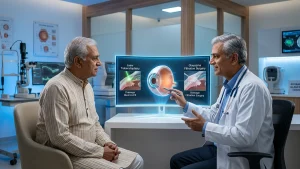
To have an in depth look at cataracts and glaucoma it is best to know how fluid moves out of the eye. Usually fluid passes through the drainage angle which in turn keeps intraocular pressure in balance. As a cataract progresses to hypermature stage protein material may be let go from the lens. These proteins along with inflammatory cells may block the drain which in turn causes pressure to rise very fast. Thus phacolytic glaucoma becomes one of the main advanced cataract complications.
Most cataracts do not cause glaucoma at the drop of a hat. What we see is that risk increases when cataracts are left alone for a long time which in turn makes the lens very hard, swollen or overripe. In these cases of cataracts and glaucoma we require prompt evaluation as delay in care may damage the optic nerve.
| Condition | What Happens | Why It Matters |
| Cataract | The lens becomes cloudy | Vision becomes blurred or glare-sensitive |
| Glaucoma | The optic nerve is damaged | Vision loss can become permanent |
| Phacolytic glaucoma | Proteins leak from a mature cataract | Pressure rises suddenly |
| Phacomorphic glaucoma | A swollen cataract narrows the angle | Pressure may rise due to angle closure |
What Is Phacolytic Glaucoma?
Phacolytic glaucoma which is a type of secondary glaucoma that occurs with a mature or hypermature cataract. The cataract develops to a point which disrupts the eye’s internal equilibrium. In this group of patients with cataracts and glaucoma may present with symptoms of eye pain, redness, tearing, blurred vision, headache, nausea, or seeing halos around light.
This does not fall in the category of a routine age related cataract. It is a serious advanced cataract complications which has sudden pressure increase that in turn may cause damage to the optic nerve. Once diagnosed, treatment for phacolytic glaucoma treatment should not be delayed.
Symptoms That Need Immediate Attention
A typical cataract will cause slow and painless vision blurring. But in the case of a pressure emergency when cataracts and glaucoma present at the same time symptoms are more sudden. The eye may become red, painful, and light sensitive. Vision may drop off quickly, the cornea may appear cloudy, and the patient may report a heavy feeling in the eye.
If these symptoms are present in a person that has a mature cataract, medical attention should be sought at once. It is unsafe to wait for the cataract to become “fully ready” which is when advanced cataract complications have begun.
How Doctors Diagnose Cataracts and Glaucoma
When doctors see signs of cataracts and glaucoma they do a vision test, they look at the cataract, they measure eye pressure, and they evaluate the optic nerve. They look at the front of the eye for signs of inflammation, of corneal swelling, and of protein in the eye fluid. If the view is clear they also look at the retina.
The doctor also determines if the pressure increase is from the cataract or if there is also a different type of glaucoma which is present. This is important as in the case of phacolytic glaucoma treatment which requires both pressure reduction and cataract removal.
| Test | Purpose |
| Vision test | Measures vision loss |
| Slit-lamp examination | Checks cataract maturity and inflammation |
| Pressure measurement | Detects high pressure inside the eye |
| Optic nerve evaluation | Looks for glaucoma damage |
| Retina check | Helps predict vision after surgery |
Treatment for Phacolytic Glaucoma
The primary goal in cataracts and glaucoma related to phacolytic glaucoma is to calm the eye and reduce pressure. We may use pressure lowering drops, anti inflammatory medications, and at times will give oral or injection medications if the pressure is very high.
Medicines play a role but they don’t cure the cause. In the case of mature cataracts they are the source of leakage. For definitive phacolytic glaucoma treatment we usually do cataract surgery once the eye has stabilized. Removal of the cataract takes out the leaking material which in turn improves the flow of fluid.
Cataract Surgery and Visual Outcome
In patients that present with cataracts and glaucoma care must be very planned out. The eye may be inflamed, the cornea may be cloudy, and the pressure may have been high for a while. The surgeon chooses the best approach to cataract removal and lens implantation. If the optic nerve and retina health are preserved, vision does improve well.
Should pressure have been high for too long some vision loss may still be present. This is which early care is so important to prevent further issues.
Can Cataracts and Glaucoma Be Prevented?
Not at present is it possible to prevent all cases of cataracts and glaucoma, but many of the serious results may be averted by means of routine eye exams.
Early treatment of cataract has a role in the prevention of raised intraocular pressure which we see in diabetics, those that have had previous eye injury, those who have glaucoma, or present with very poor vision from cataract. In these patients cataracts and glaucoma should be treated as a combined issue and not delayed.
Eye Care at ASG Eye Care
At ASG Eye Care we see patients with cataracts and glaucoma in which we do cataract grading, optic nerve study, and pressure evaluation. We aim to improve vision and to protect the optic nerve from permanent damage.
When a cataract has become very mature and is associated with pain, redness, or high pressure we stress timely care. Treatment may include pressure control measures, cataract surgery, or a combined glaucoma approach.
Key Takeaway
Most cataracts do not cause glaucoma directly, but advanced cataracts at times do lead to secondary glaucoma. This is where cataracts and glaucoma play out very much in the same field. A hypermature cataract may let go of proteins, block fluid outflow, raise pressure, and create a crisis.
The best approach is early diagnosis, regular check up, and timely cataract surgery when it is recommended. Sudden pain, redness, or vision loss in an eye with cataract should not be ignored because cataracts and glaucoma may require acute treatment.
Frequently Asked Questions
1 Can cataracts cause glaucoma?
Yes in some what we may term advanced cases. Mostly cataracts do not cause glaucoma but at the stage of maturity or hypermaturity they may cause secondary glaucoma. That is why cataracts and glaucoma should be evaluated closely if there is pain, redness, or sudden vision loss.
2 What is phacolytic glaucoma?
Phacolytic glaucoma results from the release of lens proteins into the eye from a very ripe cataract. These proteins plug up the eye’s drainage and cause pressure to increase. Treatment is usually with medications first followed by cataract surgery.
3 Is phacolytic glaucoma an emergency?
Yes. It can produce severe pain, inflammation and pressure increase. In the delayed case the optic nerve may be damaged. Of cataract related emergencies this is one that requires prompt care.
4 Can vision improve after treatment?
Vision will recover if the optic nerve and retina are healthy. How well vision recovers depends on the duration of high pressure and the stage of the cataract. Early care is best for patients’ prognosis in cataracts and glaucoma.