Will I need a laser procedure or surgery in addition to eye drops? It depends on what type of glaucoma you have, your eye pressure levels, degree of optic nerve damage, age, overall health, and how well your eye responds to the first line of treatment. Also a good glaucoma treatment plan is unique for each patient as glaucoma presents and progresses differently in each eye.
The aim of glaucoma treatment is to reduce eye pressure and protect the optic nerve from more damage. It is also true that once vision is lost it usually does not return, but we may through proper care be able to slow or stop more vision loss. In some patients medicine is sufficient which is great, in others we see benefit from laser therapy or surgery. This is why consultation with a glaucoma specialist is so important, in particular when pressure isn’t controlled or the disease is progressing.
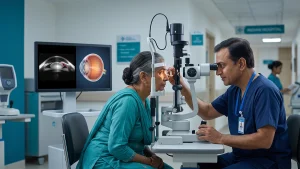
At ASG Eye Care we perform an in depth evaluation of patients’ eye pressure, we assess the optic nerve and do visual field testing and also we do imaging before we get to a glaucoma treatment plan. Our decision between which is better, laser or surgery, is made based on the stage of the patient’s disease and their long term vision goals.
Understanding Glaucoma and Why Timely Treatment Matters
Glaucoma is a collection of eye issues that occlude the optic nerve. The optic nerve which takes visual information from the eye to the brain reports that when it is damaged that results in permanent loss. This is why glaucoma treatment should not be delayed once the condition is diagnosed.
In the beginning stages of glaucoma it may not present with clear symptoms. Many patients will have 20/20 vision in the center of their field of vision and do not realize that their peripheral vision is slowly deteriorating. It is at the point where daily vision is affected that the disease may in fact be well along. A structured glaucoma treatment plan helps reduce eye pressure and lower the risk of further damage.
Main choices for treatment include eye drops, oral medicines in some cases, laser treatment for glaucoma, and various types of glaucoma surgery. A glaucoma specialist determines the best option after evaluation of pressure readings, optic nerve changes, corneal thickness, drainage angle status, and the patient’s ability to follow through with treatment.
Glaucoma Surgery vs Laser Treatment: The Basic Difference
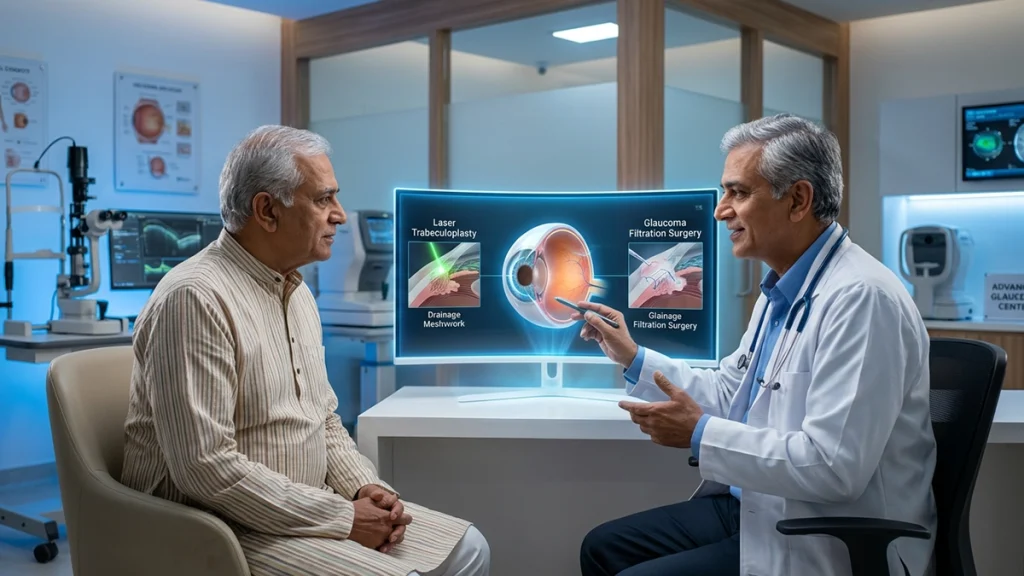
Many patients have a hard time telling the difference between laser and surgery as they are both treatments. However, laser treatment for glaucoma is usually less invasive and is often performed in the outpatient clinic. We use it to improve fluid outflow or to reduce production of that fluid, based on the kind of laser used. As for surgery, that’s a step we take when other options have failed. What we do is create a new drainage channel or put in an implant to lower the eye pressure.
The issue is not that one procedure is easier than the other. What we find is that the right glaucoma treatment depends on the degree of pressure reduction which is required. If the disease is in its early or moderate stage laser treatment for glaucoma may be sufficient for some patients. If glaucoma is advanced, pressure is very high or the optic nerve is affected despite medicine and laser, surgery may be recommended.
Glaucoma surgery costs also vary by the type of procedure which is to be performed. What we see is that a basic laser treatment and a filtering surgery do not have the same price tag because of differences in technology used, operating room needs, follow up care and implants. Before deciding, patients should discuss both the expected benefits and the glaucoma surgery cost with their treating doctor.
| Treatment option | How it works | Usually considered when | Main advantage |
| Eye drops | Reduce fluid production or improve drainage | Early to moderate glaucoma | Non-surgical first-line control |
| laser treatment for glaucoma | Uses focused laser energy to improve drainage or reduce pressure | Eye drops are not enough, not tolerated, or adherence is difficult | Quick, outpatient-based, and minimally invasive |
| Trabeculectomy | Creates a new drainage channel for eye fluid | Advanced or uncontrolled glaucoma | Strong pressure-lowering effect |
| Glaucoma drainage implant | Uses a small tube or device to drain fluid | Complex, advanced, or previously operated eyes | Useful when standard surgery may not work well |
| MIGS | Uses small devices or micro-incisions to improve drainage | Mild to moderate glaucoma, often with cataract surgery | Faster recovery in selected patients |
What Is Laser Therapy for Glaucoma?
Laser treatment for glaucoma which uses concentrated light energy to improve the flow of fluid out of the eye or to produce less of it is an option. A very used procedure is Selective laser trabeculoplasty which does great in open angle glaucoma. The laser is used on the eye’s drainage system which in turn improves flow and in effect reduces eye pressure.
For lots of patients, laser treatment for glaucoma is a go because we don’t have to do cuts or stitches and there isn’t a long stay in the hospital. The procedure is usually done with local anesthetic in the form of eye drops and within a day you’re back home. That said it doesn’t work for all types and stages of glaucoma.
A glaucoma specialist may suggest laser treatment for glaucoma when a patient is newly diagnosed, when eye drop use is problematic for the patient, when eye pressure is not well controlled, or when a patient has issues with the eye drop regimen. In some cases lasers may reduce the number of drops required but in other cases the patient may still be put on eye drops post procedure.
The results of laser treatment for glaucoma are variable. In some eyes it does very well, in others we may have to use more medication or perform later surgery. It is important to note that laser is not a cure, it is just one component of a total glaucoma treatment plan which is designed to preserve vision.
When Is Glaucoma Surgery Needed?
Glaucoma surgery is also at times used when medicines and lasers are found to be insufficient in terms of reducing intraocular pressure or when the optic nerve is still deteriorating despite routine care. Also surgery may be recommended when the target intraocular pressure is very low which is beyond what can be achieved with drops or laser
In very severe cases a glaucoma specialist may not delay treatment as each rise in pressure puts the optic nerve at greater risk. Here surgical glaucoma treatment may be the best long term option. The goal is to improve drainage and to keep intra ocular pressure at a level which in turn protects what vision is left.
Patients report that the issue of glaucoma surgery cost is a big worry for them which should be brought up in tandem with disease severity. We see delay in treatment which is a result of fear and lack of info which in turn causes the disease to progress. A transparent discussion about the procedure estimate, the type of surgery, expected visits, medicines, and recovery helps families plan better.
Common procedures we perform are trabeculectomy, glaucoma drainage implants, and minimally invasive glaucoma surgery. Which procedure is right for each patient depends on the anatomy of the eye, history of prior surgeries, age, stage of glaucoma and if cataract surgery is also a part of the plan.
Cost of Glaucoma Surgery: What Affects the Final Price?
The glaucoma surgery cost is not the same between each patient for the reason that glaucoma surgery is not a single type of procedure. Basic filtering out surgery, drainage implant, and MIGS vary in cost due to the different equipment used, what is implanted, operating room time, and post op care.
Glaucoma surgery cost may also see variation in different cities, at which it is performed, surgeon’s experience, pre op diagnostic tests, type of anesthesia required, medicines that will be prescribed, and if one or both eyes are to be treated. Should an implant be used the price may go up. Also if glaucoma is to be treated at the same time as cataract surgery the package price may change.
Patients should ask what is included in the glaucoma surgery cost before the procedure. That which is included is variable consultation, tests, the procedure itself, implant charges, post op visits and medications may or may not be included in the same package. A clear breakdown in the estimate prevents issues down the road and also empowers the patient to make an informed decision.
At a well known eye hospital the glaucoma surgery cost should be in relation to what it means for the patient’s health outcome, not just a price tag. We aim to protect vision safely, choose the right procedure, and to avoid unnecessary treatment delays.
Laser vs Surgery: Which Option Is Better?
There is a wide range of answers on this issue as laser and surgery play different roles. For early to moderate disease we see that laser therapy is the choice which the eye may respond to a less invasive procedure. When strong reduction in pressure is a must, that is when we see the use of surgery.
A patient at an early stage of open angle glaucoma which also has mild optic nerve damage and moderate intraocular pressure may respond to laser therapy or eye drops. For the patient with advanced glaucoma, very high intra ocular pressure or progressive visual field loss in spite of medical management we may have to go in for glaucoma treatment. This is to say that the decision has to be very much a personal one.
| Factor | Laser treatment | Surgery |
| Invasiveness | Less invasive and usually clinic-based | More invasive and usually done in an operation theatre |
| Recovery | Usually quicker | Longer recovery and closer follow-up |
| Pressure lowering | Moderate in many cases | Often stronger, especially in advanced disease |
| Repeatability | May be repeated in selected cases | Depends on the type of surgery and eye condition |
| Best suited for | Early to moderate glaucoma or drop intolerance | Advanced, uncontrolled, or progressing glaucoma |
| Cost discussion | Procedure-based and usually lower than major surgery | glaucoma surgery cost depends on technique, implant, and hospital package |
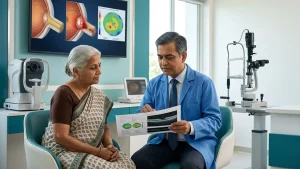
The best approach is to consult a glaucoma specialist which in turn will allow for a comparison of the different pressure reduction options. The doctor will also take into account the patient’s lifestyle, ability to keep up with follow up appointments, other eye conditions, and long term risk of vision loss.
Recovery After Laser and Surgery
Recovery after laser treatment for glaucoma is usually a simple matter. Some patients do experience mild irritation, redness, or temporary pressure fluctuation. We may give you anti inflammatory drops for a short time and will do follow up visits to check pressure response.
Recovery from surgery is a focus. In the first few weeks patients may be in the office often for the doctor to check pressure, healing, inflammation, and drainage. Success of surgical glaucoma treatment is a team effort between the procedure itself and post op care.
Your doctor will go over what to avoid, how to use the eye drops, when to come back in for a check up, and which warning signs to pay special attention to. Do not discontinue medications after laser or surgery without first speaking with the doctor.
How ASG Eye Care Plans Glaucoma Treatment
At ASG Eye Care we start glaucoma treatment with a proper diagnosis by a glaucoma specialist. Eye pressure is not in itself an adequate indicator of glaucoma. The doctor also looks at the optic nerve, visual field, drainage angle, corneal thickness, and the patient’s risk factors. This information determines if we should use medicine, a laser procedure, or surgery.
Every glaucoma team we work with reports that this is a long term condition. We aim not only to reduce pressure at diagnosis but to keep it under control going forward. For some patients that may mean a regime of eye drops and regular monitoring. For others we may recommend timely lasers which in turn may reduce their dependence on eye drops. In advanced cases we see that surgical glaucoma treatment may be what is best.
At ASG Eye Care we also focus on clear communication of the treatment plan. We go over what to expect, follow up needs, what warning signs to look out for, and the glaucoma surgery cost if that is what is required. This we do to help patients and families in making informed decisions.
When Should You See a Glaucoma Specialist?
You should see a glaucoma specialist if you have high eye pressure, a family history of glaucoma, optic nerve changes, reduced side vision, or if your present medications are not reducing pressure. Also people with diabetes, high myopia, past eye injury, or long term steroid use should also be at care.
Specialist assessment is also a good idea if you are told you will need laser or surgical intervention. This isn’t always a sign of a serious issue, but it does mean your eye needs a more in depth care plan. An early evaluation gives you more choices and may lower the risk of preventable vision loss.
As you look at your medicine, laser and surgical options for glaucoma the doctor is able to go over what form of glaucoma treatment best fits your eye condition. Also the doctor can clarify for you which between laser and surgery is the safe bet for the long term.
Key Takeaway
The proper glaucoma treatment is one which safely reduces eye pressure and at the same time protects the optic nerve in the long term. We use medicines, laser procedures, and surgery which all play a role but which one is best is based on the stage of disease and how your eye reacts.
Patients should not base treatment decisions only on the fear of surgery or the cost of care. A thorough specialist evaluation helps you to know the safe and effective path forward. With early diagnosis, regular follow up, and the right glaucoma treatment many patients are able to maintain useful vision for years.
Frequently Asked Questions
1. Which is better: glaucoma surgery or laser treatment?
Neither one size fits all. For early to moderate cases laser therapy may be used which is an option when eye drops fail or you have trouble using them. Surgery is usually considered when stronger pressure control is needed. Your eye doctor can decide the right glaucoma treatment after checking your eye pressure, optic nerve, and visual field status.
2. Is glaucoma surgery permanent?
Glaucoma surgery may bring in long term pressure control but does not fully cure the disease permanently, also will not bring back vision that is already damaged. Also post op, there will be the need for continuous follow up because pressure can change as time goes by. Surgery in the case of glaucoma treatment is to protect what vision remains, and also reduce the chance of future damage.
3. Is laser therapy painful?
Most patients tolerate laser treatment for glaucoma well. The eye is numbed with drops, and the procedure is usually quick. Some patients may feel mild pressure, irritation, or redness afterward, but these symptoms are usually temporary. Your doctor will check your eye pressure after the procedure and guide you about drops.
4. How much does glaucoma surgery usually cost?
The glaucoma surgery cost will vary by the kind of surgery, which hospital it is in, what implants are used, which city you are in, the pre op studies required, anesthetist used, and follow up care. Also as each situation is unique you should request a written out estimate prior to surgery. Also the final quote should be gone over in detail with the expected benefits and how soon treatment is needed.
5. When should I visit a glaucoma doctor?
You should see a glaucoma specialist if you have high eye pressure, nerve damage to the optic nerve, family history of glaucoma, loss of side vision, or pressure which does not improve with medicine. Your glaucoma specialist can help you choose between medicine, laser, and and surgery so that your glaucoma treatment is planned correctly.