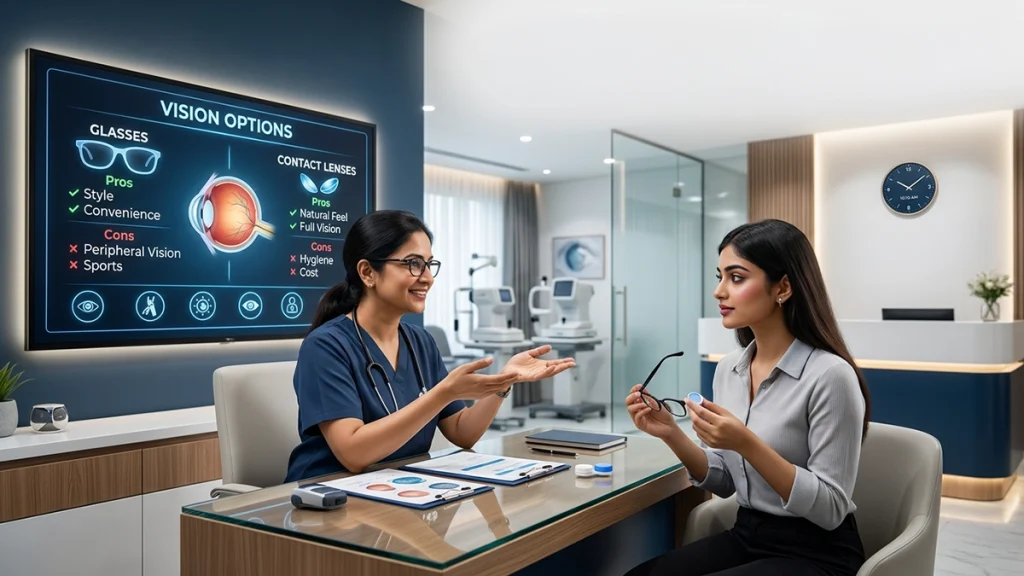
Choosing between glasses or contact lenses is what most patients do at the time of their eye exam. We see that both options do the job of correcting refractive errors like myopia, hyperopia and astigmatism, but which is best is a call each person must make based on what is most comfortable for them, what their lifestyle is like, health of the eyes, daily routine and also what they as an individual prefer. Some people go for the ease of wear of the spectacles, others for the natural field of view that contact lenses offer.
At ASG Eye Hospital we see that many of our patients ask which is better for the long term, glasses or contact lenses. That really isn’t the same answer for all. For some people wearing glasses is the safer and easier option. For others contact lenses which are better for sports, travel, or social events. A proper eye exam is a must before we make a decision because we want to make sure that their eyes are healthy enough for contact lens wear.
Understanding Vision Correction
When the eye does not properly focus light onto the retina vision becomes blurry. This may happen with nearsightedness, farsightedness, astigmatism, or age related near vision issue. In those cases glasses or contact lenses help to correct the light focus which in turn clarifies vision.
Eyeglasses rest in the position of the eyes which most people find easy to use as well as care for. As opposed to them, contact lenses are worn directly over the tear film that covers the cornea, and also move with every eye movement. This allows their wearers to enjoy a larger and more natural visual field, however they do require proper care and a high level of hygiene. This is why contact lens safety should always be part of the discussion before choosing lenses.
Glasses: Simple, Safe, and Reliable
For a great number of patients glasses are what they turn to first and they find them to be the most practical solution. The best eyeglasses benefits is that they don’t come in contact with the eye. This makes them a great option for kids, senior citizens, people with dry eyes, and those which may have trouble with insertions and removal of contact lenses.
Another issue that plays a large role in how people choose their glasses or contact lenses is on a day to day basis ease of care. Easy to put in and out, that’s one of the chief reasons. Also there is a low maintenance aspect; mostly it is just the routine of a basic clean. Also they protect the eyes from dust, wind and unforeseen touch. With the introduction of modern frames and lenses glasses can be very light, fashion forward, and fit well for a full work or study day.
However, there are issues with glasses. They may fog up, slip out of place during physical activity, or become uncomfortable with helmets and masks. Also they may reduce side vision because of the frame which in turn creates a boundary. Still, for many patients, the overall eyeglasses benefits make spectacles the most dependable option.
Contact Lenses: Natural Vision with Extra Responsibility
Contact lenses are a choice for many which prefer to not wear frames. Many patients opt for contact lenses which offer a more natural look and better peripheral vision. In sports, dance, the gym, for photography, or public appearances contact lenses may be felt to be more comfortable then glasses.
When it comes to glasses or contact lenses, it is also true that contact lenses being a medical device need to be prescribed, fit and monitored by an ophthalmic professional. Also we see that improper hygiene, wearing lenses out past the recommended date, use of tap water, or wearing them to sleep can bring on issues like irritation, infection, and corneal damage.
This is a key area for contact lens safety. Before handling lenses patients should clean and dry their hands, use only the recommended lens solution, do not share lenses, and replace them at the advised time. Should redness, pain, watering of the eye, discharge, or blurred vision present itself, remove the lenses and see an ophthalmologist.
Contact lens comparison with Glasses
| Factor | Glasses | Contact Lenses |
| Comfort | Easy for most people | Comfortable after proper fitting |
| Eye contact | Does not touch the eye | Sits directly on the cornea |
| Maintenance | Simple cleaning | Requires strict hygiene |
| Field of vision | Frame may limit side vision | Wider natural vision |
| Sports use | May slip or break | Usually more convenient |
| Infection risk | Very low | Higher if hygiene is poor |
| Dry eye suitability | Usually better | May worsen dryness in some people |
| Cost over time | Usually lower | Ongoing lens and solution cost |
This contact lens comparison reports that there is no perfect option for everyone. Which is best between glasses or contact lenses you should base that decision on eye health, comfort, budget, profession, and lifestyle.
Which Is Better for Daily Use?
For daily use glasses or contact lenses do work well when fitted right. Glasses are best for people who spend lots of time on screens, have dry eyes, or prefer easy care correction. Contact lenses may be better for people who want unobstructed vision, an active lifestyle, or frame free correction.
Patients don’t have to think of this as a permanent either or decision. Many do both. We put in contact lenses for work, sports, or social events and revert to glasses at home. This balanced approach we find works best. In fact, one of the underrated eyeglasses benefits is that glasses give the eyes a break from contact lens wear.
Safety Matters More Than Appearance
While appearance is a point of issue, safety should come first. We do have safe and effective options with contact lenses when they are used as they are supposed to be, but poor hygiene may cause serious issues. In terms of a discussion on glasses or contact lenses we should also cover care of the lenses, replacement timeline, follow up visits, and what to watch out for.
The most important in contact lens safety is to report any issues right away. Pain, redness, light sensitivity, or sudden blurred vision should not be dismissed. These may be signs of an infection or corneal inflammation. Also do not wash or store your contact lenses in water which is a no no as water may bring in microorganisms that harm the eye.
Who May Prefer Which Option?
| Patient Need | Better Option |
| Simple daily use | Glasses |
| Sports and outdoor activity | Contact lenses |
| Dry eye tendency | Glasses |
| Long screen hours | Glasses or limited lens wear |
| Cosmetic preference | Contact lenses |
| Children or elderly patients | Usually glasses |
| High hygiene discipline | Contact lenses may be suitable |
| Frequent eye allergies | Usually glasses |
This table is a simple guide, but the final decision about glasses or contact lenses should be made after an eye examination.
Can You Use Both Glasses and Contact Lenses?
Yes, many of my patients report that they use a combination of glasses or contact lenses which is very practical. We recommend this approach. Patients report using glasses at home and for computer work and also when their eyes feel tired. They use contacts for special events, sports, travel and for professional settings.
Also this mixed approach improves contact lens safety use by breaking up the routine. Wearing lenses daily for extended periods may cause eye dryness and irritation in some patients. By alternating with glasses we give the cornea a break which in turn promotes healing.
Expert Advice from ASG Eye Hospital
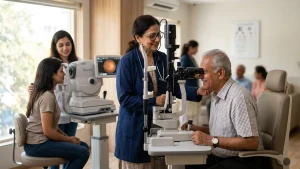
At the ASG Eye Hospital we present to you an in depth eye evaluation which is the start of the decision between glasses or contact lenses. Our doctors will look at your prescription, the health of your cornea, tear production, what your lifestyle requires, your age, and your comfort level. We also have for our patients with dry eyes, allergies, recurrent infections, or irregular corneal issues that they get special advice before trying contact lenses.
A proper contact lens comparison will also include the type of lens. Some patients may require soft lenses, toric for astigmatism, multifocal lenses, or specialty lenses. Also in the case of spectacles we see that some patients may benefit from anti-reflective coating, blue filter coating, progressive lenses, or thinner high index lenses based on their prescription.
It is not just about clear vision. We are after safe, comfortable, and sustainable vision correction. Whether you choose glasses or contact lenses, regular eye check-ups are important to keep your prescription updated and your eyes healthy.
Key Takeaway
The decision between glasses or contact lenses depends on your eyes, routine, comfort, and expectations. Glasses are simple, safe and easy in which you pop them on and go, contact lenses give you the freedom of not having a frame and in many cases a larger field of view. If you follow the safety guidelines that come with contact lens safety use they may be a great option for many people. If you prefer low maintenance and eye comfort, the eyeglasses benefits may make spectacles the better choice.
For many patients the best approach is not to choose between glasses or contact lenses at all, but to use each as the situation requires. An eye specialist consultation will help you to determine what option is the safe and best fit for your eyes.
Frequently Asked Questions
1. Are glasses or contact lenses better for daily use?
Both can be good options for daily wear. Glasses are easy to care for and a better choice for people with dry eyes or allergies. Contacts may be more convenient for very active people, but they do require proper care and regular check ups.
2. Are contact lenses safe for the eyes?
Yes they do when not prescribed, fit, cleaned and replaced properly. Good contact lens safety habits are essential to reduce the risk of infection, irritation, and corneal problems.
3. What are the main eyeglasses benefits?
The primary eyeglasses benefits are ease of use, low risk of infection, simple care, protection from dust, and we put them forward for people with dry or sensitive eyes.
4. What is the best contact lens comparison with glasses?
In terms of a contact lens comparison the former are easier and safer to maintain which the latter make up for in terms of a larger field of vision and also the freedom they provide during sports and social activities.
5. Can I use both glasses or contact lenses?
Yes. Many people use both glasses or contact lenses depending on their routine. Glasses are useful at home or during screen time, while contact lenses may be preferred for outdoor activities, events, or sports.