When a family member is diagnosed relatives will ask if it is glaucoma hereditary and what about the rest of the family should they be tested? It is a valid question because glaucoma may present with no symptoms as it damages the optic nerve which may go unnoticed until later stages. The best answer is that although inheritance may play a role in the development of the disease it does not mean that it is a sure thing for any individual. As for those that ask is glaucoma hereditary the next step is risk based screening which is to say that we screen for risk factors rather than going on heredity.
Research has determined that some cases of glaucoma genetics which are hereditary, while in adults the disease typically results from a combination of factors, age, eye pressure, anatomy and health history. A family history of glaucoma is important to report to your ophthalmologist but it is not in itself a diagnosis. The full range of glaucoma risk factors must be looked at. A genetic tendency does not guarantee that a person will come down with the disease, in some people who have it in their genes the disease may never appear.
In the field of glaucoma genetics we report that some forms of the disease have very strong hereditary components which is also to say that in the case of adult onset glaucoma what we see is a mix of genetic and environmental factors which include age, eye pressure, anatomy and health history. Family history of glaucoma is a key piece of information which ophthalmologists require however it is not in itself a diagnosis. In fully evaluating a patient we look to the full range of risk factors. Genetic susceptibility does not equal disease, there are persons with genes which would put them at risk which may in fact never see the development of the disease at all.
What Is Glaucoma?
Glaucoma is a collection of eye diseases which cause atrophy of the optic nerve that transmits visual info from the eye to the brain. In many patients what we see is an increase in intra ocular pressure which is a factor in the development of glaucoma but it also may present in people which have normal pressure readings. Primary open angle glaucoma tends to develop slowly and may present with no early tell signs.
This silent growth is what makes it important to ask is glaucoma hereditary. By the time vision is lost to glaucoma it is usually too late for restoration, but early diagnosis and appropriate treatment may help to prevent or slow further damage. The National Eye Institute reports that many people are unaware they have glaucoma which is a result of early disease that usually does not produce any symptoms.
Is Glaucoma Hereditary or Simply Common in Families?
So is glaucoma hereditary like a single gene disease? In some cases it does, but not always. Certain rare, congenital or early onset forms do see more clear patterns of inheritance. Common primary open angle glaucoma is usually a complex picture of many genes which interact with environmental factors over the course of many years.
Two siblings may have an inherited predisposition to glaucoma which presents in different ways one may develop the disease while the other does not which is due to differences in age, eye structure, eye pressure, medical history and other glaucoma risk factors. Thus the answer to is glaucoma hereditary includes genetic and environmental factors. Having a relative with the disease raises issues of risk in other family members’ but does not in fact determine present or future diagnosis in any given individual.
How Glaucoma Genetics Influence Different Types
The study of glaucoma genetics has reported on variants which play a role in congenital, juvenile and adult disease. MYOC variants may play a role in primary juvenile and adult open angle glaucoma in some families. CYP1B1 is connected to most cases of primary congenital glaucoma, while in other studies it was reported that a small proportion of normal tension glaucoma is associated with OPTN and TBK1.
MedlinePlus Genetics report that early onset glaucoma has variable inheritance patterns. Primary congenital glaucoma is usually inherited in an autosomal recessive pattern, and juvenile open angle glaucoma may present with an autosomal dominant pattern.
These reports do not say which patients should get genetic testing. In Glaucoma genetics is clinical is that which appears very early in life, which affects many generations, or which presents with other inherited conditions. Also a negative result does not rule out common glaucoma which in adults may be the result of many small genetic factors which we at present are not able to detect.
| Glaucoma pattern | Possible hereditary contribution | Meaning for relatives |
| Primary open-angle glaucoma | Usually influenced by multiple genes and other factors | Close relatives may benefit from earlier, regular eye examinations |
| Juvenile open-angle glaucoma | Can have a stronger inherited component | Parents, siblings and children may need risk-based assessment |
| Primary congenital glaucoma | Often linked with inherited developmental abnormalities | Genetic counselling and paediatric eye evaluation may be considered |
| Normal-tension glaucoma | Usually complex, though rare family-linked variants are known | Normal pressure does not remove the need to assess the optic nerve |
| Secondary glaucoma | Usually follows injury, inflammation, medicine or another eye condition | Hereditary influence depends on the underlying cause |
Why Family History Matters
A family history of glaucoma is a recognized indicator of increased risk which is especially true when a parent, sibling or child is affected. Patterns which involve multiple relatives, diagnosis at a young age or severe disease across generations do require special attention. The National Eye Institute includes people with affected relatives in high risk groups.
A family history of glaucoma may also present as incomplete. Some relatives report only that there was “high eye pressure” at some point, while other family members may not have ever had a dilated exam. Because early glaucoma usually has no symptoms, what appears to be a negative family history may in fact be a result of under diagnosis.
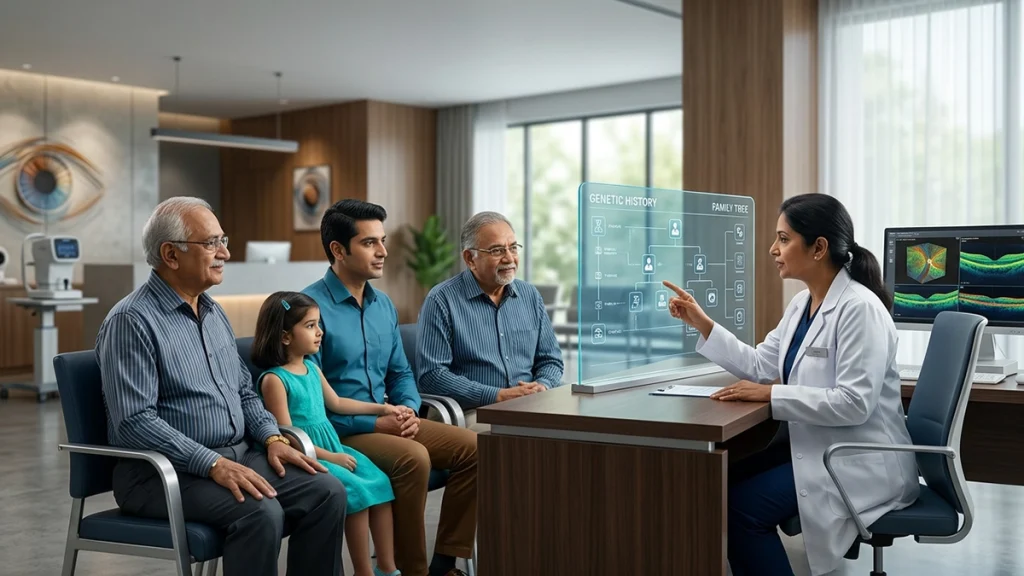
When you are discussing is glaucoma hereditary with your specialist report which relative was affected, the age at which they were diagnosed and what treatment they had which may have been medication, laser or surgery. This gives a more in depth picture than to just say that there was an eye issue.
In a research out of India which looked at first degree relatives of people with primary open angle glaucoma they found glaucoma in 13.3% of the relative groups which they screened. Also it was reported by the researchers that the prevalence in first degree relatives was greater than what we have seen in the general population.
Glaucoma Risk Factors Beyond Inheritance
Genetic material is but one element in glaucoma risk factors. As it stands presently, age is a factor, intraocular pressure is high, there is presence of what we term as suspicious optic-nerve features, we see thin central corneal thickness, high myopia, history of eye injury, inflammation and use of corticosteroids for long term. The import of each of these factors varies by glaucoma type.
Several combined glaucoma risk factors may in fact present a greater risk picture than a single one. For example a person which reports high intraocular pressure and also has a sibling affected by the disease may require more frequent monitoring as compared to that of a person which does not report any nerve or pressure changes. An ophthalmologist should tailor the exam schedule.
| Risk consideration | Why it matters | Practical response |
| Close relative with glaucoma | May reflect shared inherited susceptibility | Tell the ophthalmologist and ask when screening should begin |
| Increasing age | Risk for common adult glaucoma rises with age | Maintain regular comprehensive eye examinations |
| Raised eye pressure | It is a major modifiable factor, though not everyone with high pressure develops glaucoma | Assess pressure together with the optic nerve and visual field |
| Long-term steroid use | Steroids can raise eye pressure in susceptible people | Discuss monitoring; never stop prescribed medicine abruptly |
| Eye injury or inflammation | Damage can alter fluid drainage and cause secondary glaucoma | Seek review and retain previous eye records |
| High myopia or suspicious optic nerve | These findings can affect risk assessment | Follow the interval advised by the eye specialist |
Who in the Family Should Be Examined?
If in your family a parent or sibling has glaucoma it is the other first degree relatives’ responsibility to report this to the ophthalmologist. We are not only looking at the issue of is glaucoma hereditary but also if that person has raised intraocular pressure, nerve damage, or visual field loss. With a strong family history of glaucoma screening may need to take place at an earlier age and more frequently.
There is not a one size fits all schedule for every family. Age, glaucoma type, age at diagnosis in the affected relative and also other glaucoma risk factors play a role in when to screen. We see that a family which has a member that developed glaucoma in childhood or early adult years may require a different approach from a family in which the parent’s diagnosis was much later in life.
What Does a Glaucoma Evaluation Include?
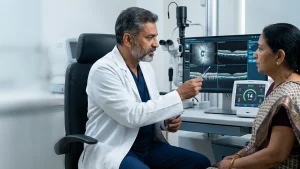
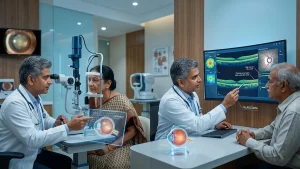
A full assessment is beyond just using an eye chart. It may include pressure measurement, a dilated optic nerve exam, gonioscopy, corneal thickness measurement, optical coherence tomography and visual field testing.
This is that we can not determine is glaucoma hereditary from at home vision test or a single pressure reading. Some people develop damage at what is considered to be normal pressure, while in others there is high pressure without glaucoma. Diagnosis is based on nerve structure, visual function and change over time.
The National Eye Institute reports that comprehensive dilated eye exams are the best way to catch glaucoma. At ASG Eye Hospital we may include in our glaucoma assessment tonometry, gonioscopy, optical coherence tomography and visual field testing as the situation requires.
Does Everyone With Family History Need Genetic Testing?
For example in the case of common adult primary open angle glaucoma we may not see a great value in routine testing. The Glaucoma genetics is complex which is to say that many variables play a role only to a small degree. Results should be looked at in the context of the eye exam and family history.
Testing of the disease may be reported at the onset of glaucoma in infancy, childhood or early adulthood, when many in the family are affected across several generations, or when it is a part of a larger genetic syndrome. In some cases glaucoma genetics will inform counseling and also identify which relatives require evaluation.
A genetic counselor may present to families the info on inheritance patterns, the limits of test results and what a detected variation may mean for other relatives. Genetic testing is not to be used in place of eye pressure assessment, optic nerve and visual field evaluation.
Can Hereditary Glaucoma Be Prevented?
Inherited predisposition at this time is not something that can be changed, which is to say that if you ask is glaucoma hereditary the response should be to which course of action will you put in place for screening rather than panic. The practical aim is to catch the disease before it causes visible vision loss.
Healthy habits are a component of good health care but do not in and of themselves treat all health issues. Also, people who have a family history of glaucoma do not use supplements, eye exercises or perfect 20/20 vision as indicators that the optic nerve is in fact healthy.
The National Eye Institute reports that at present we do not have any methods to prevent glaucoma. That is why it is important for routine eye exams which may detect the disease before the patient is aware of any vision loss.
When Symptoms Need Urgent Attention
Most open angle glaucoma is a progressive disease but acute angle closure glaucoma presents with severe eye pain, redness, blurred vision, halos, headache, nausea or vomiting. These symptoms require prompt medical attention and should not be waited out at home while you’re determining is glaucoma hereditary.
Even out of the blue for no reason side vision loss, repeat abnormal pressure results or a note of something off in the optic nerve report which is out of the ordinary requires specialist attention, also when many glaucoma risk factors are present. At ASG Eye Hospital we see a sudden severe headache, eye redness, nausea, vomiting and sudden vision loss as reason to require urgent evaluation.
Treatment Depends on Eye Findings
A positive family history of glaucoma does not in itself mean that treatment is to be given. We do step in to treat when the exam results come back positive for glaucoma or when the risk of damage is high which in turn requires us to do something about lowering the intraocular pressure. We may use eye drops, laser treatment or surgery.
The aim is to reduce pressure to a more stable point and see if the optic nerve and visual field have improved. Genes may play a role in how we get the disease but in terms of treatment we base our decisions on what we can measure and the disease’s progress.
Current treatments do not reverse optic nerve damage in glaucoma. But we do have success in protecting what vision is left via medicine, laser procedures, and surgery.
Talking to Relatives
When a family member is diagnosed with glaucoma, share what type of glaucoma it is if you know and get other relatives to bring it up at their next eye exam. This shifts the question is glaucoma hereditary into a practical family health measure.
Record out which affected relatives from the mother’s and father’s lines and what age at diagnosis, what is known of the treatment. A family history of glaucoma which is from either parent is relevant. A family health history over many generations is useful to health care professionals in recognizing what may otherwise be missed.
Glaucoma Screening at ASG Eye Hospital
At ASG Eye Hospital we may also do an eye pressure check, nerve at the back of the eye evaluation, visual field testing, gonioscopy and in some cases imaging. Care is customized to the type of glaucoma, degree of severity, pressure levels, visual function and progress.
Anyone that is concerned about is glaucoma hereditary glaucoma after a relative’s diagnosis may book in for a comprehensive eye exam and bring in available family and medical records. People with many risk factors may be put on a personal monitoring schedule.
Frequently Asked Questions
1. Is glaucoma hereditary if only one parent has it?
Heredity may still play a role when one parent is affected, but a child is not destined to develop the disease. As to whether glaucoma hereditary it depends on the type, age at onset of the disease and if a specific inherited gene variant is present.
2. How much does family history increase glaucoma risk?
In family history of glaucoma there is a greater risk, especially in first degree relatives. The exact degree of risk which varies between studies, populations and glaucoma types. Also to be looked at is eye pressure, optic nerve appearance, age and other glaucoma risk factors.
3. Which genes are linked with glaucoma?
Research in glaucoma genetics has reported that MYOC, CYP1B1, OPTN and TBK1 are associated with certain disease presentations. These genes do not account for all cases and adult onset glaucoma in most instances is a result of the aggregate effect of many variables.
4. Can glaucoma skip a generation?
In some cases glaucoma may skip a generation which means not all people with hereditary tendency will develop the disease which is noticeable, also relatives may be diagnosed at different ages and some cases may go unrecognized. Thus it is not true that every case of is glaucoma hereditary based on whether each generation has a diagnosis.
5. Should children be screened when a grandparent has glaucoma?
The grand parent’s diagnosis should pass to the child’s ophthalmologist. As to timing that varies by the type of glaucoma and wider family picture. In the case of early onset or congenital glaucoma in the family prompt discussion with specialists is required and glaucoma genetics may sometimes be relevant.
6. Can glaucoma develop without affected relatives?
Yes. Many patients present with no family history of glaucoma. Maybe their relatives are yet to be diagnosed, we may not have full family info or disease may present through other inherited or non inherited causes.
7. Does normal eye pressure rule out hereditary glaucoma?
No. Normal pressure glaucoma does present a situation in which the optic nerve is affected at what is considered to be a normal pressure. In terms of is glaucoma hereditary, the optic nerve and visual field should be evaluated as opposed to pressure alone.