A diagnosis of keratoconus brings up right away the issue of what the future holds for vision. Also very common is the question patients put forth: can keratoconus cause blindness? It is a natural worry, in particular when vision begins to go blurry, distorted, or is no longer corrected by regular glasses. While keratoconus does greatly affect visual quality if left untreated the good news is that complete blindness from it is very rare.
We see that patients do better to know how the condition progresses and what treatment options are available which in turn helps them in making informed decisions for the health of their eyes. In this guide we look at can keratoconus cause blindness, the importance of early diagnosis, and how modern eye care has greatly improved results for people that have this condition.
What Is Keratoconus?
Keratoconus is a condition which is progressive in nature affecting the cornea, the clear front of the eye. In a healthy eye the cornea is smooth and domed which in turn properly focuses light. In keratoconus the cornea becomes thinner over time and begins to bulge out into a conical shape. As the cornea changes its shape vision also does likewise which may include distortion, double vision, seeing halos around lights, increased light sensitivity and very frequent changes in the prescription for glasses. Also many with this disease wonder if it leads to total blindness which in fact it may do so in very advanced stages thus making simple things in life like reading, driving, and recognizing faces a great challenge if not well managed.
Can Keratoconus Cause Blindness?
The issue at hand is that which of all the cases does keratoconus lead to total blindness is a question which requires attention but in fact total blindness is a very rare outcome. Keratoconus alters the way light enters the eye as opposed to the retina or the optic nerve which are the elements usually to blame for permanent loss of vision.
Also it is true that which left untreated keratoconus does cause vision to worsen greatly. In late stages we see corneal scarring, very severe thinning of the cornea or issues like acute hydrops which do bring vision down to very low levels which in turn greatly affect daily life. It is for this reason that many patients ask can keratoconus cause blindness after they have had their vision worsen.
We have today very good diagnostic tools and also advanced treatments for keratoconus which allow us to slow progress of the disease, preserve vision and improve visual quality for the great majority of patients. Thus while the question of can keratoconus cause blindness is an important one, what we do about it in terms of early intervention greatly reduces the risk of serious visual impairment.
Is Keratoconus Serious?
Many of our patients also put forth the question: is keratoconus a serious issue and can keratoconus cause blindness? That really depends on at what stage the condition is caught and how fast it progresses. In the early stages of the disease we see only mild visual distortion which may be corrected with the use of glasses. But as the disease progress the cornea does so also which in turn makes standard glasses less of an option.
This is very much a reason for which we address the is keratoconus serious issue for any one that has just been diagnosed. The severity of keratoconus is in its progressive nature. Also without proper monitoring and treatment the condition may go on to get worse over time. When patients ask if keratoconus is serious we as eye specialists explain that the issue of the disease is in the large variation we see in how it plays out for each individual.
How Vision Changes in Keratoconus
To better understand why people ask can keratoconus cause blindness, it helps to look at how vision changes throughout the condition.
| Stage | Common Symptoms | Vision Impact |
| Early | Mild blur, slight astigmatism | Usually corrected with glasses |
| Moderate | Increased distortion, glare, halos | Contact lenses often needed |
| Advanced | Significant irregular astigmatism, corneal thinning | Vision may become severely reduced |
| Severe | Scarring and extreme corneal irregularity | Functional vision may be substantially affected |
Patients who wonder is keratoconus serious should know that progression is not identical for everyone. Some individuals experience slow changes over many years, while others see more rapid deterioration.
Why Early Treatment Matters
One reason patients frequently search can keratoconus cause blindness is because they are unaware of the treatment options available today. Early diagnosis allows ophthalmologists to intervene before major vision loss occurs.
Corneal collagen crosslinking has grown to be the top advancement in keratoconus treatment. This procedure strengthens the cornea and also which in turn stops or lessens progression. We see for many that early intervention which is key in preventing the disease from reaching advanced stages. In the discussion of how serious is keratoconus we note that what may be more at risk is the patient’s vision if left untreated which in turn is a greater issue than the condition itself. Early management greatly improves long term results.
Modern Treatment Options for Keratoconus
Today, several effective treatment approaches are available depending on the severity of the condition.
| Treatment Option | Purpose | Suitable Stage |
| Glasses | Correct mild vision changes | Early |
| Specialty Contact Lenses | Improve visual clarity | Mild to Advanced |
| Corneal Cross-Linking | Stabilize the cornea | Progressive Keratoconus |
| Intracorneal Ring Segments | Improve corneal shape | Moderate Cases |
| Corneal Transplant | Replace severely damaged cornea | Advanced Cases |
Patients often ask can keratoconus cause blindness because they fear permanent vision loss. Fortunately, modern eye treatments provide multiple options before severe complications develop.
Can Keratoconus Lead to Permanent Vision Loss?
Although it is a common issue that people bring up with regard to keratoconus which is the can keratoconus cause blindness in fact what we see very rarely is total and permanent blindness. What we see more of is severe visual impairment which comes from advanced corneal distortion or scarring. This is why it is so important to see a qualified cornea specialist regularly.
A cornea specialist is able to watch the disease progress, to recommend intervention at the right time and to determine what other treatments for keratoconus may be of benefit. Also patients very often ask is keratoconus serious because they are afraid of losing their independence. What we find is that most people who get the appropriate care are able to maintain useful vision for their entire lives.
Risk Factors That Can Worsen Keratoconus
Research reports that some factors may bring on faster disease progress. Eye rubbing is the greatest known risk factor for chronic. Also at play are allergies which produce persistent itchy eyes and which in turn may cause more corneal change. If you are a person who has keratoconus which may lead to blindness it is important to know that by reducing these risk factors you can do a lot to protect your vision.
In terms of care for this condition, we see that managing allergies and to also to avoid excessive eye rubbing is very important. In the discussion around is keratoconus serious, ophthalmologists tend to also stress out lifestyle changes along with medical treatment.
Living Well With Keratoconus
A diagnosis of keratoconus is not a death sentence. We have seen great progress in imaging tech, early detection methods, and specialized eye care which has in turn improved patient results.
Individuals who regularly follow up with a cornea specialist and adhere to recommended keratoconus treatment plans often continue to work, drive, study, and enjoy normal daily activities. This is one of the reasons why the answer to can keratoconus cause blindness has become far more reassuring than it was decades ago.
For patients that are concerned that keratoconus is serious, the condition does require attention, but with proper treatment it is very much under control.
When Should You See a Cornea Specialist?
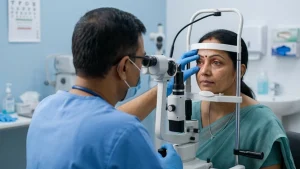
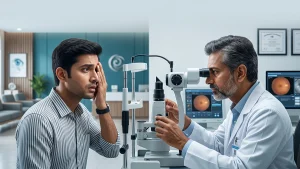
If you are finding your glasses prescription is changing very often, vision is becoming more distorted, or you notice that your glare and halos are getting worse it is important to see a cornea specialist soon. Often patients ask at what point can keratoconus cause blindness which is usually well into the disease’s progress. An early evaluation allows in to effective keratoconus treatments before large scale vision loss. Also if you are putting out what is keratoconus a serious issue that is in itself a good reason to get a full eye exam. Early detection is by far the best tool for vision preservation.
Keratoconus Care at ASG Eye Hospital
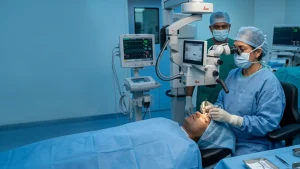
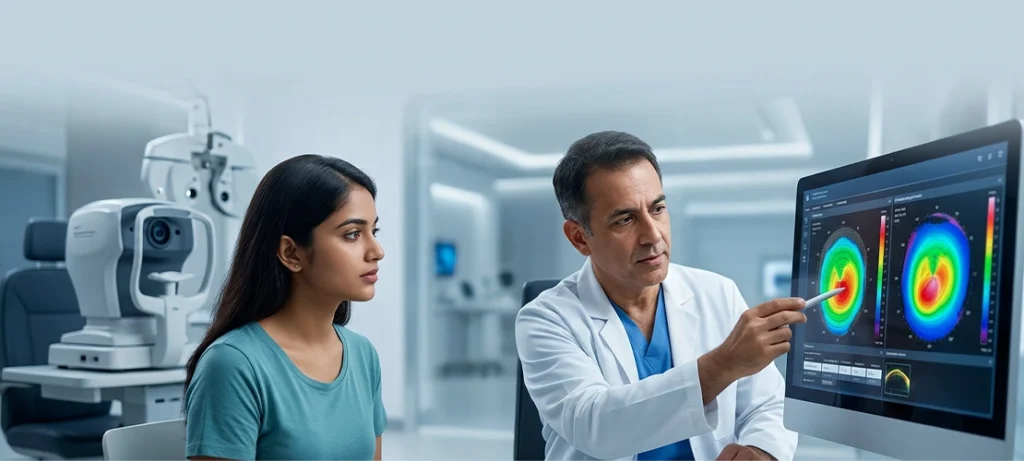
At ASG Eye Hospital we have a team of experienced cornea specialists which use advanced diagnostic tools to identify keratoconus in its early stages. We present to each patient a personal keratoconus treatment plan which may include corneal cross linking, specialty contact lens fitting and advanced surgical options as needed. We are to inform patients that while keratoconus may lead to blindness we offer the best info, timely treatment and a support system. With the help of the latest eye care technologies and full follow up we do our best to preserve our patients’ vision and to help them live well.
Key Takeaway
Can keratoconus cause blindness is a valid one, but full blindness from this disease is a very rare thing. While the condition may cause severe visual impairment if not treated, present treatments for keratoconus do well to slow progress of the disease and to preserve vision. Also it is fair to ask if keratoconus is a serious condition, a condition which needs attention and which should be monitored by health care professionals. But with early diagnosis, regular check ups, and care from a cornea specialist most patients will do well to keep their functional vision for many years.
Also Read :
Keratoconus Treatment, Cornea Disorders
Frequently Asked Questions
1 Can keratoconus cause blindness?
Full on blindness is a rare outcome. But what does happen is that with left untreated keratoconus you see very serious visual impairment which comes from corneal thinning, scarring and distortion
2 Is keratoconus serious?
You bet it is. Keratoconus is a progressive disease which greatly affects vision if you don’t treat it. Early diagnosis and treatment is key.
3 What is the best keratoconus treatment?
Treatment is based on the stage of the disease. We have glasses, specialty contact lenses, corneal cross linking, intracorneal ring segments, and corneal transplantation as treatment options.
4 Can keratoconus be cured permanently?
At present there is no full cure but we have very good treatments which do control the progress and improve vision.
5 When should I see a cornea specialist?
You should see a cornea specialist if you are having frequent prescription changes, increasing blur, glare, halos or if you think your keratoconus is progressing.