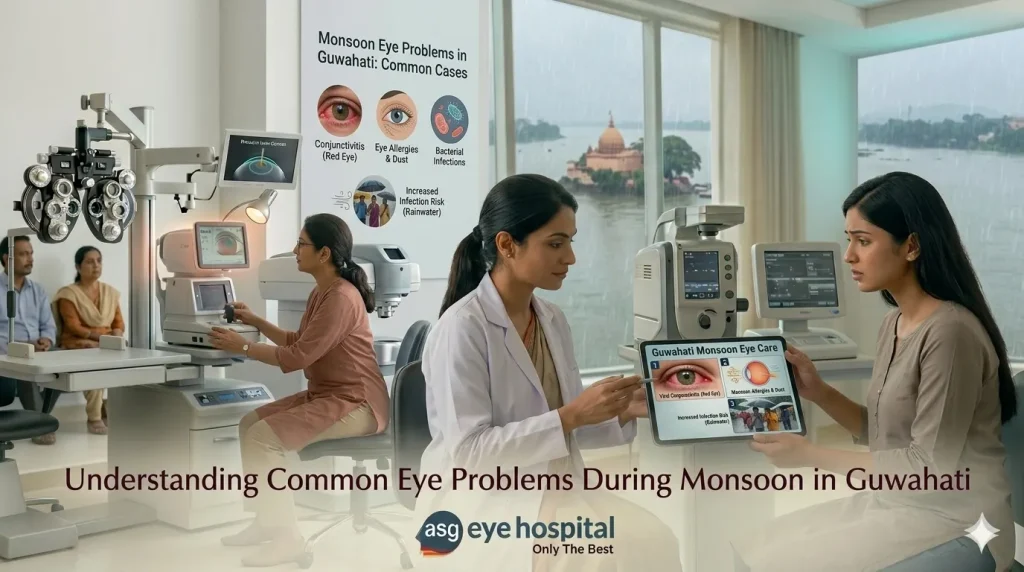
Guwahati’s Rains Are Beautiful, But Hard on the Eyes
Monsoon is an eagerly awaited event in Guwahati all year long. The city turns lush green. The air cools down. But along with the rains comes something far less welcome — a sharp spike in eye problems. The dampness of air, the water-soaked streets and polluted rain water are all conducive to infection. Many residents brush off early symptoms as simple tiredness. That is usually where the problem begins.
What Are the Most Common Eye Problems During Monsoon in Guwahati?
During the monsoon season, people in Guwahati commonly experience:
- Conjunctivitis (Pink Eye)
- Eye Allergies
- Styes (Eyelid Infections)
- Corneal Infections
- Contact Lens-Related Eye Problems
The increased humidity, contaminated rainwater, and bacterial growth during monsoon can increase the risk of eye infections. Maintaining eye hygiene and seeking timely treatment can help prevent serious complications.
Pink Eye Spreads Faster Than Most People Realize
The most talked about eye disease during the monsoons in Guwahati is conjunctivitis. It is easy to spread between people, direct and indirect contact. Handshakes, doorknobs, shared towels are all possible sources of infection. By morning the eyes are quite red, gritty and oozing a sticky discharge. Schools and offices often see multiple cases within the same week. Anyone experiencing these signs should seek eye infection treatment Guwahati without delay. It is important to not rub the eye as this only makes the condition worse and spreads the infection further.
Common Monsoon Eye Problems & Prevention Tips
| Eye Problem | Common Symptoms | Prevention Tips |
|---|---|---|
| Conjunctivitis | Redness, itching, discharge | Wash hands frequently, avoid sharing towels |
| Stye | Painful eyelid swelling | Maintain eyelid hygiene, avoid touching eyes |
| Eye Allergy | Itching, watering, redness | Avoid allergens, use prescribed eye drops |
| Keratitis | Pain, blurred vision, light sensitivity | Protect eyes from rainwater and dust |
| Contact Lens Infection | Irritation, redness, discomfort | Remove lenses before rain exposure |
Styes: Small but Genuinely Painful
A stye is a sore, enlarged bump which develops on the eyelid. It occurs as a result of blockage of the oil glands due to bacteria.. During monsoon, dust particles carried by rain get trapped in these glands easily. This leaves the petals with pain, redness and obvious swelling around the lashing line. The majority of individuals attempt to squeeze a stye from the eye. That is a bad idea. It pushes the infection deeper and can worsen things significantly. A visit to a trusted eye clinic handles this cleanly and safely.
Corneal Infections: A Serious Monsoon Risk
Keratitis is an extremely painful condition around the cornea due to inflammation. It’s caused by an infection that bacteria, viruses or fungus enter into the eye through contaminated water. It is particularly dangerous when it rains for commuters on two-wheelers. Contact lens wearers face even higher risk. Wearing an eye lens during monsoon demands extra hygiene. Never let the rain water come close to the lens. Symptoms are sharp pain, extreme sensitivity to light and blurry vision. Immediate eye treatment is required at a reputed eye hospital in Guwahati – don’t delay – don’t treat at home.
Eye Allergy Guwahati: Mold and Pollen Are the Real Culprits
With every monsoon season thousands of people are struck with seasonal allergies in Guwahati. It is in the damp corners that mold spores begin to grow. Rains have little effect on pollen levels during the season. They work together to cause itchy, watery and swollen eyes. People suffering from eye allergy Guwahati often make things worse by constantly rubbing. The irritation triggers the body to secrete additional histamine and to inflate and swell even more. Antihistamine drops (prescribed by an eye specialist) can soothe the reaction down in no time at all. Managing the source of the allergy alongside medication gives the best results.
Habits That Actually Make a Difference This Season
Little effort is needed and a lot of discomfort is saved by prevention. Some useful suggestions regarding the actions that should be taken by the citizens of Guwahati in the monsoons:
- Wash hands properly prior to and after contact with face/eyes.
- Never share towels, pillows or eye makeup with anyone in the home
- Wear wrap around glasses when riding on 2 wheels in the rain.
- Remove contact lenses before any exposure to rain or swimming
- Use clean, fresh tissues to wipe the eyes instead of fingers
- Replace eye lens storage solution regularly during humid months
- Book a checkup at an eye clinic even without visible symptoms
These habits sound simple. By sticking to their recommendations, people who stay healthy do so, while others find themselves in treatment.
When Waiting Is No Longer an Option
If you experience any sudden vision loss, intense pain or any discharge of pus, this is not something to keep an eye on. If the redness doesn’t go away after two days, it should be taken seriously by an eye doctor. Thanks to advancements in eye technology, retinal damage, pressure changes, and even the start of an infection may now be detected in specialist hospitals in minutes. Early detection translates to quick recovery and minimal risk of permanent damage. Waiting makes nearly every eye condition harder to treat.
How ASG Eye Hospital Guwahati Handles This Season’s Demand
ASG Eye Hospital has become a recognized name for eye care across Guwahati and the wider Assam region. Because ASG Eye Hospital provides “consultation, advanced diagnostic testing, and surgical treatment at one location,” the patient experience is ideal. Eye treatment is received without time delays or referrals to other health care providers because the knowledgeable eye professionals and state-of-the-art eye technology are on site to provide accurate diagnosis and eye treatment. From managing simple eye allergy Guwahati cases to providing complex eye infection treatment Guwahati, ASG handles the full spectrum with clinical precision. Every patient — whether needing a new eye lens, a cornea assessment, or an allergy evaluation — receives individual attention backed by genuine expertise.
FAQ Section
1. Why do eye infections increase during monsoon in Guwahati?
High humidity, contaminated water, and increased bacterial and viral growth during monsoon create ideal conditions for eye infections.
2. What are the symptoms of conjunctivitis?
Common symptoms include red eyes, itching, watering, discharge, and a gritty sensation in the eyes.
3. Can rainwater cause eye infections?
Yes. Rainwater may contain pollutants, bacteria, and allergens that can irritate the eyes and increase infection risk.
4. Is it safe to wear contact lenses during monsoon?
Yes, but extra care is required. Avoid exposing contact lenses to rainwater and maintain proper lens hygiene.
5. When should I visit an eye specialist?
Consult an eye specialist if you experience persistent redness, pain, blurred vision, swelling, or eye discharge.
6. How can I protect my eyes during the rainy season?
Wash your hands regularly, avoid rubbing your eyes, wear protective eyewear outdoors, and maintain proper contact lens hygiene.