
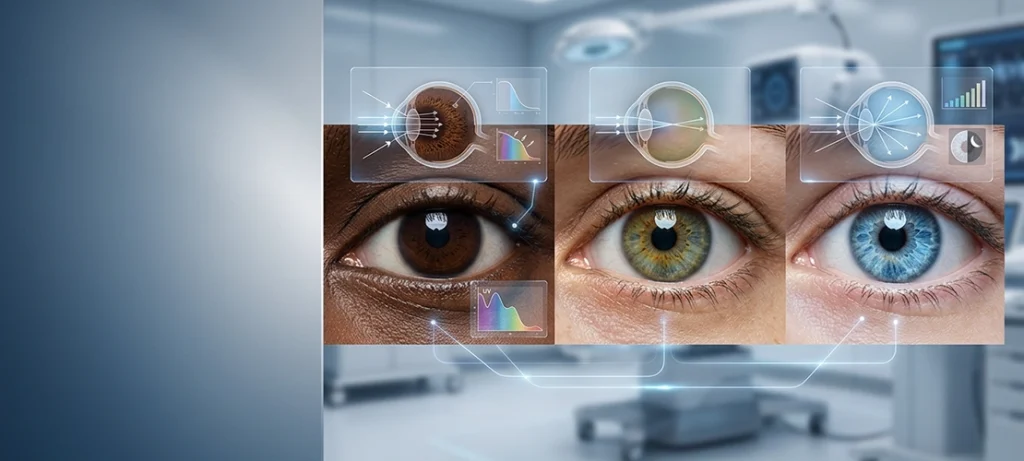
Many people assume eye color is a simple trait which we have brown, blue, green, hazel, gray. But in fact eye color is very much tied to the amount of melanin in eyes and that which we see is a large role that most don’t think of. Beyond what we see in terms of appearance,melanin in eyes also plays a role in how light enters the eye, to what degree that is comfortable for the eye and also reports in some cases the risk of certain eye conditions.
Over the past decades researchers have been at it to study the association between melanin in eye colour vision. Although eye color in itself doesn’t determine one’s acuity of eye colour vision , what we do see is that the amount of pigmentation present in the iris does play into light sensitivity, glare tolerance and aspects of total eye color vision. By understanding this connection people can in turn make better choices in terms of eye care and protecting their eye health.
What Is Melanin and Why Is It Present in the Eyes?
Melanin is a natural pigment that is produced by what are known as melanocytes. It is the element which gives us our skin, hair and eye color. In the eyes it is the amount of melanin in eyes which determines if a person will have dark or light colored irises. High levels of melanin in eyes results in brown or dark brown irises. Low levels may produce hazel, green, blue or gray eyes. The pigment also serves as a natural filter which puts a brake on excess light and protects the inner sensitive elements of the eye. This protective role is a key element in the health of the eye which is why melanin in eyes is very important for a person’s visual health over a lifetime.
How Melanin Determines Eye Colour
The colour of the iris depends primarily on the amount and distribution of melanin in eyes rather than the presence of different coloured pigments. Darker eyes contain more melanin, while lighter eyes contain less.
| Eye Colour | Typical Amount of Melanin in Eyes |
| Dark Brown | Very High |
| Brown | High |
| Hazel | Moderate |
| Green | Moderate to Low |
| Blue | Low |
| Grey | Very Low |
Although genetics is the primary factor in eye color, environment and biological factors play into pigment change over time. Melanin production in eyes does mostly stabilize during childhood, but we see small changes with age.
Does Eye Colour Affect Vision?
One of the most asked questions of patients is what we put out there regarding eye color change which in turn affects eye colour vision. In general eye color does not020 play a role in determining visual sharpness or clarity. You may have blue eyed people with 20/20 eye colour vision at the same time as we have brown eyed patients that require glasses.
Also eye color does play a role in eye colour vision indirectly via the amount of pigmentation present. What we see most of this in bright environments. In very bright settings the relationship between eye color and pigmentation becomes most prominent. What we see is that people with low levels of melanin in eyes may have increased sensitivity to sun and glare because they have less pigment to absorb that incoming light.
As for dark eyed individuals we see they do report greater comfort in very bright conditions as they have high amounts of melanin in eyes which in turn does the job of natural light filtration in the eye. This does not improve eye color vision per se but does improve visual comfort during outdoor activities.
Light Sensitivity and Melanin in Eyes
Light sensitivity also known as photophobia is a variable which is present in different degrees in different people. An element which may play a role in this variation is the amount of melanin in eyes.
Upon entry of bright light into the eye, there is a great deal of scattering which takes place within the eye’s structures. High levels of melanin in eyes plays a role in the absorption of some of this scattered light thus in turn reduces discomfort.
Low levels of melanin in eyes may allow more light to pass through which in turn may make bright settings to be more intense. That is why we see individuals with lighter eye colors reach out for their sunglasses more often than those with dark eye colors. While the difference is not related to visual acuity it is to do with comfort and glare management.
Eye Colour, Vision, and Daily Activities
The issue of how eye color and light play together may shape our day to day experiences. For instance we see how on bright sunny days, at the beach, or under very bright lights people perform differently based on the level of melanin in eyes.
What we find is that while people with light eyes may see more of the glare effect, at the same time those with dark eyes report they do better in very bright settings. Also there are many other issues at play with eye colour vision which include total eye health, pupil size, age, and environment.
It is also important to note that although eye color may play a role, many other factors do as well. That is why it is important to have a healthy lifestyle for your eyes which includes regular eye exams and wearing proper protection for your eyes.
Eye Colour and Eye Health Risks
Researchers looked at if melanin in eyes plays a role in development of certain eye conditions. Although eye color itself does not cause disease, pigmentation does play a role in how the eyes react to environmental factors like ultraviolet (UV) radiation. What we see is that melanin’s protective qualities may put some defense against UV related damage in eyes. Also it is for all of us no matter what our eye color is to protect our eyes from excessive sun exposure.
| Eye Factor | Possible Influence on Eye Health |
| Higher melanin levels | Increased natural light absorption |
| Lower melanin levels | Greater sensitivity to bright light |
| Darker eye colour | Often associated with lower glare sensitivity |
| Lighter eye colour | Often associated with increased light sensitivity |
| All eye colours | Require UV protection and regular eye exams |
While scientists continue to study the relationship between melanin in eyes and disease risk, experts agree that routine monitoring of eye health remains the most important preventive measure.
Can Eye Colour Change Over Time?
Changes of eye color in adults are at a minimum but do happen in some situations. In some cases what we see is a change in melanin in eyes. Also it may be a result of medication, injury, inflammatory issues and very rare eye diseases which in turn may change iris color.
Any notable or sudden change in eye color should be reported to an ophthalmologist. Such changes may be a sign of a health issue which requires the attention of an eye specialist at a hospital.
Protecting Your Eyes Regardless of Eye Colour
Although different levels of melanin in eyes, which is a fact that varies person to person, we all do well from proper eye care. We put on UV protective sunglasses, we see to it that our diet is balanced and rich in anti oxidants, and we get our eyes checked up regularly which in turn supports our term health eye colour vision.
As for which people experience great glare or don’t do well with what they are given, it is best for them to talk to their ophthalmologist about what protective measures to take. We have modern eye care treatments which do what they are supposed to do which is to address the various causes of visual discomfort and in the process improve quality of life.
It is very important for people who have a history of eye disease in the family or who are seeing changes in their eye colour vision to visit an eye specialist hospital on a regular basis.
When Should You See an Eye Specialist?
If you experience an increase in light sensitivity, change in eye color, blurred eye colour vision, glare issues, or any change in eye color it is important to get in to see a professional. Early diagnosis of many eye conditions which present with these symptoms allows for more effective management through the use of timely eye care and treatment and also ongoing eye health monitoring.
An experienced ophthalmologist will be able to tell if your symptoms are within the range of normal variation in eye pigmentation or if further investigation is required.
Conclusion
Melanin in eyes does not just determine color but also the eye’s reaction to light, visual comfort, and also plays a very large role in the protection of the eye’s structure. Although many genes may influence eye color the role of pigmentation in the function of the visual system can not be ignored.
On the spectrum from dark brown to hazel, green, blue and grey, what is very important is to keep your eyes healthy through routine check ups, wearing UV protective lenses, and to seek out timely care for eye issues. And if you are having problems with light sensitivity, eye colour vision changes, and also any changes at all in the color of your eyes a professional visit is recommended in which we will be able to address these issues and thus keep your eyes healthy into the future.
Frequently Asked Questions
1.Does melanin affect eyesight?
Yes. Melanin present in eyes is what helps to absorb extra light and reduce glare. Although it doesn’t determine visual acuity, it does play a role in visual comfort and light sensitivity.
2. Why are light-coloured eyes more sensitive to sunlight?
Lighter eyes have less of the pigment melanin which in turn does not do a great job of filtering out incoming light. This may result in greater sensitivity to bright conditions.
3. Does eye colour affect vision quality?
Eye color doesn’t determine visual quality. However, eye color does play into vision. A bright environment may be influenced by differences in eye pigmentation.
4. Can eye colour change with age?
Minor changes may occur over time, but significant changes in eye colour should be evaluated by an eye specialist to rule out underlying conditions.
5. Is melanin important for eye health?
Yes. Melanin in eyes provides natural protection against excess light exposure and contributes to maintaining overall eye health.
References
National Eye Institute (U.S. Government)
https://www.nei.nih.gov
MedlinePlus – Eye Anatomy and Eye Health (U.S. National Library of Medicine)
https://medlineplus.gov
National Institutes of Health (NIH) – Melanin and Eye Pigmentation Research
https://www.nih.gov