
Discarded plastic breaks down into particles which then travel in air, water, soil and food. This is causing an issue with Microplastics and Eye Health to become a bigger public health issue which is very true for people with Dry Eyes.
Researchers have reported the presence of Microplastics in the human body and in the lab it has been seen that some plastic particles may cause oxidative stress or Eye Inflammation. But we do not have enough human studies to say that everyday exposure causes a specific eye disease for sure. We must present a balanced picture of Eye Health Risks which puts out what is early research and what is proven information regarding Pollution Effects on Eyes.
This guide includes information on the issue of Greater Plastic Pollution, also we cover Practical Eye Safety measures, Relevant Environmental Toxins, and we present ways to protect Vision Health and Healthy Vision.
What Does Microplastics and Eye Health Mean?
Microplastics are tiny plastic particles that may be manufactured for a specific purpose or produced as larger plastic items break down. According to the US Environmental Protection Agency, they range from five millimetres to one nanometre in size, while Plastic Pollution persists and fragments across both natural and built environments.
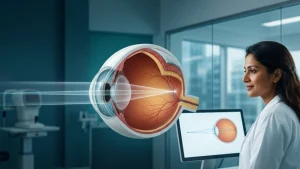
The issue of Microplastics and Eye Health is that the eye is in constant contact with the environment. The tear film which is over the cornea keeps that surface smooth and also helps to remove dust and irritants. The National Eye Institute reports that with each blink the tear film is spread across the cornea and that the tear film also plays a role in clear vision and in protecting from infection.
Tiny particles which may also include elements of dust, synthetic fibers, road grit, smoke or polluted water are present in our air. Also a person is not to identify microplastics in dust, and we don’t see that common symptoms prove exposure. Dry eyes, allergies, screen use, low humidity, medication and contact lens wear are still the more common causes of irritation
How Can Microplastics and Eye Health Exposure Occur?
Research on Microplastics in the Human Body reports on inhalation, intake and environmental contact as possible exposure which. NIH reports we have found microplastics in blood, lungs, the digestive tract, faeces, placenta and breast milk, at the same time which it is put out that we still don’t have clear proof of how these particles play health issues. Detection of Microplastics in the Human Body is a report of exposure not of disease.
The ocular surface can come in contact with air borne fibers or particles which deposit on the lids, eyeball, conjunctiva or tear film. In a study through the US National Library of Medicine which is titled “Impact of Microplastics on the Ocular Surface” it is reported that we are exposed via air and water but that we have very little human based evidence. Thus Microplastics and Eye Health is a very much an area of present research as opposed to a set in stone clinical issue.
Every day we see that which is thrown out and burned adds to plastic pollution. Also when we burn plastic it increases the problem of plastic pollution and at the same time releases environmental toxins which in turn puts more people at risk.
What Does Current Eye Research Show?
Most of what we have in terms of direct evidence regarding Microplastics and Eye Health comes from what is done in the lab with cell studies and animal models. We are told by researchers that they have reported on oxidative stress, inflammatory signals, reduced cell viability, altered tear production and changes in the ocular surface which they noted after putting particles in. It is also brought to our attention by PubMed Central which hosts these reviews that at this stage the research is preclinical and that we can’t assume that what is seen in these settings will play out the same in normal human exposure.
Possible causes include Eye Inflammation, oxidative damage and disruption of the tear film environment. Which in turn may be a result of the size, shape, chemical make up, concentration and duration of exposure. Also plastic particles may carry in them additives, metals, microbes or Other Environmental Toxins which we are still in the process of researching for Eye Health Risks.
This issue is key. The presence of microplastics in Human Body does not tell us if a particle caused damage, how long it stayed in the system or if the body was able to clear it. Also in terms of Eye Health Risks we see that what we find in the lab does not prove that microplastics cause dry eye, corneal disease or vision loss in the real world.
| Area being studied | Current understanding | Important limitation |
| Tear film | Experimental exposure may reduce tear stability and resemble Dry Eyes | Human exposure levels and clinical importance are unknown |
| Cornea and conjunctiva | Cell and animal studies suggest oxidative stress and Eye Inflammation | Results may not reflect routine exposure in people |
| Airborne particles | Dust may bring particles into contact with the ocular surface | The plastic portion of total dust is rarely measured |
| Long-term sight | Researchers are examining possible Eye Health Risks to Vision Health | Direct evidence of permanent human visual damage is insufficient |
Microplastics Are Not the Same as General Air Pollution
The issue of general Pollution Effects on Eyes is greater than that of microplastics alone. We see in systematic reviews that particulate pollution is associated with burning, itching, redness, tear film disturbance, conjunctival irritation and also with ocular surface disease. Air pollution contains soot, dust, smoke, gases, bio material, heavy metals, plastic particles and other Environmental Toxins.
This issue is of importance in the discussion of Microplastics and Eye Health. We see that a person may have Dry Eyes on a high pollution day, but a health care professional is not able to determine that microplastics are the cause based only on symptoms. We know that Pollution effect on eyes and may cause eye inflammation which is why it is sensible to reduce total irritant exposure until we have more data.
People who present with ocular allergy, meibomian gland dysfunction, chronic eye inflammation, corneal disease or contact lens discomfort may react more strongly to Environmental Toxins and poor air quality. In these cases Protection of Vision Health is achieved by control of all relevant variables instead of a single invisible agent.
Microplastics and Eye Health: Symptoms That Deserve Attention
Dust, Environmental Toxins and polluted air may present with burning, stinging, grittiness, itching, redness, watering, light sensitivity and also temporary blur. The National Eye Institute reports that scratchy feeling, burning, redness, light sensitivity and blurry vision are very common symptoms of Dry Eyes.
These issues do not confirm an issue with Microplastics and Eye Health or identify specific Eye Health Risks. They present with symptoms which are also see in allergy, infection, blepharitis, foreign-body injury and contact-lens complications. Persistent Eye Inflammation may be a sign of true Eye Health Risks and should not be put on indefinite management with random drops.
Intense pain, sudden vision change, very redness, an object in the eye or excessive watering requires prompt attention. The National Eye Institute reports that for severe pain, vision change, red watery eyes or a foreign body in the eye seek immediate care. Early evaluation supports Eye Safety, preserves Healthy Vision and we hope to protect your Healthy Vision.
Who May Be More Sensitive to Microplastics and Eye Health Concerns?
People that have dry eyes, eye allergies, recent surgeries, corneal conditions or are heavy contact lens users may see Pollution Effects on Eyes earlier. Also outdoor workers and people in the fields of textile production, plastic cutting, recycling, packaging, construction or waste handling which have high particle exposure should comply with workplace Eye Safety measures.
In children and elderly people eye safety is a key issue which includes the fact that rubbing and unstable tears increase irritation. Also it is not standard practice to run a tear test, scan or blood test to determine if Microplastics in Human Body are affecting a patient’s eyes. We do not have that which proves that info on Microplastics in Human Body validates “detox” products or eye drops which claim to remove plastic.
Reducing Exposure While Research on Microplastics and Eye Health Continues
A practical approach to Microplastics and Eye Health is to reduce your exposure as much as you can instead of trying for a zero exposure which may not be possible. During dust, smoke, Environmental Toxins or poor air quality events do your best to avoid unnecessary exposure. For work that is occupational in nature and in windy conditions use certified protective eyewear and wraparound glasses. While ordinary spectacles do in part shield the eye, they are not a full substitute for the required safety goggles.
Do not rub at irritated eyes as this may worsen surface injury and Eye Inflammation. Also, it is important to wash your hands before you touch the eyes or handle contact lenses. Should loose dust get in the eye, blink a few times and gently rinse with clean water or sterile saline. Do not put in rose water, oil, herbal mixtures, steroid drops or antibiotics without first consulting a professional. These practices will reduce Eye Inflammation, improve Eye Safety and promote Healthy Vision.
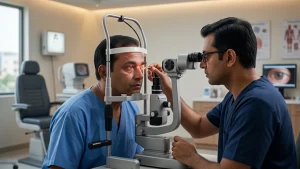
For Dry Eyes, an ophthalmologist may put forth suitable lubricating drops, contact lens changes, eyelid care or treatment for an underlying condition. The National Eye Institute reports that artificial tears are a mainstay for mild dry eye and that steering clear of smoke, wind and excessive air conditioning may help.
Indoor Pollution Effects on Eyes may be reduced through damp cleaning, ventilation and responsible waste disposal. Out of plastic burning which produces smoke and Environmental Toxins, we should avoid it. Also we may reduce the use of single use products, at the same time repair and reuse what we can and properly dispose of waste which in turn will support the fight against Plastic Pollution.
| Situation | Practical response | Medical attention |
| Dust or smoke exposure | Move to cleaner air, avoid rubbing and rinse gently when needed | Seek care if pain, redness or blur persists |
| Mild Dry Eyes | Blink regularly, take screen breaks and use doctor-approved lubricants | Arrange an examination if symptoms recur or affect daily life |
| Workplace particles | Use certified protection and follow occupational Eye Safety procedures | Obtain urgent help after chemical exposure or embedded particles |
| Sudden visual symptoms | Stop driving or hazardous work | Seek urgent assessment to protect Vision Health and Healthy Vision |
Can Lifestyle Changes Solve Microplastics and Eye Health Concerns?
Complete elimination of Pollution Effects on Eyes is a fallacy because Microplastics in Human Body is a result of widespread exposure which is out of an individual’s control. We find microplastics in food packaging, synthetic fabrics, household dust, road wear and breakdown of waste to name a few. Also measurement methods vary which makes it hard to determine individual exposure.
The reason to do so is to avoid disposable plastic when you can, to not heat food in improper containers, to replace broken food storage items and to keep indoor dust to a minimum. These are steps which address Plastic Pollution but cannot eliminate Pollution Effects on Eyes or guarantee better eyesight.
Good Vision Health and sustained Vision Health support Healthy Vision through eye exams, wearing protective eyewear, health management, avoidance of smoking, a healthy diet and early treatment. These practices play a larger role in Healthy Vision than do very strict “plastic free” regimens.
Should Patients Worry About Microplastics and Eye Health?
Concern should match the evidence. We have documentation of microplastics in human body and early studies which put forth reasons to continue research into microplastics and eye health. At the same time it is put forward that we do not have direct proof that every day micro plastic exposure causes human eye disease. Both the NIH and the EPA report that more research is required to understand eye health risks.
The solution is to put down Plastic Pollution, avoid smoke and dust, practice Eye Safety and protect Healthy Vision via timely consultation. Patients should take note of Pollution Effects on Eyes and related Eye Health Risks without assuming that microplastics are the only cause.
Conclusion
Microplastics and Eye Health is a topic of scientific study which should not be a cause for panic. It has been reported that Microplastics in Human Body and in the lab have brought up issues of oxidative stress, Eye Inflammation and tear film disturbance. That said, we are still in the dark regarding what exactly the human eye health risks are.
Patients may respond proactively by reducing their exposure to dust and smoke, avoiding the burn of plastic, managing Dry Eyes, following Eye Safety guidelines and in the case of visual changes, seek early care. If you experience persistent irritation, redness or blurred vision, see an ophthalmologist at ASG Eye Hospital for the appropriate evaluation. Also these actions play a role in what we know of Eye Pollution Issues, reduce contact with Environmental Toxins, support Vision Health and at the same time which is an ongoing research into Microplastics and Eye Health we present these as preventive measures.
Frequently Asked Questions About Microplastics and Eye Health
1. Can microplastics enter the eye?
Air inhaled or absorbed particles may come into contact with the tear film and eye surface which is the reason for study in Microplastics and Eye Health. We still lack in depth research on human exposure, retention and clearance.
2. Do microplastics cause dry eye disease?
Laboratory results present that there may be tear film changes, but they do not in fact prove that everyday exposure is the cause of Dry Eyes in most people. Other causes must be ruled out before we attribute symptoms to microplastics.
3. Can microplastics cause permanent vision loss?
There at present isn’t enough research to say that normal exposure causes permanent vision loss. Work in the field of Eye Health Risks and long term Vision Health is still at early stages.
4. Are contact-lens wearers more vulnerable?
Contact lenses which come in contact with the tear film also have wearers which may be more prone to dust, smoke and Environmental Toxins. Proper hygiene, replacement of lenses and in time a professional review protect vision health.
5. Is there a clinical test for microplastics in the eye?
No present test is a part of routine which is used for diagnosis of harmful eye exposure. Research into detection methods does not report yet on a simple patient test for Microplastics in Human Body.
6. Can protective glasses block all particles?
No piece of eyewear can block out all environmental particles, but appropriate protection does reduce exposure and improves Eye Safety. In the case of wraparound styles they also do a better job at reducing Pollution Effects on Eyes which is an issue in dusty or windy settings.
7. When should I see an ophthalmologist?
Arrangement of tests for issues like recurring redness, burning, watering, Eye Inflammation or blur. Go to the emergency for severe pain, sudden vision loss, injury, chemical exposure or a retained object which may affect Vision Health.