What is Myopia?
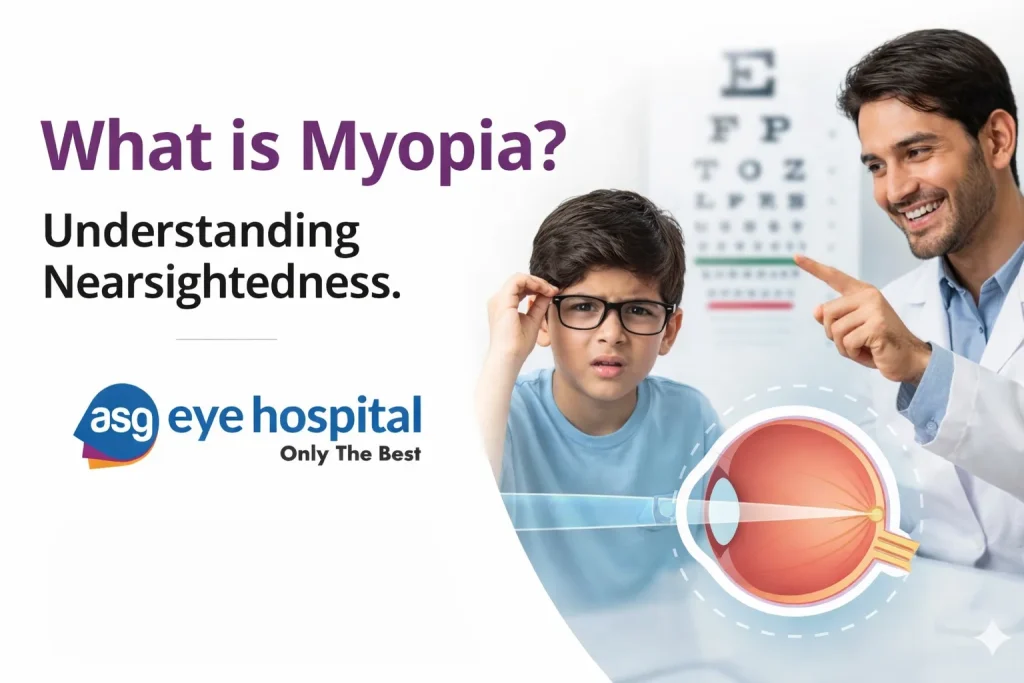
Myopia, also known as nearsightedness, is a common eye condition in which distant objects appear blurry while nearby objects are seen clearly. This happens because light entering the eye focuses in front of the retina instead of directly on it. Myopia can affect people of all ages and is increasingly common, especially among children and young adults.
Types of Myopia
Understanding the types of myopia helps in better management:
- Simple Myopia: The most common form, usually manageable with glasses or contact lenses.
- High Myopia: A more severe form that increases the risk of eye complications.
- Pathological Myopia: A progressive condition that may lead to serious vision problems over time.
Causes of Myopia
Several factors contribute to the development of myopia:
1. Genetics
If one or both parents are nearsighted, the chances of developing myopia are higher.
2. Excessive Screen Time
Prolonged use of mobile phones, computers, and tablets can strain the eyes and increase the risk.
3. Lack of Outdoor Activities
Spending less time outdoors has been linked to a higher incidence of myopia in children.
4. Eye Strain
Continuous reading or close-up work without breaks can contribute to vision problems.
Symptoms of Myopia
Common signs of myopia include:
- Blurred vision when looking at distant objects
- Difficulty seeing road signs or classroom boards
- Squinting to see clearly
- Eye strain or headaches
- Fatigue during visual tasks
Early detection is important to prevent progression.
Myopia in Children
Myopia is becoming increasingly common among children due to lifestyle changes and increased screen exposure. Early diagnosis is crucial because untreated myopia can worsen over time and affect academic performance and daily activities.
Parents should watch for signs like squinting, sitting too close to screens, or complaining of blurred vision.
How is Myopia Diagnosed?
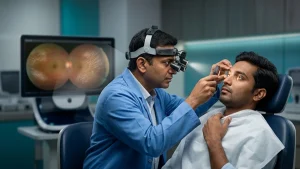
Myopia is diagnosed through a comprehensive eye examination, which may include:
- Vision testing using eye charts
- Refraction test to determine lens power
- Eye health evaluation
Regular eye check-ups help detect myopia early.
Treatment Options for Myopia
There are several effective ways to manage myopia:
Glasses
The most common and simple solution to correct vision.
Contact Lenses
Provide a wider field of vision and are suitable for active lifestyles.
LASIK Surgery
A permanent solution that reshapes the cornea using laser technology to improve vision.
Can Myopia Be Prevented?
While myopia cannot always be prevented, its progression can be slowed:
- Follow the 20-20-20 rule (every 20 minutes, look at something 20 feet away for 20 seconds)
- Limit screen time
- Spend more time outdoors
- Maintain proper lighting while reading
- Keep a safe distance from screens
Myopia vs Hyperopia
| Condition | Myopia | Hyperopia |
|---|---|---|
| Vision Issue | Blurry distance vision | Blurry near vision |
| Cause | Light focuses in front of retina | Light focuses behind retina |
| Common Fix | Glasses, LASIK | Glasses, lenses |
Complications of High Myopia
If left unmanaged, high myopia may lead to:
- Retinal detachment
- Glaucoma
- Macular degeneration
Regular monitoring is essential to avoid serious complications.
Final Thoughts
Myopia (nearsightedness) is a common but manageable eye condition. With early diagnosis, proper treatment, and healthy lifestyle habits, you can maintain clear vision and prevent further progression. If you experience symptoms, consult an eye specialist for timely care.
Frequently Asked Questions
What causes myopia?
Myopia is caused by genetic factors, excessive screen use, and prolonged near work.
Can myopia be cured?
It cannot be cured naturally, but it can be corrected with glasses, contact lenses, or LASIK surgery.
Is LASIK safe for myopia?
Yes, LASIK is a safe and effective option for eligible candidates.
How can I prevent myopia in children?
Encourage outdoor activities, limit screen time, and schedule regular eye check-ups.