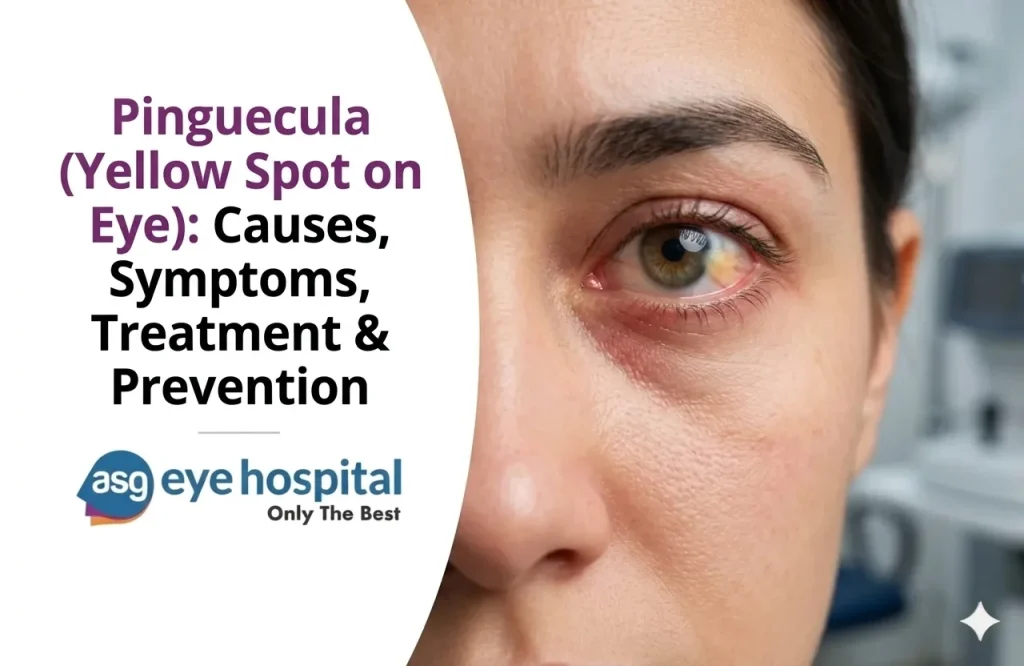
Have you noticed a yellow spot on your eye or a small white bump on the eyeball? This common condition is called Pinguecula a harmless but noticeable growth on the white part of the eye that can sometimes cause irritation, dryness, or redness.
While a pinguecula is usually not dangerous, understanding its causes and treatment options can help you protect your eye health and prevent complications.
What is Pinguecula?
A pinguecula is a benign (non-cancerous) growth that appears on the conjunctiva, the thin transparent layer covering the white part of your eye (sclera).
It typically looks like:
- A yellowish or whitish raised bump
- Located near the inner corner (nose side) of the eye
- A deposit of protein, fat, or calcium
👉 Many people search for this as:
- yellow spot on eye
- white bump on eyeball
- growth on white part of eye
Pinguecula vs Pterygium: What’s the Difference?
- Pinguecula: Stays on the white part of the eye
- Pterygium: Can grow onto the cornea and affect vision
👉 If untreated, a pinguecula may sometimes develop into a Pterygium
Pinguecula Symptoms
In many cases, a pinguecula does not cause symptoms. However, when inflamed (pingueculitis), you may experience:
- Redness and swelling
- Dry eyes
- Burning or itching sensation
- Feeling like something is stuck in the eye
- Mild discomfort while blinking
What Causes Pinguecula (Yellow Spot on Eye)?
The most common cause is long-term exposure to UV rays from sunlight.
Other causes include:
1. Sun Exposure (UV Radiation)
Prolonged exposure damages the conjunctiva over time.
2. Dust, Wind & Pollution
Environmental irritants can trigger growth formation.
3. Dry Eye Condition
Chronic dryness increases irritation and risk.
4. Aging
More common in people over 40 due to cumulative exposure.
Pinguecula Treatment Options
Treatment depends on symptoms and severity.
1. Lubricating Eye Drops
Artificial tears help reduce dryness and irritation.
2. Anti-Inflammatory Drops
Prescribed in case of redness or swelling.
3. Lifestyle Protection
- Wear UV-protected sunglasses
- Avoid dusty environments
- Use protective eyewear
4. Pinguecula Surgery (Rare Cases)
Surgical removal may be needed if:
- It causes persistent discomfort
- It affects contact lens use
- Cosmetic concerns arise
How to Prevent Pinguecula
Prevention is simple but important:
- Wear UV-400 sunglasses outdoors
- Use eye protection in dusty environments
- Keep eyes hydrated
- Avoid excessive screen strain
When Should You See an Eye Specialist?
Consult a doctor if:
- The yellow spot increases in size
- You experience persistent redness or pain
- Your vision becomes blurred
- The irritation does not improve with eye drops
👉 For accurate diagnosis and advanced care, visit ASG Eye Hospitals.
FAQs on Pinguecula (Yellow Spot on Eye)
1. What is a pinguecula in the eye?
It is a non-cancerous growth on the white part of the eye caused mainly by UV exposure.
2. Is pinguecula dangerous?
No, it is usually harmless, but it can cause irritation if inflamed.
3. Can pinguecula go away naturally?
No, it does not disappear on its own, but symptoms can be managed.
4. How to remove yellow spot on eye?
Mild cases are treated with eye drops; surgery is needed only in rare cases.
5. What is the difference between pinguecula and pterygium?
Pinguecula stays on the sclera, while pterygium can grow onto the cornea.
Conclusion: Protect Your Eyes from Early Damage
A pinguecula (yellow spot on eye) is common and usually harmless, but it’s a sign that your eyes need protection from environmental damage.
👉 Early care and proper eye protection can prevent irritation and future complications.
Book your eye check-up today at ASG Eye Hospitals and get expert guidance for long-term eye health.