
Red eyes are one of those things most people notice and immediately try to explain away. Too little sleep. Too much screen time. In many cases, they are right, the redness clears by morning, and nothing more needs to happen.
But red eyes are also one of the most common reasons people walk into an eye clinic, and not always for simple reasons. The same appearance can come from a dozen different causes, some minor and some not. Knowing which category you are in changes what you should do next.
Red eye causes and why the same symptom means different things
The white area of the eye appears red when tiny surface blood vessels dilate or become inflamed. What triggers that reaction varies considerably, and the causes of red eye are not all managed the same way.
The most common everyday eye redness reasons include:
• Lack of sleep – fatigued blood vessels dilate, producing general redness that usually clears after rest
• Dry eye – insufficient tear film leaves the surface irritated and surface vessels more visible
• Prolonged screen use – reduced blink rate dries the eye surface, which shows up as redness by evening
• Allergies – histamine response causes vessels to swell, typically affecting both eyes with itching
• Conjunctivitis – viral or bacterial infection of the conjunctiva, usually with discharge
• Subconjunctival haemorrhage – a small surface vessel bursts, producing a vivid red patch that looks alarming but is usually harmless
Beyond these, conditions like uveitis, acute angle-closure glaucoma, and corneal ulcers can also cause red eyes. These are less common but more serious, which is why the accompanying symptoms matter as much as the redness itself.
Why are my eyes red? reading the pattern
Why are my eyes red is a question where context does most of the work. Redness alone tells you something is irritated. The other details – when it started, whether it is one eye or both, what else is happening – narrow down the cause considerably.
Both eyes are red, with intense itching and watery discharge, which suggests allergies. One eye with sticky or crusty discharge after waking suggests conjunctivitis. A bright red patch on an otherwise white eye, with no pain and normal vision, is almost always a subconjunctival haemorrhage. Redness that has developed gradually over weeks with no obvious trigger more often indicates chronic dry eye or blepharitis.
A question that is being asked consistently in clinics: Does red eye always mean infection?
No. Dry eye, allergy, and fatigue account for a large proportion of red eye presentations. The distinction matters because antibiotic drops, which many people reach for first, do nothing for allergic or viral causes and can create their own problems with overuse.
Red eye treatment at home and what actually works
For mild cases with an identifiable cause, red eye treatment at home is reasonable. The key is matching the remedy to what is actually driving the redness.
For dryness and screen fatigue: preservative-free lubricating drops used consistently through the day. These support the tear film without the rebound redness that vasoconstrictor drops, those marketed specifically for redness relief, can cause with regular use. A cold compress held over closed eyes also reduces surface irritation effectively.
For allergy-related redness, antihistamine drops are more effective than lubricating drops. Avoiding rubbing is particularly important, rubbing releases more histamine and worsens the itch-redness cycle. For conjunctivitis: viral cases run their course over seven to fourteen days with supportive care only. Bacterial cases respond to antibiotic drops, but only a proper examination can confirm which type is present.
Something people often ask: How to cure red eyes fast before an important day?
For cosmetic redness from tiredness or mild irritation, cold compresses and rest are the most reliable quick option. Vasoconstrictor drops reduce redness temporarily, but the effect reverses as the drops wear off, and the underlying cause remains.
Also read: What is PRK Eye Surgery Purpose, Complications and After Care?
Eye redness reasons that go beyond the surface
Some eye redness reasons involve inflammation or pressure changes inside the eye. These are the cases where redness signals something that needs clinical attention, not home management.
Uveitis, inflammation of the middle eye layer, is often linked to autoimmune conditions. It typically causes redness concentrated around the cornea, significant light sensitivity, and aching pain. Acute angle-closure glaucoma presents with sudden severe pain, halos around lights, blurred vision, and nausea. It is a medical emergency where intraocular pressure rises rapidly, and vision can be lost within hours without treatment. A corneal ulcer, most common in contact lens wearers, causes intense pain, photophobia, and a visible white spot. Without urgent antibiotic treatment, it can scar and permanently affect vision.
Red eye when to see a doctor: the clear dividing line
When to see a doctor for a red eye? Is a question most people navigate by emotion, and often get wrong in one direction or the other. Some come in for redness that clears in a day. Others wait weeks with something that needed attention at the start.
Manage at home if the redness is mild, in both eyes, came on gradually, has an obvious cause, and is not accompanied by pain or vision change.
See an eye specialist if:
• The redness is in one eye only without an obvious reason
• There is pain alongside the redness, not just irritation, but actual pain
• Vision has changed in any way, even mildly
• There is significant discharge, particularly thick or coloured
• The redness has not improved after a week of basic care
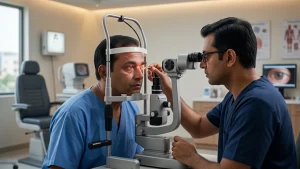
• You wear contact lenses, and the eye is red and uncomfortable
Seek immediate attention if redness comes on suddenly with severe pain, nausea, blurred vision, or halos around lights. These are not symptoms to manage at home.
Final thoughts on red eye causes and treatment
Red eyes are common enough that it is easy to underestimate them. Most cases are genuinely minor and settle with rest or basic care. But the same symptom can occasionally indicate something that worsens quickly without the right treatment, which is why the accompanying signs matter more than the redness alone.
ASG Eye Hospital, with centres in Patna, Surat, Jodhpur, Udaipur, and more, sees a wide range of red eye presentations. The approach is always the same, a proper examination to understand what is driving the redness before any treatment is recommended.
FAQs
1. What are the most common red eye causes?
Dry eye, allergies, conjunctivitis, sleep deprivation, and prolonged screen use. Subconjunctival haemorrhage – a burst surface vessel – is also common and looks alarming, but is usually harmless.
2. Can a red eye go away on its own?
Many cases do, particularly those linked to fatigue, mild irritation, or viral conjunctivitis. Redness from infection, allergy, or an underlying condition tends to persist without appropriate treatment.
3. Is red eye treatment at home always safe?
For mild, identifiable causes – yes. Lubricating drops, cold compresses, and antihistamines cover most everyday cases. Vasoconstrictor drops should not be used regularly. Any redness with pain or vision change should be examined before treatment is started.
4. How long should red eye last before I see a doctor?
If redness has not improved after seven days of basic care or worsens at any point, a specialist visit is the right call. Immediate attention is needed if pain, blurred vision, or halos accompany the redness.
5. Can contact lens use cause red eye?
Yes. Overwearing, sleeping in lenses, or inadequate cleaning all increase the risk of corneal irritation and infection. Red eye in a contact lens wearer that does not settle quickly after removing the lenses should be evaluated by a specialist.