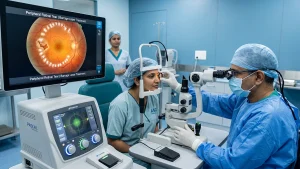
Many people report alarm when they suddenly notice blurred vision, dark spots, floating shadows, or a drop in eyesight which may in fact be related to a retiroleak. That is a situation which occurs when blood escapes out of damaged blood vessels in the retina. As the retina is what does the work of capturing light and then sending visual messages to the brain any bit of bleeding can affect that process. In some retinal hemorrhage cases proper medical care will lead to resolution but in other cases it may in fact be a sign of a more serious health issue that needs immediate attention.
Retinal hemorrhage is a symptom rather than a disease in fact it is a red flag that something has gone wrong with the very delicate blood supply to the retina. The scale of severity can range from small areas of bleeding which may only cause minor issues to large scale hemorrhages that put sight at risk. It is important to know the causes, symptoms and what treatments are available for retinal hemorrhage in order to protect long term vision.
What Is a Retinal Hemorrhage?
A retinal hemorrhage is a result of blood which has leaked into or under the retina from damaged or abnormal blood vessels.
The retina is a thin layer of nerve tissue which lines the back of the eye. It is key in the process of vision which it carries out by transforming light into electrical signals which the brain then interprets as images. Upon the occurrence of internal bleeding in the retina vision may be distorted which depends on the site and extent of the hemorrhage.
A small retinal hemorrhage may produce little in the way of symptoms, but a large scale bleed which affects the macula, the central area which is responsible for sharp vision can greatly impact on daily activities such as reading, driving, and recognizing faces.
How Common Is Retinal Hemorrhage?
A retinal hemorrhage affects all age groups although it is a more common issue in diabetics, hypertensives, those with retinal vein occlusions, trauma victims, or in people which have an age related eye problem. Also we see this condition present itself in the course of routine retinal exams which ophthalmologists perform, in particular in patients with chronic systemic diseases. In most cases the cause of the hemorrhage will determine its severity and also the treatment approach.
Common Causes of Retinal Hemorrhage
In many health issues which affect the eyes and the body in general we see retinal hemorrhage as a result. Diabetes is by far the most common of these. What we find is that high blood sugar over time damages the retinal blood vessels which in turn leads to leakage and bleeding. Also very present is high blood pressure which is a large contributor.
Chronic hypertension puts stress on the blood vessel walls which in turn increases the risk of a retinal hemorrhage. We also see retinal vein occlusion which is in essence a stroke within the eye which results in large scale retinal bleeding.
Also to the list of causes we must add eye injuries, blood clotting disorders, severe anemia, leukemia and certain inflammatory conditions which may also trigger a retinal hemorrhage. In some people we note that age related macular degeneration causes the growth of abnormal blood vessels under the retina which in turn cause repeat bleeding.
Common Causes of Retinal Hemorrhage
| Cause | How It Affects the Retina |
| Diabetic Retinopathy | Damages retinal blood vessels causing leakage |
| Hypertension | Weakens and ruptures retinal vessels |
| Retinal Vein Occlusion | Blocks blood flow and causes bleeding |
| Eye Trauma | Direct injury damages retinal tissues |
| Blood Disorders | Affects clotting and vessel integrity |
| Age-Related Macular Degeneration | Abnormal vessels bleed beneath retina |
| Severe Anemia | Reduces oxygen supply to retinal tissues |
Symptoms of Retinal Hemorrhage
The variable symptoms of retinal hemorrhage depend on the what and how much of the bleed. Some patients report a sudden introduction of floaters black spots, strings, or spider like shadows that drift in their vision.
Also we see reports of blurred vision, distorted picture quality, or large dark areas in the visual field. Large scale bleeds into the central retina report a sudden drop in visual acuity. Some people say it is like looking through smoke, fog, or a curtain. In serious cases vision loss may present quickly and requires immediate attention from a retina specialist.
Also because some types of retinal hemorrhage present no symptoms at all at first, routine eye exams are very important, also for diabetics and hypertensives.
Types of Retinal Hemorrhage
Different forms of retinal hemorrhage can occur depending on the layer of the retina involved.
Types of Retinal Hemorrhage
| Type | Location | Common Causes |
| Flame-Shaped Hemorrhage | Nerve fiber layer | Hypertension, retinal vein occlusion |
| Dot and Blot Hemorrhage | Deeper retinal layers | Diabetes |
| Preretinal Hemorrhage | Surface of retina | Trauma, diabetic retinopathy |
| Subretinal Hemorrhage | Beneath retina | Macular degeneration |
| Vitreous Hemorrhage | Into vitreous cavity | Advanced diabetic eye disease |
Identifying the exact type of retinal hemorrhage helps determine the most appropriate retinal hemorrhage treatment plan.
How Is Retinal Hemorrhage Diagnosed?
A thorough retinal exam is key to diagnosis of retinal hemorrhage. At the time of evaluation the ophthalmologist will use drops to open the pupils which in turn gives us a clear picture of the retina.
Also we use advanced imaging tools like Optical Coherence Tomography (OCT), fundus photography, fluorescein angiography, and retinal scanning which in turn helps us determine the site and extent of the retinal hemorrhage.
Also these tests play a role in identifying the cause which in turn aids in the plan of retinal hemorrhage treatment. Many patients are referred to a retina specialist for in depth evaluation and management when retinal bleed is a issue.
Retinal Hemorrhage Treatment Options
What is appropriate for retinal hemorrhage is based on the cause, size, and location of the bleed. In mild cases watchful waiting may be enough which in time allows the body to absorb the blood.
But treatment is usually aimed at the base cause of the bleeding. In diabetic eye disease retinal hemorrhage treatment may include intra vitreal anti-VEGF injections, laser therapy or surgery. With hypertension related bleeding patients need close monitoring of their blood pressure to avoid repeat episodes.
When retinal vein occlusion is the cause of the retinal hemorrhage treatments may consist of injections to reduce swelling and at the same time better retinal health. In severe cases that include vitreous bleeding a recommendation may be for a vitrectomy as part of the advanced retinal hemorrhage treatment.
Also in very serious cases of retinal hemorrhage we have seen from modern treatment that if intervention is early visual results have greatly improved.
Can Vision Return After Retinal Hemorrhage?
Many a time patients ask what to expect in terms of visual recovery post retinal hemorrhage which in large part is determined by the promptness of the treatment and the issue of permanent retinal damage.
In the case of a small bleed which doesn’t include the macula we may see almost full recovery with little to no long term issues. With larger bleeds which in turn affect central vision we may see the need for intensive treatment and very close follow up. Some of our patients will report great visual improvement but in other cases there will be some degree of permanent vision loss which again is a product of the base disease.
Preventing Retinal Hemorrhage
Prevention of retinal hemorrhage is a result of management of systemic health issues. Good diabetic control, healthy blood pressure, regular exercise, and routine eye exams play in large part to risk reduction.
With a diabetes diagnosis patients should have a routine of getting retinal screens as many types of retinal hemorrhage present before symptoms are noticed. Early detection which in turn allows for timely treatment is key in preventing serious complications.
Those that are under care for retinal disease should keep to a regular follow up schedule and report at the first sign of new visual symptoms..
When Should You See a Retina Specialist?
Any sudden change in vision is a medical emergency. Symptoms which may require prompt attention include sudden floaters, light flashes, blurred vision, dark spots, or partial vision loss which may be a sign of retinal hemorrhage. Timely evaluation by a retina specialist is key to determine the cause of your issue, start appropriate treatment for retinal disease, and to reduce your risk of permanent visual impairment. Delay in care may allow the issue to progress and increase your risk of irreversible vision loss.
Retinal Care at ASG Eye Hospital
At our ASG Eye Hospital which has at its core experienced retina specialists we provide in depth diagnosis and management for a wide range of retinal diseases which include diabetic retinopathy, retinal vein occlusion, macular disorders and retinal hemorrhage. We use advanced retinal imaging and modern treatments for retinal diseases which we apply at the first sign of issues and which we tailor to each patient’s needs in an effort to preserve vision and improve results.
Key Takeaway
A retinal hemorrhage is a condition which should not be ignored. In some cases it may resolve with watchful waiting, in other cases it is a sign of serious retinal or systemic disease. Early diagnosis, timely intervention in treatment of retinal hemorrhage and ongoing care by a retina specialist is key to prevent complications and preserve sight. Should you see sudden changes in vision seek prompt medical care which may greatly improve your visual recovery.
Frequently Asked Questions
1. What is retinal hemorrhage?
Retinal hemorrhage is blood within or under the retina that results from damaged blood vessels. It may affect vision based on where it is located and how severe it is.
2. Can retinal hemorrhage heal on its own?
Some small scale cases of retinal hemorrhage may resolve by itself, but many require an evaluation to find out and treat the cause.
3. What is the best retinal hemorrhage treatment?
That depends on the base cause. Options may include watchful waiting, injections, laser therapy, blood pressure management, or surgery.
4. Is retinal hemorrhage a medical emergency?
A sudden retinal hemorrhage which also brings about vision changes is a situation that should be evaluated in the emergency by an eye specialist to0 rule out permanent vision loss.
5. Can diabetes cause retinal hemorrhage?
Yes. It is a known fact that diabetic retinopathy which is a result of diabetes is one of the leading causes of retinal hemorrhage especially when blood sugar levels are not brought under control for great lengths of time.
6. Who should I consult for retinal hemorrhage?
A retina specialist is the best type of doctor to see for the diagnosis and treatment of retinal hemorrhage and related retinal diseases.