Has at some point a doctor has brought up that you are developing a thin spot or outpouching in your eye? That sounds alarming. In this picture comes staphyloma which is a rare but serious eye issue which if left untreated may play a role in vision loss.
It is at these eye exams that many are first made aware of staphyloma and immediately wonder if it leads to total blindness. The answer is that it does depend on what type of staphyloma it is, where it is located, and at what stage it is caught.
This guide goes through everything you need to know about staphyloma including its symptoms, causes, risks, and the best today’s treatments.
What Is Staphyloma?
Staphyloma is a term used for a situation in which the outer wall of the staphyloma eye becomes thin and weak causing it to protrude out. The bulging may present in various areas of the eye based on the kind of staphyloma.
Also a staphyloma eye condition forms as a result of a weakening of the sclera (the white component of the eye) that transpires over time.
At times this is present at birth and at other times a person will develop the issue after injury, infection, with very high myopia, with glaucoma or in other eye diseases. As staphyloma affects different aspects of the eye the effect on vision ranges per individual.
Types of Staphyloma
Understanding the different forms of staphyloma helps explain why symptoms can vary significantly.
Anterior Staphyloma
Anterior staphyloma eye affects the forward section of the eye which in turn involves the cornea and nearby sclera. This form of staphyloma which may be seen externally also changes the eye’s appearance.
Posterior Staphyloma
Posterior staphyloma eye forms at the back of the eye. It is a common feature of pathologic or high myopia which in turn may greatly affect retinal health and vision. As it appears within the eye it often goes unnoticed by patients until detected by specialized testing.
Intercalary Staphyloma
This form of staphyloma eye which develops near the cornea is also associated with inflammatory eye diseases.
Equatorial and Ciliary Staphyloma
These atypical forms of staphyloma present in the varied areas of the sclera and may require advanced imaging for diagnosis.
What Causes Staphyloma?
Several issues that may lead to staphyloma.
Also which include:
- Severe or pathological myopia
- Eye trauma or injury
- Corneal infections
- Advanced glaucoma
- Previous eye surgery
- Inflammatory eye disorders
- Congenital abnormalities
In many patients staphyloma develops slowly over time. The base disease weakens the eye wall which in turn causes the affected area to bulge out.
Early Symptoms of Staphyloma
The symptoms of staphyloma depend on its size and location.
Some patients with staphyloma notice:
- Progressive blurring of vision
- Distorted or stretched vision
- Difficulty focusing
- Eye strain
- Visible bulging of the eye
- Changes in eye appearance
- Increased sensitivity to light
A staphyloma which affects the back of the eye may present with very subtle symptoms at first. This is also a reason why we recommend regular eye exams for people with high myopia or other eye issues.
How Does Staphyloma Affect Vision?
One of the biggest concerns about staphyloma is its effect on vision.
When staphyloma affects the posterior portion of the eye it changes the retina and surrounding tissues’ shape. Over time this may cause:
- Progressive vision loss
- Retinal stretching
- Macular damage
- Distorted central vision
- Increased risk of retinal complications
Patients who present with posterior staphyloma usually require for us to do a continuous follow up as retinal changes may present slowly.
In some severe cases staphyloma may in fact cause great enough impairment that it affects daily tasks like reading, driving, and recognizing faces.
Is Staphyloma Dangerous?
While not all staphyloma cases progress to severe vision loss, it is a condition which should be paid close attention to.
The issues which may arise from staphyloma include:
- Progressive deterioration of vision
- Retinal complications
- Increased myopia progression
- Cosmetic concerns
- Reduced quality of life
The earlier staphyloma is diagnosed, the greater the opportunity to preserve vision and prevent complications.
How Is Staphyloma Diagnosed?
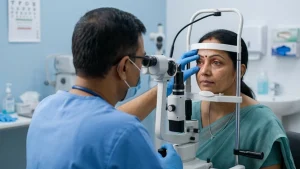
An eye specialist typically diagnoses staphyloma through a comprehensive eye examination.
Diagnostic tests may include:
- Visual acuity testing
- Dilated retinal examination
- Optical Coherence Tomography (OCT)
- Ultrasound imaging
- Retinal photography
- Advanced eye scans
A detailed examination at an eye specialist hospital is often necessary to determine the extent of staphyloma and assess whether the retina has been affected.
Best Treatment Options for Staphyloma
In each instance of staphyloma there is no universal treatment. Rather we focus on the base cause of the condition and do what we can to protect vision.
Monitoring and Observation
Mild staphyloma in some cases may be managed with regular checkups which track progression.
Corrective Glasses or Contact Lenses
For certain patients we see improvement in visual function which is a result of staphyloma we treat.
Retina Treatment
When postero basal staphyloma is present in the retina specialized retina care may be required to treat related retinal issues and preserve vision.
Treatment of Underlying Conditions
Managing glaucoma, severe myopia, and inflammatory disease may help to stop staphyloma progression.
Surgical Management
In selected cases, surgery may be considered to reinforce weakened eye tissues or manage complications associated with advanced staphyloma.
Can Staphyloma Eye Be Prevented?
Not all cases of staphyloma eye can be prevented, especially congenital forms.
However, the risk may be reduced by:
- Managing high myopia appropriately
- Treating eye infections promptly
- Following glaucoma treatment recommendations
- Attending regular eye examinations
- Seeking immediate care after eye injuries
Early diagnosis remains one of the most effective ways to minimize the long-term impact of staphyloma.
When Should You Visit an Eye Specialist?
You should schedule an evaluation at an eye specialist hospital if you experience:
- Progressive vision changes
- Distorted vision
- High myopia with worsening symptoms
- Eye pain or discomfort
- Visible changes in eye appearance
- Sudden reduction in vision
Prompt assessment allows doctors to determine whether staphyloma or another eye condition is responsible for your symptoms.
Eye Care at ASG Eye Hospital
At ASG Eye Hospital we have specialists which evaluate patients with staphyloma eye with the help of advanced diagnostic tools and we also present very individualized treatment plans. Based on the degree of the staphyloma we may recommend watchful waiting, special eye treatments, or advanced retina procedures which are put in place to preserve vision and improve quality of life.
We find that early intervention is key to successful management of staphyloma.
Key Takeaways
- Staphyloma eye is a condition that sees the weak eye tissues bulge out.
- In the front and back of the eye staphyloma may present.
- Common causes include high myopia, glaucoma, infection, and trauma.
- Early symptoms are blurred vision, distortion, and eye strain.
- Posterior staphyloma eye may affect retinal health and vision.
- It is important for early diagnosis at an eye specialist hospital.
- We have modern eye treatments and retina treatment options which do help in management of complications and in preserving vision.
Frequently Asked Questions
What is staphyloma?
Staphyloma is a condition in which some parts of the eye wall become thin and bulge out. It may be present in various areas of the eye and what it does to vision is determined by its location.
Is a staphyloma eye condition serious?
If a staphyloma eye affects the retina or causes progressive vision loss then yes, it is a serious issue. Early diagnosis and monitoring is key.
Can staphyloma cause blindness?
Advanced staphyloma may lead to very poor vision if it results in complications. But also at early stages with proper treatment and regular follow up this may be prevented.
What causes staphyloma?
Common causes are high myopia, glaucoma, eye injury, infection, inflammation, and birth defects.
Can staphyloma be treated?
While staphyloma is not a curable issue, we have proper eye care, monitoring, and retinal treatment that helps in management of symptoms and in to prevent more damage.
When should I see an eye specialist for staphyloma?
You should visit an eye specialist hospital if you experience blurred vision, distorted vision, worsening myopia, eye pain, or any noticeable changes in the appearance of your eye.
References
National Eye Institute (NEI)
National Eye Institute – Eye Conditions and Diseases
MedlinePlus (National Library of Medicine)
MedlinePlus – Eye Care and Vision Health
Clinical Overview of Staphyloma
Cleveland Clinic – Staphyloma: Causes, Symptoms and Treatment