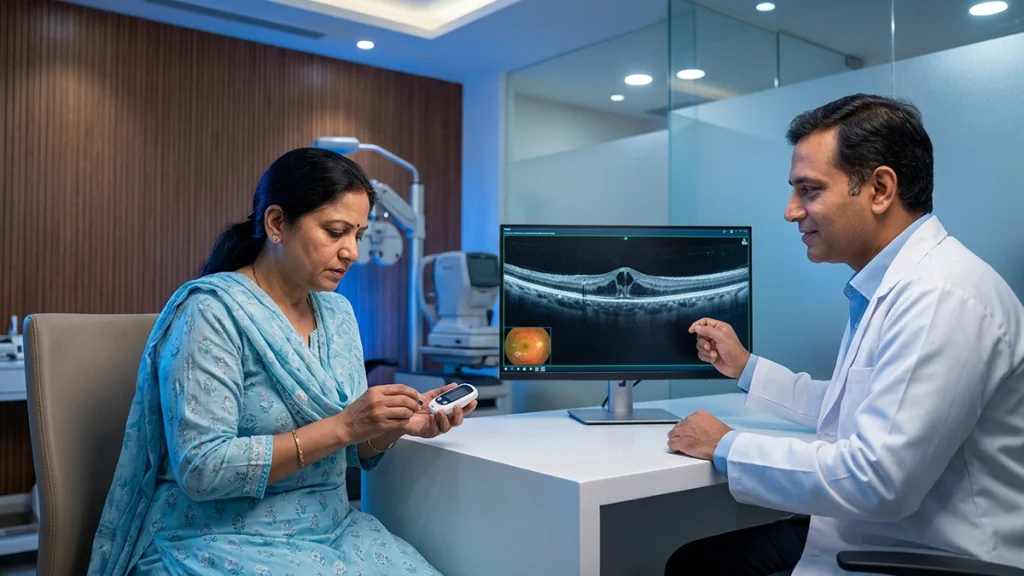
Diabetes affects many parts of the body, also the eyes are very important areas to protect. Many patients only hear of diabetic eye disease once their vision has become blurred, at which time the damage may in fact have been going on for some time. Diabetic eye disease often presents itself early which is a chance to treat it before severe vision loss sets in.
At ASG Eye Care we see that many of our patients ask if diabetes does in fact cause blindness. The answer is yes, but what we do is try to catch it early and start care as soon as possible. Conditions such as diabetic retinopathy, diabetic macular edema, cataract, and glaucoma come under diabetic eye disease. Of these the most common cause of preventable vision loss is diabetic retinopathy.
What Is Diabetic Eye Disease?
Diabetic eye disease is not a single condition. What it does is present a group of eye issues which result from high blood sugar which in turn damage fine structures in the eye. As time goes by diabetes may affect the retina, the lens, and the optic nerve which is why it is recommended to have regular eye exams even in the absence of apparent diabetic eye symptoms.
The primary type of diabetic eye disease is usually diabetic retinopathy which is what happens when retinal blood vessels break down, get blocked, swell, or begin to leak. In the late stages of the disease, new abnormal blood vessels will grow and may bleed. It is at this point that patients may worry about diabetes blindness especially if they have had the disease for many years.
Common Eye Problems Linked to Diabetes
| Condition | What Happens | Possible Effect on Vision |
| Diabetic retinopathy | Retinal blood vessels leak, swell, or grow abnormally | Blurred vision, bleeding, and possible diabetes blindness |
| Diabetic macular edema | Fluid collects in the macula | Difficulty reading or seeing faces |
| Cataract | The eye lens becomes cloudy earlier than usual | Hazy vision, glare, and poor clarity |
| Glaucoma | Eye pressure may damage the optic nerve | Gradual side vision loss |
Can Diabetes Cause Blindness?
Yes, diabetes may cause blindness which will occur if retinal damage is detected late and treated delayed. Also diabetes blindness typically does not appear suddenly. It is a gradual process which usually comes from untreated diabetic eye disease. This is why it’s important for annual retina check ups to be a part of your routine even when your vision seems fine.
At first it may not be at all apparent that you have diabetic retinopathy. You may see normally as your retina is changing. As diabetic eye disease progresses you may notice that your vision is blurred, wavy, patchy or obstructed by floaters. In severe cases you may experience bleeding, retinal detachment or macular edema which will lead to serious loss of vision.
Early Diabetic Eye Symptoms to Watch For
In the early stages of diabetic eye symptoms may be very mild and easy to pass off. Some patients report blurry vision which in and out, also when their blood sugar is going up and down. Also some may note floaters, dark spots, trouble with reading, poor night vision, or that colors don’t appear as bright. These signs should not be ignored.
Another indicator of diabetic eye disease is sudden change in vision. If you notice that your vision has become foggy, blurred or very dark in one eye it is advised to see an eye specialist right away. Also it is important to note that the absence of diabetic eye symptoms does not always mean that the retina is in good health. A dilated retina exam is the only way to determine if you have diabetic retinopathy or any other diabetes related eye problem.
Symptoms and What They May Indicate
| Symptom | What It May Suggest | When to Act |
| Blurred or fluctuating vision | Blood sugar changes or early diabetic eye disease | Book an eye check-up |
| Floaters or dark spots | Bleeding or retinal changes from diabetic retinopathy | See an ophthalmologist promptly |
| Trouble reading or seeing faces | Macular swelling | Do not delay evaluation |
| Sudden vision loss | Advanced bleeding or retinal detachment | Seek urgent eye care |
| No symptoms | Early disease may still be present | Continue yearly screening |
Who Is at Higher Risk?
The risk of diabetic eye disease goes up with poor control or long term presence. High blood pressure, kidney disease, high cholesterol, pregnancy, smoking, and missing eye exams also play a role. In the case of long term diabetes people should be very careful as diabetic retinopathy may progress without symptoms.
The longer blood sugar is out of control the greater the risk of diabetes blindness. Regular exams help detect diabetic eye disease before damage becomes advanced.
Diagnosis and Treatment
An eye doctor diagnoses diabetic eye disease during a thorough exam which may include vision test, eye pressure measurement, dilated retina exam, fundus photography, OCT scans and angiography as needed. These tests help to identify diabetic retinopathy, macular edema, and other changes early.
Treatment is based on the type and stage of the condition. In the early stages we may see better blood sugar, blood pressure, and cholesterol control advised along with regular monitoring. Should diabetic retinopathy progress or macular edema present itself we may use laser therapy, anti-VEGF injections, steroid injections or retinal surgery in more advanced cases. We aim to protect the retina and to reduce the risk of diabetes blindness.
Prevention and Long-Term Eye Care
Prevention of diabetic eye disease starts with good diabetes management. We keep blood sugar, blood pressure, and cholesterol in check which in turn reduces retinal damage. Annual dilated eye exams are a must, and some may require more frequent visits based on the state of their health. Also patients should quit smoking, follow the diabetes treatment plan, eat right and report any new diabetic eye symptoms. Timely care is the key to preserving your useful vision for life.
Eye Care at ASG Eye Care
At ASG Eye Care we provide in depth retina evaluation, diagnosis, management and treatment of diabetic eye disease to our diabetes patients. Our team is into early detection and very personalized treatment plans. We aim to preserve vision and to reduce long term complications. If you have diabetes do not wait until your vision deteriorates. A regular retina check up is key in the early detection of diabetic eye disease.
Frequently Asked Questions
1 Can diabetes cause blindness?
Yes. Diabetes can cause very serious issues with vision, in advanced and uncontrolled cases it leads to what is almost diabetes blindness. Most often the cause is diabetic retinopathy which in turn damages the retina’s blood supply. Regular eye check ups and prompt treatment can reduce that risk.
2 What are the early signs of diabetic eye disease?
Early diabetic eye symptoms may present as blurred vision, floaters, dark spots, reduced color intensity, trouble reading, or variable eyesight. Also it is a fact that in the beginning this may go asymptomatic which is to say that it may go undetected which is why in service screening is important
3 Is diabetic retinopathy curable?
Diabetic retinopathy can be controlled, especially when detected early. Treatments such as laser therapy, injections, and retinal surgery can slow progression, but controlling diabetes remains essential.
4 How often should a diabetic patient get an eye check-up?
For the most part it is recommended that diabetics have a dilated eye exam at least once a year. If diabetic eye disease is present the follow up may be more frequent.