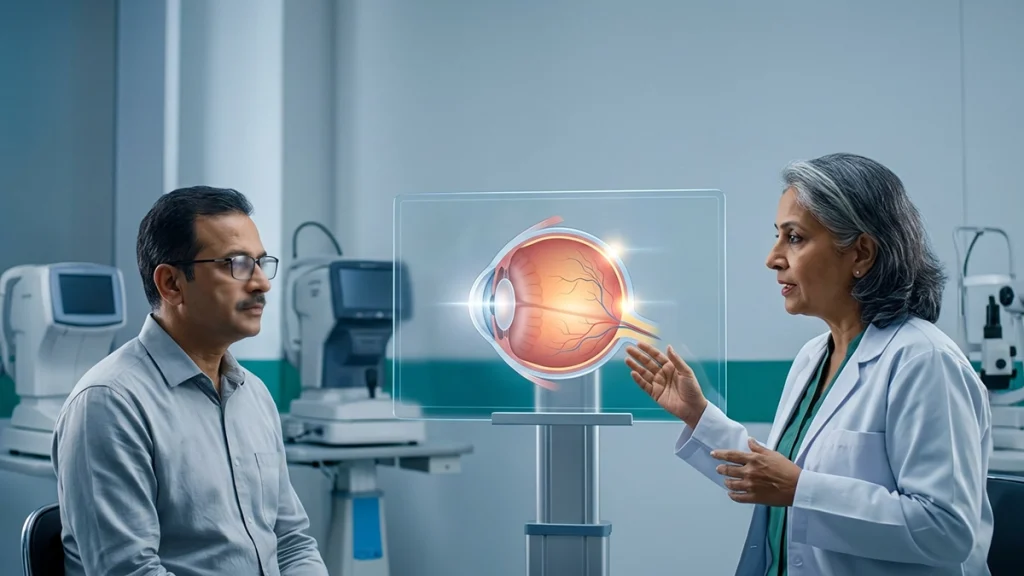
Blindness is a term that we often see as a death sentence, but from a medical point of view it doesn’t always mean total darkness. Many of the people we put in this category may still see light, make out shapes, shadows or movement. Some may have lost central vision, others peripheral vision. This is why it’s important to look into what blindness really means before jumping to conclusions.
At ASG Eye Care we see that our patients have a lot of the same questions “Is my sight permanent?, “Will this be fixed?, or “Is there nothing you can do about this?. The answer will depend on what is causing it, the stage of the eye disease, and at what point we are able to put out a diagnosis. Also in many cases what is meant to be blind is a result of what is preventable blindness and that can be averted with routine eye exams, early intervention, and continuous care.
What Is Blindness?
Blindness is described as a severe loss of vision which does not improve with the use of standard glasses or contact lenses. It may present in one eye or in both. Some may have partial sight which persists, while in some it may be a total loss which in turn leaves no light perception. This is what makes blindness a very personal condition for each patient.
Blindness is actually a term we use for many different conditions. It is a degree of impaired vision which results from a group of eye diseases, injuries, nerve issues, or brain based visual disorders. Also some forms appear all of a sudden, while others develop over the course of months or years.
Vision impairment is a term used for reduced vision which impacts on daily activities like reading, walking, recognizing faces, driving, or using digital screens. A person with vision impairment may not be total blindness, but eyesight which is poor enough to require medical attention, low vision aids, or rehabilitation is included.
Types of Blindness
There are various methods used to classify blindness. Doctors typically look at what degree of vision is present, which area of the vision is affected, and what disease is at play. In the case of glaucoma we may see side vision loss, while in macular degeneration we see central vision impairment. Both may result in blindness, but in very different ways.
The table below explains the common types in simple language.
| Type of Blindness | What It Means | Common Conditions Linked With It |
| Partial blindness | Some vision remains, but it is not enough for normal daily activities | Cataract, glaucoma, diabetic retinopathy, macular degeneration |
| Legal blindness | Vision is severely reduced even with best correction, but some usable sight may remain | Advanced glaucoma, retinal diseases, optic nerve damage |
| Total blindness | No light perception at all | Severe trauma, end-stage retinal disease, advanced optic nerve disease |
| Central vision loss | Difficulty seeing straight ahead | Macular degeneration, diabetic macular edema |
| Peripheral vision loss | Loss of side vision or tunnel vision | Glaucoma, retinitis pigmentosa |
| Night blindness | Difficulty seeing in dim light or at night | Retinal disorders, vitamin A deficiency |
| Colour blindness | Difficulty distinguishing certain colours | Genetic colour vision deficiency |
Not all causes of blindness result in total vision loss. Some patients may still perform daily activities with the use of low vision devices, brighter lighting, magnifiers, screen readers, or rehabilitation training.
What Are the Causes of Blindness?
Not all causes of blindness result in total vision loss. Some patients may still perform daily activities with the use of low vision devices, brighter lighting, magnifiers, screen readers, or rehabilitation training. Not all types of blindness lead to total loss of sight. Some patients may still do well with low vision devices, brighter lighting, magnifiers, screen readers, or rehabilitation training.
Some causes of blindness will be treated if caught early. We see in the case of cataracts which usually may be remedied by means of surgery. Also diabetic retinopathy does better when diabetes is controlled and also timely care is given to retina issues. But with glaucoma, related damage is mostly not reversible which is why the early detection is so important.
The most common causes are cataract, glaucoma, diabetic retinopathy, age related macular degeneration, corneal disease, eye injuries, retinal detachment, infections, optic nerve disease and birth related eye disorders. In India cataract is still the leading cause of avoidable vision loss which also affects large numbers of older adults.
| Cause | How It Can Lead to Blindness | Can It Be Prevented or Treated? |
| Cataract | The natural lens becomes cloudy and blocks clear vision | Usually treatable with cataract surgery |
| Glaucoma | High eye pressure damages the optic nerve | Damage cannot be reversed, but progression can be controlled |
| Diabetic retinopathy | Diabetes damages retinal blood vessels | Often manageable with diabetes control, laser, injections, or surgery |
| Macular degeneration | The central retina becomes damaged | Treatment may slow progression in some cases |
| Corneal opacity | The clear front layer of the eye becomes scarred | Treatment depends on severity; transplant may be needed |
| Retinal detachment | The retina separates from its normal position | Emergency surgery may save vision |
| Eye injury | Trauma damages eye structures | Prevention and emergency care are important |
| Congenital disorders | Eye problems are present from birth | Early diagnosis can protect development of vision |
Blindness Symptoms You Should Not Ignore
Blindness symptoms can present very quickly or over a long period of time. Vision loss which happens suddenly is a medical emergency and should always be brought to the attention of a health care provider right away. Slow changes also matter as many eye diseases like glaucoma and diabetic retinopathy may progress without pain in the early stages.
Common blindness symptoms include blurry vision, loss of peripheral vision, seeing dark spots, trouble with night time vision that requires frequent changes in your glasses prescription, eye pain, flashes of light, floaters, reduced color intensity, foggy vision, seeing double, or having issues with face recognition. Also some may notice they are hitting things, have trouble reading road signs, or require more lighting than before.
In kids we see signs like sitting very near the TV, poor eye contact, white reflection in the pupil, frequent rub of the eyes, squinting, delayed visual response, or poor performance in school related to difficulty seeing the board. We should look out for these at an early stage which is very important as childhood blindness may in turn affect learning, movement and total development.
When Is Blindness an Emergency?
Immediate attention is required for sudden vision loss. If a person suddenly goes blind in one eye, has severe eye pain, sees flashes and floaters, reports a curtain like shadow, has vision loss after an injury, or develops redness with reduced vision, they should go to the eye emergency room right away.
Waiting at home is not advised in these cases. Retinal detachment, eye stroke, acute glaucoma, severe infection, and injury related blindness may require immediate care. Quick action is the difference between preserving some vision and total loss.
Preventable Blindness: Why Early Eye Care Matters
Preventable blindness is a result of vision loss which is avoidable through early diagnosis, timely treatment, protective care, or better management of the disease. Many patients go blind not because treatment did not exist, but because the disease was caught too late.
Regular health eye exams are very important for people over 40, patients with diabetes, those with a family history of glaucoma, people with high minus power, children with signs of eye issues, and also for any that have had eye trauma or previous eye surgery. These groups are at greater risk for blindness and should not wait for symptoms to fully develop.
Good control of diabetes, blood pressure, use of UV protection, up to avoid smoking, wearing protective eyewear, in at early sign of eye infection and as directed with glaucoma or retinal treatment which is also a great help in reducing risk of preventable blindness.
How Is Blindness Diagnosed?
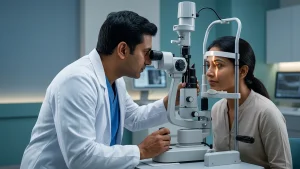
Diagnosis starts with a comprehensive eye exam. The ophthalmologist will look at visual acuity, eye pressure, eye movement, pupil response, corneal clarity, lens condition, retina health, and that of the optic nerve. As per the thought out cause of the blindness some extra tests may be recommended.
These may have retinal imaging, OCT scan, visual field testing, fundus exam, B-scan ultrasound, corneal evaluation, blood sugar testing, and neurological assessment included in which case the issue is of the brain or the optic nerve. We are not just to rule out blindness but to see what parts of the vision loss are treatable or stable.
Blindness Treatment Options
Blindness treatment is a very individual issue based on what is causing it. We do not have a single solution which works for all types of blindness. In a case of cataract we may see great improvement with a surgery, but for glaucoma we may require a lifetime of pressure control to avoid more damage. Retinal diseases may be treated with injections, laser, surgery or very close monitoring.
In cataract we see that surgery is a solution which puts in artificial intraocular lens in place of the cloudy one. In case of diabetic retinopathy we may do laser, anti-VEGF injections, vitrectomy, also we recommend strict diabetes control. Corneal blindness we look at what medical and other procedures may do or we may go for a corneal transplant based on the condition.
For patients that do not see fully again blindness treatment also includes low vision rehabilitation. This may put into practice magnifiers, special glasses, screen readers, mobility training, counseling, occupational support, and lifestyle modifications. We aim to get the patient to use what sight they have and to live more independently.
Can Blindness Be Reversed?
Some types of blindness will improve if the cause is identified and treated. Cataract is a very frequent case in which we are able to restore vision with the help of surgery. Also we see that in some cases of corneal opacity which may improve with transplant or other procedures. Retinal detachment may be treated if attended to at an early stage.
However in many cases of blindness from which there is little chance of full recovery we see that which results from advanced optic nerve damage, chronic glaucoma, extensive retinal scarring or some hereditary retinal diseases. In these cases we focus on what vision is left, also trying to stop any further loss and we improve quality of life through rehabilitation.
This is why early diagnosis is so important. The earlier the cause is found, the better the chance of preventing permanent blindness.
Living With Blindness and Vision Loss
A diagnosis of blindness is an emotional issue. Patients may feel anxiety, dependence, or uncertainty about what the future holds. But what we see is that many people with serious vision loss do still study, work, travel, use technology, and live independently with the right support.
Low vision services do make a difference. Things like better lighting, contrast markings, large print material, voice assisted devices, screen readers, mobility training, and home safety changes can improve quality of life. Also family support is very important.
At ASG Eye Care we do not only focus on treatment of disease but also in having patients leave with a clear understanding of their condition. We see patients with early vision impairment, advanced eye disease, or established blindness in which case the right guidance we give helps to preserve independence and confidence.
Eye Care at ASG Eye Care
ASG Eye Care we present a full range of care for conditions which may lead to blindness. We determine the cause, the severity, stage of disease and we present all treatment options before we put together a care plan. We may use medical treatment, surgery, laser procedures, retinal care, glaucoma management, cataract surgery, corneal treatment, or low vision guidance.
For patients with preventable blindness, prompt action is key. If vision is changing, degenerating, tunnel vision is present or it is affecting day to day activities a delay in getting an eye exam is not an option. Early intervention may preserve what sight is left and also reduce the risk of going blind for good.
Key Takeaway
Blindness isn’t a black and white issue. It’s a spectrum which includes reduced vision to the full loss of sight. What we do know is that it is very important to identify the cause at the first sign of issue. Many eye conditions which lead to blindness may be treated, controlled, or at least their progression slowed with early diagnosis.
If you or a family member is seeing issues with your vision impairment don’t wait for it to get worse. An eye exam at the first sign of trouble can catch a disease early, start you on the right care, and in many cases reduce the risk of avoidable vision loss.
Also Read : Can Blindness Be Treated? Understanding Different Types of Vision Loss
Frequently Asked Questions
1. What are the early signs of blindness?
At first there may be blurred vision, night vision issues, loss of side vision, frequent changes in the strength of your glasses, dark spots, flashes, floaters, or trouble identifying faces. These blindness symptoms should be reported to an ophthalmologist, also if they come on suddenly or get worse over time.
2. What are the common causes of blindness?
The primary causes of blindness are from cataract, glaucoma, diabetic retinopathy, macular degeneration, corneal disease, retinal detachment, optic nerve disease, eye injury, and congenitally based eye disorders. Some of these are amenable to treatment, others require a long term approach to manage and which may also reduce the damage.
3. Is blindness always permanent?
No, not all blindness is permanent. If the cause is cataract, corneal opacity, or certain retinal issues which improve with early treatment, vision may return. But in the case of advanced glaucoma, optic nerve damage or severe retinal scarring that is late stage that may be permanent.
4. What is the best blindness treatment?
The best blindness treatment depends on the cause. Cataracts may require surgery, glaucoma may require management of eye pressure, diabetic retinopathy may require laser therapy or injections, and corneal disease may require medication or a transplant. If vision does not return, low vision rehabilitation can help the patient to function better in day to day life.