In present day routines screens are hard to escape. From laptops used in the office to cellphones we carry in our pockets, also tablets and TVs, and social media late into the night our eyes are placed in front of digital products for a few hours. This has made Blue Light Effects on Sleep an important topic for patients who complain of tired eyes, poor sleep, headaches, dryness, or difficulty relaxing at night.
Blue light doesn’t always have negative health results. In fact it from the sun is a factor which keeps us alert during the day and also plays a role in what some term our body clock. The issue appears when we expose ourselves to screens at late hours at night. At night Blue Light Effects on Sleep may disrupt the natural sleep wake cycle by which the body usually knows when to wind down and prepare for rest.
At ASG Eye Care it has been brought to our patients’ attention that they are concerned with permanent eye damage from screen use. In the great majority of cases we see that regular screen use does not lead to blindness or permanent eye damage. However, the Screen time impact on eyes is a great issue when it is a result of poor habits which include ignoring break times and repeated disturbance of sleep.
What Is Blue Light?
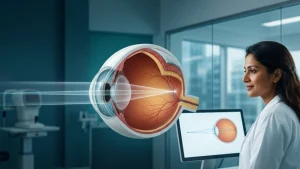
Blue light is a part of what we see in the light spectrum. It has a shorter wavelength and higher energy which is true for many other visible colors. The sun is by far the best natural source of blue light, also it is present in digital screens, LED lights, and smart phones. What is really an issue is not the exposure at all but the time and duration of that exposure.
When we spend many hours in front of screens, including in the evening, which we do before going to bed, what we see is the Blue Light Effects on Sleep play out more. Eye fatigue is a thing, the mind stays awake, and getting to sleep is a challenge. Also it is why doctors put out sleep hygiene tips at the same time as eye care advice for people that use screens into the night.
How Blue Light Affects Sleep
Sleep is controlled by what is known as the body’s internal clock which also is the circadian rhythm. Light is a key player in this system. During the day bright light helps to keep us awake. At night in the dark our bodies produce melatonin which in turn supports sleep. Evenings with screen exposure play a role in this.
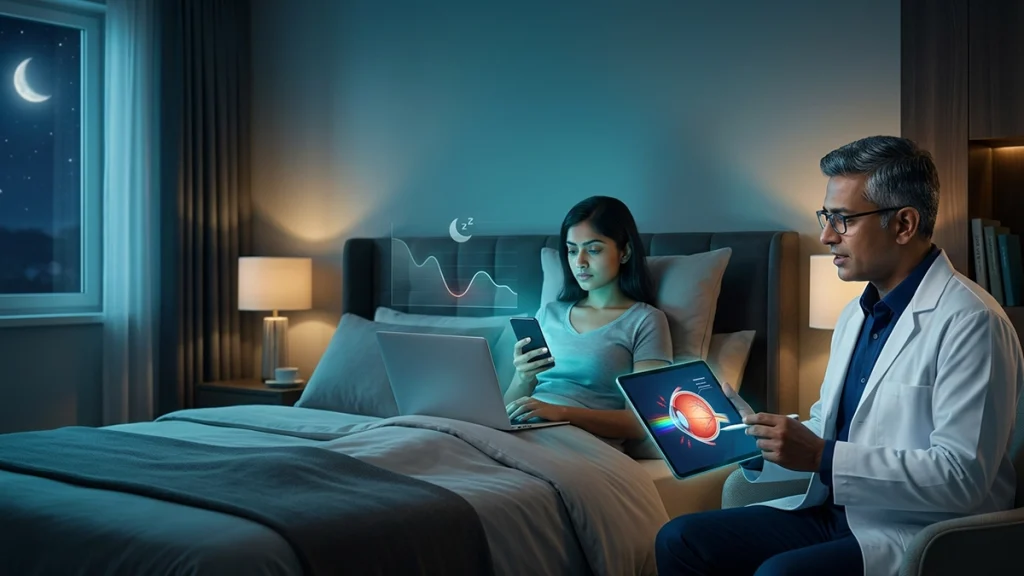
The main concern with Blue Light Effects on Sleep is that blue-rich light in the evening may delay the body’s natural preparation for sleep. You may feel tired in the body but still be wide awake in the mind. Over time this may cause you to go to bed later, have less total sleep time, get lower quality sleep and wake up feeling tired in the morning.
| Screen Habit | Possible Effect on Sleep |
| Using mobile phones in bed | May delay sleep onset and keep the brain alert |
| Watching bright screens late at night | May reduce sleep readiness and disturb the body clock |
| Working on a laptop before bed | Can increase mental stimulation and eye strain |
| Keeping devices near the pillow | Notifications and light exposure may interrupt sleep |
| Using night mode with reduced brightness | May help, but does not replace good screen discipline |
Understanding Blue Light Effects on Sleep is an issue for students, working professionals, gamers and people who spend great amounts of time on phones at night. Even if the eyes are healthy this may cause disruption to sleep which in turn affects concentration, mood, productivity and over health.
Blue Light and Vision: What Really Happens?
Many people are concerned that blue light from screens will cause permanent eye damage. What current clinical research does report is that when it comes to routine screen use we see more of an issue of discomfort rather than permanent structural damage to the eye. The more common issue is digital eye fatigue also known as digital eye strain
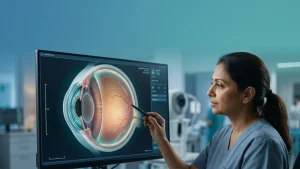
Digital eye fatigue is a result of us blinking less as we look at screens. The tear film becomes unstable and you may feel your eyes are dry, heavy, burning, or irritated. Also we are doing close work which keeps the focus muscles active which in turn may cause headaches and blurred vision. This is the practical aspect of Screen time impact on eyes. It is not just blue light we should be concerned with; also issues are screen distance, brightness, posture, blinking, room lighting and how often you take breaks.
Common Symptoms Linked With Excess Screen Use
Patients that have issues with Blue Light Effects on Sleep also report of eye related symptoms. We see that these symptoms are more so in people which put in many hours in front of screens without breaking it up or use their phones at night in the dark.
| Symptom | What It May Indicate |
| Burning or dry eyes | Reduced blinking and tear film disturbance |
| Headache after screen work | Eye strain, poor posture, or uncorrected power |
| Blurry vision after laptop use | Focusing fatigue or dryness |
| Watering eyes | Reflex tearing due to dryness or irritation |
| Poor sleep after night screen use | Possible circadian rhythm disturbance |
| Eye heaviness in the morning | Sleep disruption or prolonged screen exposure |
If these symptoms are a recurring issue do not attribute them solely to blue light. Digital eye fatigue may also result from uncorrected vision issues, dry eye disease, allergies, or poor screen posture.
Are Blue Light Glasses Useful?
Many of our users ask about blue light glasses for sleep. What these glasses do is to reduce some blue light wavelengths which enter the eye. They may be a help for people that can’t avoid evening screen time which includes shift workers and night studiers. But they are not a full solution.
The benefit of blue light glasses for sleep is a function of the quality of the lenses, the time of day which you are using screens, and also your sleep schedule. You may be wearing the glasses but still be in front of bright screens in bed for hours which isn’t solving the issue. The better approach is to combine blue light glasses for sleep with proper sleep hygiene tips, reduced screen brightness, and a fixed bedtime routine.
Also for daily use blue blocking glasses aren’t for all. If you have signs of digital eye fatigue the first thing to do is to have a proper eye exam to check your prescription, tear film and screen habits.
Practical Ways to Reduce Blue Light Effects on Sleep
Managing Blue Light Effects on Sleep doesn’t mean to eliminate all screens from your life. It means to use them more intelligently. Try to reduce your screen time at least 30 to 60 minutes before bed. Darken your room, avoid bed time scrolling, and use warm light in the evening.
Good sleep hygiene tips include set bed and wake times, stay away from bright screens an hour before bed, and to have a cool and quiet sleep environment which also is free of late afternoon and evening caffeine. These do in fact train your brain what time it is to sleep.
For the eyes, follow the 20-20-20 rule. Every 20 minutes, look at something about 20 feet away for 20 seconds. This helps reduce focusing stress and supports better blinking. The Screen time impact on eyes can also be reduced by keeping the screen slightly below eye level, adjusting brightness to match the room, and using lubricating eye drops only when recommended by an eye doctor.
When Should You Visit an Eye Doctor?
Occasional tiredness from screen use is a common issue. But if you have persistent redness, dryness, headaches, blurred vision, double vision, eye pain, or sleep disturbance which doesn’t improve with lifestyle changes, you should see an ophthalmologist. Also what may appear to be digital eye fatigue may in fact be dry eye disease, allergic eye disease, computer vision syndrome, or an uncorrected refractive error.
People with diabetes, children that have heavy screen time, contact lens wearers, and which report dry eye should also take care. For them Blue Light Effects on Sleep and screen related discomfort may require a more detailed eye care plan.
Eye Care Support at ASG Eye Care
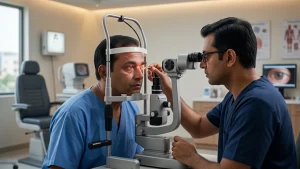
At ASG Eye Care we have a full eye exam which we use to look at screen related eye issues. We test visual acuity, eye surface health, tear film stability, blink rate, also we note on digital eye fatigue. As needed we also help out with ergonomic adjustments, prescriptive eye drops, corrective lenses and healthy computer habits.
Our focus is to treat eye strain but also we aim to help patients see the connection between Blue Light Effects on Sleep, screen time, and daily comfort. We give out the right advice which in turn allows most patients to safely use digital devices at the same time they protect their eyes and sleep.
Key Takeaway
Blue Light Effects on Sleep we see mostly in terms of evening and night time screen exposure. Blue light isn’t in itself bad, it is the poor habit of screen use that disrupts sleep, increases eye strain, and causes dryness. The best approach is a balance of smart phone and computer use, regular eye breaks, good lighting, annual eye check up, and practical sleep hygiene tips. If symptoms persist it is a good idea to see an eye care professional to determine the root cause and to prevent it from developing into a longer term issue.
Also Read : Blue Light Filtering Lenses
Frequently Asked Questions
1. What are the main Blue Light Effects on Sleep?
The primary Blue Light Effects on Sleep are delayed sleep onset, reduced sleep quality, difficulty relaxing at night, and morning tiredness. Also it is more likely that these effects will happen when bright screens are used close to bedtime.
2. Does screen time damage the eyes permanently?
For the great majority of people regular screen use does not cause permanent blindness or direct structural damage. That said, screen time’s impact on eyes includes dryness, irritation, headache, blurred vision, and digital eye fatigue which is the result of not taking breaks and ignoring proper eye care.
3. Do blue light glasses for sleep really help?
Blue light glasses for sleep do better in some cases at decreasing evening blue light exposure when one is not able to forgo screen time. Also they work best in conjunction with low screen brightness, less phone use before bed, and sleep hygiene tips.
4. How can I reduce digital eye fatigue?
To reduce digital eye fatigue, take frequent breaks, blink often, adjust screen brightness, keep the screen at a comfortable distance, use proper glasses if needed and see an eye care professional if symptoms persist.
5. What are simple sleep hygiene tips for screen users?
Helpful sleep hygiene tips are to avoid screens 30 to 60 minutes before bed, keep the bedroom dark, use warm lighting at night, maintain a regular sleep schedule, and stay away from late night scrolling.