Most people think of cancer in terms of the lung, breast, or colon. What is less known is that cancer also develops in and around the eye. Although eye cancer is rare, early detection is key in preserving both sight and overall health.
What we also see is that in the early stages eye cancer may not cause pain. Many patients put off seeing a doctor for what they think are minor eye issues which may in fact be symptoms of something more serious.
What we tell our patients is to pay attention to any changes in vision or appearance and to come in for an exam. At an experienced eye cancer hospital our ophthalmologists use the best in class imaging and diagnostic tools to catch and treat tumors at the first sign of issue.
What Is Eye Cancer?
Eye cancer is a term for when there is abnormal cell growth in the eye or its structures. These cells grow out of control which in turn may form tumors that in turn affect vision and eye function. Eye cancer may present within the eye ball (intraocular cancer) or in the tissues which are around the eye, including the eyelids and orbit. Some types of eye cancer start in the eye itself, while others are a result of cancer which has spread from other parts of the body. Not all eye tumors are cancer but any which are suspicious require evaluation by an ophthalmologist.
Types of Eye Cancer
Several forms of eye cancer can affect adults and children.
| Type | Description |
| Uveal Melanoma | The most common primary eye cancer in adults. |
| Retinoblastoma | A rare eye cancer primarily affecting children. |
| Ocular Lymphoma | Cancer affecting lymphatic tissue within the eye. |
| Conjunctival Melanoma | Develops in the thin membrane covering the eye. |
| Orbital Tumors | Affect tissues surrounding the eye socket. |
| Eyelid Cancer | Cancer affecting eyelid skin and glands. |
Each type of eye cancer behaves differently and may require specific treatment approaches.
Eye Cancer Symptoms You Should Never Ignore
Recognizing eye cancer symptoms early can significantly improve treatment outcomes.
Some patients experience only one symptom, while others may notice multiple changes over time.
Common eye cancer symptoms include:
- Blurred or distorted vision
- Sudden loss of vision
- Flashes of light
- Floating spots in vision
- A growing dark spot on the iris
- Bulging of one eye
- Changes in pupil shape
- Persistent eye redness
- Eye pain or pressure
- Swelling around the eye
Not all symptoms present with eye cancer, what we do see is that persistent and atypical changes are what you should look into. Also many patients tend to put off attention to early signs of eye cancer which is usually painless. We regret to inform you that delayed diagnosis may cause the cancer to progress which in turn may lead to permanent loss of vision.
Early Warning Signs of Eye Cancer
The earliest eye cancer symptoms are often subtle.
A person may notice:
| Early Sign | Why It Happens |
| Floaters | Tumor affects internal eye structures |
| Blurred vision | Retinal or optic nerve involvement |
| Visual field loss | Growth blocks part of the retina |
| Eye prominence | Tumor pushes the eye forward |
| Iris changes | Pigmented tumor development |
Because these eye cancer symptoms can resemble common eye conditions, professional examination is essential.
What Causes Eye Cancer?
The exact cause of eye cancer is not always known. However, several factors may increase risk.
Risk Factors
- Increasing age
- Fair skin and light-colored eyes
- Excessive UV exposure
- Family history of melanoma
- Certain genetic mutations
- Weakened immune system
While risk factors increase the likelihood of developing eye cancer, many patients diagnosed with eye cancer have no obvious risk factors.
How Is Eye Cancer Diagnosed?
Diagnosing eye cancer requires a detailed eye examination and specialized testing.
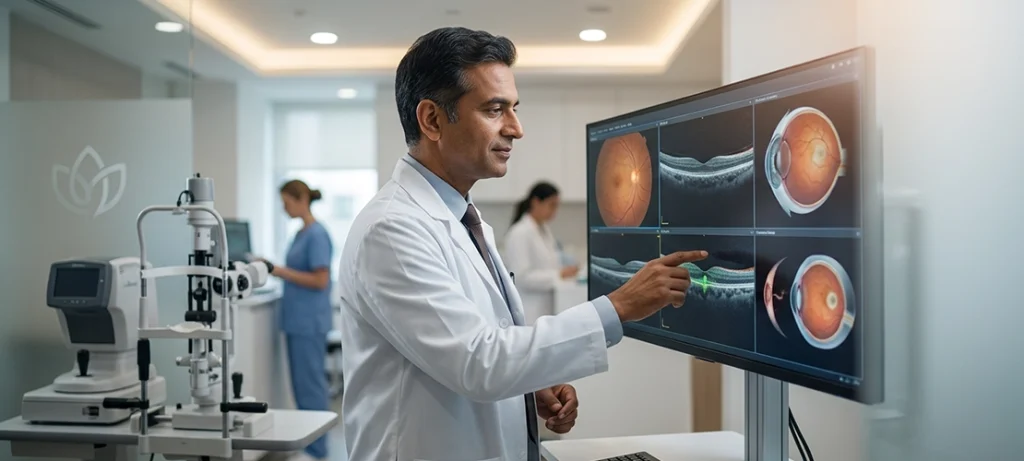
At an advanced eye specialist hospital, evaluation may include:
Dilated Eye Examination
Allows the ophthalmologist to examine the retina and internal structures.
Ocular Ultrasound
Helps determine the size and location of the tumor.
Optical Coherence Tomography (OCT)
Provides detailed retinal imaging.
Fluorescein Angiography
Assesses blood flow within the eye.
MRI or CT Scan
Used when eye cancer may extend beyond the eye.
Biopsy
Performed selectively to confirm diagnosis.
Early diagnosis of eye cancer often improves both visual and treatment outcomes.
Can Eye Cancer Affect Vision Permanently?
Yes.
Untreated eye cancer can damage critical structures such as:
- Retina
- Optic nerve
- Macula
- Blood vessels within the eye
As eye cancer progresses, vision loss may become irreversible. This is why persistent eye cancer symptoms should never be ignored.
In some cases, prompt intervention helps preserve useful vision and prevents cancer from spreading.
Treatment Options for Eye Cancer
The treatment plan depends on the type, size, and location of the eye cancer.
Common Treatment Methods
| Treatment | Purpose |
| Radiation Therapy | Shrinks or destroys tumors |
| Laser Therapy | Targets selected tumors |
| Surgery | Removes cancerous tissue |
| Chemotherapy | Controls cancer growth |
| Immunotherapy | Stimulates immune response |
| Targeted Therapy | Attacks specific cancer cells |
The goal of eye cancer treatment is to eliminate cancer while preserving vision whenever possible.
Role of Retina Specialists in Eye Cancer Care
Some types of eye cancer go after the retina and require a special approach. In these cases we may see in depth retina treatment which is for monitoring retinal damage, assessment of vision and supporting recovery from cancer therapy. Retina specialists also work very closely with ocular oncologists to give full care.
When Should You See an Eye Doctor?
Schedule an eye examination immediately if you experience persistent eye cancer symptoms such as:
- Unexplained vision loss
- New floaters or flashes
- Eye bulging
- Persistent redness
- Dark spots on the iris
- Changes in eye appearance
Early evaluation at a qualified eye specialist hospital can help identify eye cancer before significant complications develop.
Eye Cancer Treatment at ASG Eye Hospital
At the ASG Eye Hospital our patients have access to in depth eye exams, state of the art imaging technology, and we also have a wide range of specialized eye care for hard to treat eye issues. Our team of ophthalmologists is into early stage detection, precise diagnosis, and we design tailored management plans which in turn protects vision and improve long term outcomes. Also for the patients that need advanced retinal care we at ASG Eye Hospital provide advanced diagnostic and treatment tools under very able supervision.
Key Takeaways
- Eye cancer is a rare but very serious issue.
- We see better results from early diagnosis of eye cancer signs.
- Symptoms may present as blurred vision, floaters, vision loss, and protrusion of the eye.
- Both adult and child populations are affected by many forms of eye cancer.
- Very early diagnosis at an eye specialist hospital is key.
- We have modern treatments which do very well in the management of many eye cancer cases.
- For retinal structure involvement specialized retina treatment may be required.
Frequently Asked Questions (FAQs)
1. What are the first eye cancer symptoms?
At first it may present as blurred vision, floaters, flashes of light, visual field loss, or a dark spot within the eye.
2. Is eye cancer painful?
In many early cases of eye cancer there is no pain. Pain may be a factor if the tumor causes increased pressure or inflammation.
3. Can eye cancer be cured?
Many types of eye cancer do present a good prognosis when caught early. What results we see from treatment will depend on what type and stage of the disease you have.
4. Who is at risk for eye cancer?
Also which eye conditions are hereditary and what your exposure has been to things like UV light play a role in who develops eye cancer.
5. Are all eye tumors cancerous?
No. Some eye tumors are benign. However, any suspicious growth should be evaluated by an eye specialist.
6. Can children develop eye cancer?
Yes. Retinoblastoma is a form of eye cancer that primarily affects young children and requires immediate treatment.
7. When should I consult an eye specialist?
You should seek medical attention if you experience persistent eye cancer symptoms, unexplained vision changes, or any unusual changes in the appearance of the eye.