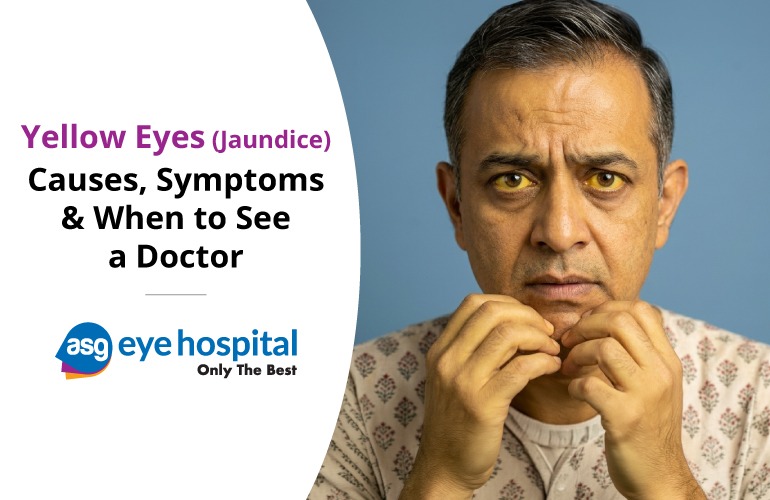
Yellowing of the eyes, medically known as ‘yellow eyes’ or jaundice, is a clinical sign that indicates an underlying disturbance in the metabolism or excretion of bilirubin, a yellow pigment produced during the breakdown of red blood cells.
Bilirubin deposits in the eyes make the sclera, which is the white part of the eyes, especially vulnerable to showing visible yellow discolouration. The process of identifying what causes yellow eyes in adults holds particular importance because this symptom serves as an indication of underlying medical conditions that need immediate assessment and treatment.
Understanding Bilirubin and Its Role in Yellowing of the Eyes
Bilirubin exists as a waste product that results from the standard process that breaks down haemoglobin inside red blood cells. A healthy person processes bilirubin in the liver, where the substance undergoes conjugation before the body eliminates it through bile into the digestive system.
The human body experiences elevated bilirubin levels, which result in hyperbilirubinaemia, when any part of this pathway becomes disrupted through excessive bilirubin production, impaired liver processing or blocked bile flow.
Common Causes of Yellow Eyes
Yellow eyes causes can be broadly categorised into pre-hepatic, hepatic, and post-hepatic factors:
1. Prehepatic Causes
The main reason for prehepatic bilirubin elevations occurs because the body produces excessive bilirubin, which exceeds the liver’s ability to eliminate it. The conditions that produce this effect include
- Haemolytic anaemia: Accelerates red blood cell destruction.
- Genetic disorders: People with Gilbert’s syndrome experience problems with their bilirubin-processing abilities.
2. Hepatic Causes
The hepatic causes happen because direct liver function impairment is the reason for these medical conditions. Jaundice develops in the body when the liver fails to process bilirubin, which then builds up in the bloodstream. The following conditions are essential for understanding this topic:
- Hepatitis: Viral infections that cause liver inflammation.
- Cirrhosis: Permanent liver damage that results from alcohol, toxins, or viral infections.
- Fatty liver disease: A condition in which liver cells build up fat, which leads to organ dysfunction.
3. Post-Hepatic Causes
Post-hepatic or obstructive causes emerge when bile flow is obstructed, which stops bilirubin from being eliminated. The following factors commonly cause the situation:
- Gallstones obstruct the bile ducts.
- Pancreatic tumours compressing the bile flow.
- Strictures or inflammation of the bile ducts.
Symptoms Associated with Jaundice
Recognition of symptoms of jaundice in adults is critical for timely diagnosis. Alongside yellowing of the eyes, individuals may present with:
Yellowing of the skin (generalised jaundice).
Dark urine results from the excretion of conjugated bilirubin.
Pale or clay-coloured stools indicate that the body cannot properly release bile.
The patient experiences both exhaustion and complete body weakness.
The patient experiences abdominal pain, which mainly affects the right upper quadrant.
The patient experiences nausea, together with vomiting and loss of appetite.
The development of severe or progressive cases brings about new systemic symptoms, which include fever, confusion and bleeding tendencies that indicate serious underlying medical issues.
Differential Diagnosis for Yellow Eyes
The yellow-eyed jaundice condition usually points to liver or biliary diseases, but doctors need to explore alternative medical conditions. The two conditions that require evaluation are the following:
- Conjunctival jaundice: Yellowing confined to the sclera without systemic bilirubin elevation.
- Carotenemia: Excessive dietary intake of carotene-rich foods (e.g., carrots) may cause yellowish skin but not affect the sclera.
- Medication-induced pigmentation changes.
- Accurate differentiation is essential for appropriate management.
Treatment of Yellow Eyes
Yellow eyes treatment is determined by the underlying cause:
1. Prehepatic Causes
The method of treatment focuses on the fundamental condition that causes haemolysis. The treatment approach consists of these components.
- Autoimmune haemolytic anaemia requires treatment through medication.
- Blood transfusions occur during life-threatening emergency situations.
- Patients with Gilbert’s syndrome need genetic testing to monitor their condition and to make necessary changes to their daily activities.
2. Hepatic Causes
Liver dysfunction treatment serves as the primary focus for medical staff, which includes the following procedures.
- The treatment of hepatitis infections needs antiviral drugs.
- Patients must avoid all drugs that damage the liver and any alcohol consumption.
- The process includes providing nutritional assistance and controlling patients’ additional health problems.
- Patients with advanced liver disease need liver transplantation as their only treatment choice.
3. Post-Hepatic Causes
Obstructive jaundice necessitates intervention to restore bile flow:
- Endoscopic retrograde cholangiopancreatography (ERCP) to remove stones.
- Surgical procedures for tumours or strictures.
- Stenting of bile ducts in selected cases.
When to Seek Medical Attention
Doctors need to evaluate patients who have yellow eyes with these symptoms:
- Rapidly worsening jaundice.
- Severe abdominal pain or abdominal swelling.
- Continuous vomiting, and the person cannot keep fluids down.
- The person shows symptoms of bleeding, together with confusion and drowsiness.
Early evaluation allows timely intervention and reduces the risk of complications that include liver failure and biliary obstruction.
Preventive Measures and Monitoring
The following measures can reduce risk, but not all causes of yellowing of the eyes can be prevented.
- All people with risk factors should receive regular liver function tests as part of their assessment.
- People need to get vaccinated against both hepatitis A and hepatitis B.
- People should sustain their health through proper dietary habits while staying away from alcohol consumption.
- Medical professionals need to treat haemolytic disorders and gallbladder diseases without delay.
Conclusion
The yellowing of the eyes constitutes a medically important condition that demands immediate medical attention. The process of avoiding severe health problems requires people to understand the causes of yellow eyes in adults, to identify adult jaundice symptoms and to obtain immediate medical help for yellow eyes treatment. People who see yellowing in their eyes must complete medical testing to find out what causes their condition.
ASG Eye Hospital provides expert eye care and systemic assessment across multiple locations. The assessment should be conducted without delay because it helps to identify and treat medical conditions that cause yellow eyes, jaundice. Eye and systemic health assessments are available at ASG Eye Hospital in Indore, ASG Eye Hospital in Delhi, ASG Eye Hospital in Srinagar, ASG Eye Hospital in Gujarat, ASG Eye Hospital in Indore and ASG Eye Hospital in Punjab.
The patient should see an ophthalmologist without delay because this will enable doctors to determine the correct diagnosis and provide proper treatment, while they can stop vision problems that develop from systemic jaundice.
Frequently Asked Questions
1. What factors lead to yellow eye appearance in adult individuals?
The presence of yellow eyes in adult individuals occurs because of liver problems and bile duct blockages and an increase in red blood cell destruction, which results in higher bilirubin levels.
2. Are yellow eyes always a sign of liver disease?
The answer is no. The common causes of yellow eyes originate from liver diseases, but haemolytic disorders, bile duct obstructions and specific drugs can also lead to yellow-eyed jaundice.
3. What are the common symptoms of jaundice in adults?
The symptoms of the condition begin with yellowing of the eyes, while patients experience fatigue and dark urine, pale stools, nausea, abdominal discomfort and general weakness.
4. When should I see a doctor for yellow eyes?
You should visit a doctor immediately when yellowing starts suddenly and increases rapidly while you experience abdominal pain, persistent vomiting, bleeding and confusion.
5. How is yellow eye treatment determined?
The treatment selection process requires identification of the root cause, which might need medication and lifestyle modifications, bile duct obstruction treatment and liver disease control.