
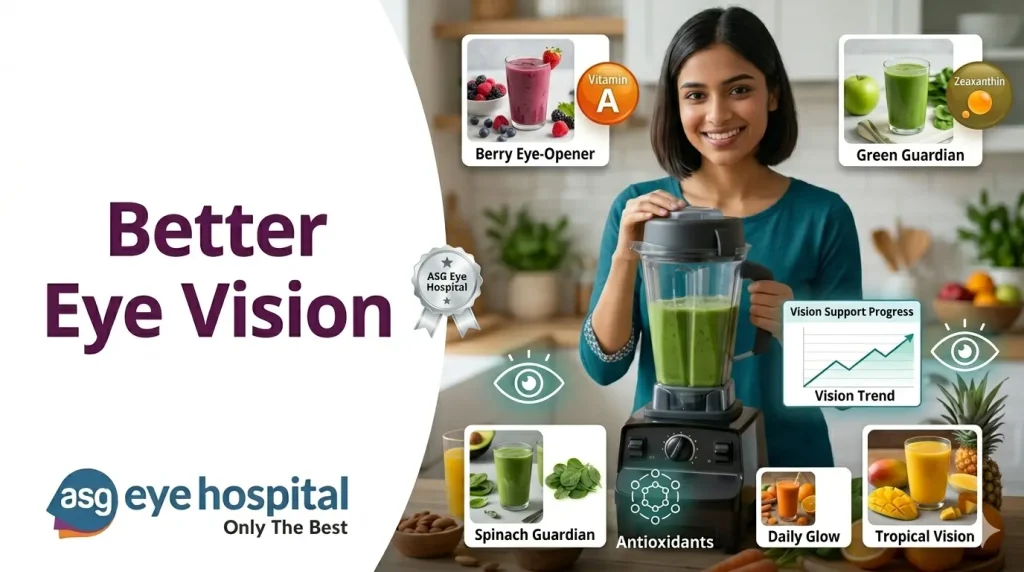
Vision is one of the first things people say they could not live without, and one of the last things they think about when it comes to nutrition. We plan meals around heart health. We stock up on probiotics for the gut, also read ingredient labels on behalf of our skin. But what do we eat for our eyes? If we think about it at all, it is rarely something most people can answer with any confidence. Usually, the question only comes up after vision starts to change.
The truth is, the retina is one of the most metabolically demanding tissues in the body. It burns through nutrients constantly. Lutein, zeaxanthin, vitamin A, omega-3 fatty acids, zinc, and vitamin C are not optional extras. They are working materials. And for most people, the diet does not consistently supply enough nutrients.
That is where healthy smoothies for eye vision become genuinely useful. Not as a cure. Not as a replacement for glasses or clinical treatment. But as a practical, low-effort way to get the right nutrients in regularly, especially the dark leafy greens and seeds that most people rarely eat.
The ten Recipes for Better Eye Vision below are built around ingredients with a direct, documented connection to ocular health. Most of them are already in Indian kitchens.
What the Eyes Actually Need – and Why
Lutein and zeaxanthin concentrate in the macula, the part of the retina handling sharp central vision. They filter blue light and neutralise oxidative damage in real time. The body makes none of them. Every milligram comes from food.
Vitamin A keeps the cornea intact and drives rhodopsin production in rod cells, the pigment that makes low-light vision possible. Deficiency shows up first as night blindness, long before more serious damage becomes visible.
Vitamin C is found inside the eye at concentrations far higher than in blood. Amla, Indian gooseberry, is one of the most concentrated sources of vitamin C of any food on the planet.
Omega-3 fatty acids form the structural membrane of photoreceptor cells and stabilise the tear film. For anyone spending long hours on screens, this matters. Flaxseeds and chia seeds are the most practical plant sources in an Indian context.
Zinc transports vitamin A from the liver to the retina. Without it, even a good vitamin A intake does not reach the tissue that needs it.
1. Carrot, Mango and Ginger Blend
Carrot and mango together are among the richest beta-carotene combinations in everyday produce. Ginger supports the small blood vessels that supply the retina.
Ingredients: 2 carrots, 1 cup mango, 1 tsp fresh ginger, 1 cup coconut water, squeeze of lime
Note: Beta-carotene is fat-soluble. Have a few nuts alongside or blend in half a teaspoon of coconut oil to improve absorption.
2. Spinach, Blueberry and Flaxseed Smoothie
For macular health specifically, this is one of the best smoothies for eyesight improvement on this list. Spinach sits at the top of the lutein and zeaxanthin charts. Blueberries carry anthocyanins, which research links to better retinal circulation and reduced eye fatigue after screen-heavy days. Ground flaxseeds bring ALA omega-3 into the mix.
Ingredients: 1 handful spinach, 1 cup blueberries, 1 tbsp ground flaxseeds, 1 banana, 1 cup oat milk
Note: Use ground flaxseeds – whole seeds pass through the gut largely undigested.
3. Amla, Turmeric and Coconut Water Drink
Amla’s vitamin C concentration is among the highest of any fruit documented in nutritional research, significantly higher than citrus, which most people reach for first. It has been used specifically for eye health in Ayurvedic medicine for centuries, a tradition that modern evidence now supports. Turmeric brings curcumin, which reduces the inflammatory load in the retinal tissue.
Among natural drinks to improve eyesight fast, this one is the most rooted in Indian dietary tradition and among the most nutrient-dense per glass.
Ingredients: 2 fresh amla or 2 tbsp amla powder, ½ tsp turmeric, 1 cup coconut water, a pinch of black pepper, ½ tsp honey
Note: Black pepper is not optional. It raises curcumin absorption significantly, without it, most of the turmeric passes through unused.
4. Kale, Avocado and Cucumber Smoothie
Gram for gram, kale contains more lutein than spinach. Avocado contributes lutein of its own and provides the fat that makes carotenoid absorption possible in the first place. Among homemade smoothies for eye care, this one delivers the highest lutein concentration per glass.
Ingredients: 1 cup kale, ½ avocado, ½ cucumber, juice of 1 lemon, 1 cup cold water, pinch of rock salt
5. Sweet Potato, Almond, and Cinnamon Smoothie
Sweet potato is one of the most beta-carotene-dense foods grown across India. Almond butter adds vitamin E, which protects lens proteins from oxidative breakdown over time – relevant to long-term cataract risk.
Ingredients: ½ cup cooked sweet potato, 1 tbsp almond butter, 1 cup oat milk, ½ tsp cinnamon, ice
Also read: Best Diet Plan for Healthy Eyes and Vision
6. Papaya, Chia Seed and Yoghurt Blend
Papaya covers beta-carotene, vitamin C, and zeaxanthin in one fruit. Plain yoghurt adds zinc and enough fat to improve carotenoid uptake. Chia seeds bring omega-3 without changing the flavour.
Ingredients: 1 cup papaya, 1 tbsp chia seeds, ½ cup plain yoghurt, ½ cup water, juice of half a lime
Note: Stir chia seeds in after blending rather than blending them through.
7. Beetroot, Pomegranate, and Raspberry Smoothie
The retina has one of the densest blood supplies in the body. Poor microvascular circulation is a documented factor in diabetic retinopathy and age-related macular degeneration. Beetroot’s dietary nitrates dilate blood vessels and improve flow to the small capillaries feeding the eye.
Ingredients: ½ small cooked beetroot, ½ cup pomegranate juice, ½ cup raspberries, 1 tsp chia seeds, ½ cup water
8. Methi, Green Apple, and Lemon Smoothie
Methi – fenugreek leaves- is a staple of the Indian kitchen and a solid source of both vitamin A and vitamin C. It rarely appears in eye health smoothie recipes despite being genuinely relevant. Green apple and lemon manage their bitterness without adding anything that works against the nutritional goal.
Ingredients: 1 handful methi leaves, 1 green apple, juice of 1 lemon, 1 cup water, ½ tsp honey
9. Pumpkin, Walnut, and Oat Milk Smoothie
Pumpkin supplies beta-carotene, vitamin C, and vitamin E in one ingredient. Walnuts add ALA omega-3 and zinc. Few single recipes bring this range of eye-relevant nutrients into one glass as efficiently.
Ingredients: ½ cup cooked pumpkin, 6 to 8 walnuts, 1 cup oat milk, ½ tsp vanilla, ½ tsp cinnamon, ice
Note: Blend walnuts and oat milk for a full 60 seconds first – the texture is considerably smoother.
10. Palak, Banana, and Sesame Seed Smoothie
Palak is available across India year-round, costs very little, and carries a strong lutein and zeaxanthin load. Sesame seeds add zinc and vitamin E. Bananas make it drinkable without added sugar. Every ingredient in this smoothie is already in most Indian kitchens – making it the most realistic recipe on this list for daily use.
This is one of the smoothies for better vision 2026 that works not because it is complicated, but because it is easy enough to actually make every morning.
Ingredients: 1 handful palak, 1 ripe banana, 1 tbsp sesame seeds, 1 cup oat or almond milk, ½ tsp honey
What These Smoothies Do Not Do
These recipes support eye health. They do not treat eye disease. Refractive errors need glasses or clinical management. Established macular degeneration and diabetic retinopathy need medical treatment. Nutrition works alongside the care, not instead of it.
ASG Eye Hospital, with centres across Mumbai, Delhi, Jaipur, Pune, and more, provides comprehensive eye examinations, nutritional deficiency assessments, and management of conditions including macular degeneration, diabetic retinopathy, and dry eye. If you have concerns about your vision or want to understand how your diet is affecting your eye health, a consultation with an ophthalmologist is the right first step.
Anyone managing a diagnosed eye condition should speak to their ophthalmologist before making significant changes to their diet or supplement routine.
FAQs
1. Do Healthy Smoothies for Eye Vision Produce Real Results?
They build the nutritional foundation the eye depends on – lutein levels, vitamin A availability, tear film stability, lens protection. These effects accumulate over months. The clinical evidence behind individual nutrients like lutein, zeaxanthin, and omega-3 is well established. A smoothie is not a treatment, but it is a meaningful dietary habit.
2. Which Single Ingredient Has the Strongest Evidence?
Lutein and zeaxanthin together have the deepest clinical evidence, particularly for macular protection and blue-light filtering. Amla stands out specifically for Indian diets – its vitamin C concentration is exceptional. Palak and methi are the most practical daily sources of carotenoids.
3. How Often Is Enough?
Three to five times a week contributes meaningfully to overall nutrient intake for most people. Daily is better where it is sustainable. The benefit comes from months of consistency, not occasional large quantities.
4. Are These Safe for Children?
Most recipes are appropriate for children with quantities adjusted for age and body weight. A paediatric ophthalmologist or nutritionist can advise based on specific dietary requirements and eye health history.
5. Can These Replace Prescribed Eye Supplements?
No. Clinical supplements – particularly those formulated for age-related macular degeneration – are built to specific dosages based on trial data. These smoothies complement that. They do not replicate it.