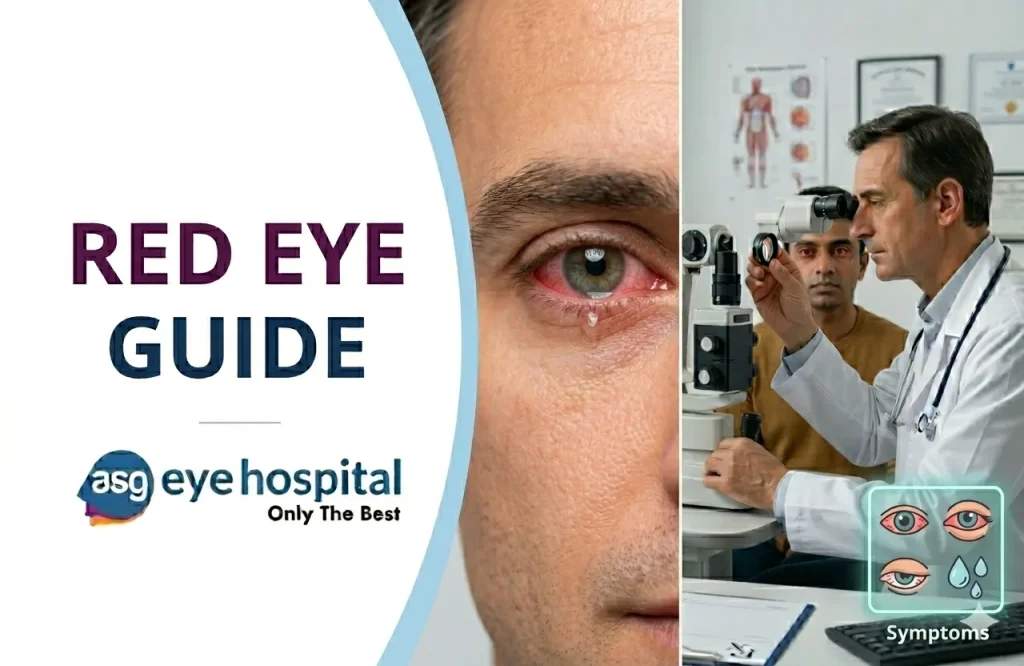
Red eyes are one of the most common eye complaints -and one of the most frequently mistreated. The whites of the eye look pink or red because surface blood vessels have dilated or become inflamed. What triggers that response varies considerably, and the right treatment depends entirely on the cause.
Most cases of bloodshot eyes are benign and resolve on their own. A handful are not. Knowing the difference matters.
Eye Redness Causes: The Most Common Ones
The most frequent eye irritation causes are dry eye, allergic conjunctivitis, and viral conjunctivitis. Dry eye produces low-grade, persistent redness with burning and grittiness. Allergic conjunctivitis adds intense itching and affects both eyes. Viral conjunctivitis typically starts in one eye, produces watery discharge, and spreads within days.
Bacterial conjunctivitis causes thicker, coloured discharge and crusting on the lids, particularly after sleep. Subconjunctival haemorrhage -a burst blood vessel beneath the conjunctiva -produces a vivid red or dark patch on the white of the eye. It looks alarming, but is almost always painless and harmless, resolving over one to two weeks without treatment.
Less common but more serious eye redness causes include uveitis (inflammation inside the eye), acute angle-closure glaucoma, and corneal ulcer. These are typically accompanied by pain, light sensitivity, or vision change and require urgent clinical attention.
What Bloodshot Eyes Can Tell You About the Cause
The pattern of redness -where it appears and what accompanies it -is often the most useful diagnostic information before an examination.
- Diffuse redness across the whole white of the eye, both sides, with itching: allergic conjunctivitis
- Diffuse redness starting in one eye, watery discharge, spreads to the second eye: viral conjunctivitis
- Redness with thick discharge and lid crusting: bacterial conjunctivitis
- A single bright red or dark patch on an otherwise white eye: subconjunctival haemorrhage
- Redness concentrated around the coloured iris, with eye pain and light sensitivity: uveitis or keratitis
- Sudden red eye with severe pain, halos around lights, nausea: acute angle-closure glaucoma -emergency
Does a very red eye always mean an infection?
No. Infection is one cause among many. Dry eye, allergy, and physical irritation from dust, smoke, or contact lens overwear all produce visible redness without infection. Antibiotic drops are ineffective for these causes and can cause problems with overuse.
Also read: Blurred Vision – Causes, Sudden vs Gradual Changes & Treatment
Red Eye Treatment: Matching It to the Cause
Red eye treatment is only effective when matched to the underlying cause. Lubricating eye drops are the appropriate first response for dry eye and mild irritation; using them consistently through the day rather than as a one-off is what produces sustained improvement. For allergy-related redness, antihistamine drops -preferably combination antihistamine-mast cell stabiliser drops such as olopatadine or ketotifen -are more effective than lubricants alone.
Viral conjunctivitis has no specific treatment and resolves in one to two weeks with cold compresses and lubricating drops for comfort. Bacterial conjunctivitis responds to antibiotic drops, but an examination is needed first -the two look similar, and antibiotics are ineffective for viral infection. Vasoconstrictor redness-relief drops should not be used regularly: they reduce redness cosmetically but cause rebound redness and treat nothing.
Red Eyes Home Remedies That Genuinely Help
For mild, non-infectious red eyes, several red eye home remedies provide real benefit alongside or instead of drops. A cold compress over closed eyes for five to ten minutes reduces histamine-driven swelling and surface irritation. It is more effective than a warm compress for allergy and general irritation because cold constricts dilated blood vessels.
Rinsing with clean water after dusty or polluted environments removes surface irritants. Staying hydrated, blinking consciously during screen use, and removing contact lenses when eyes are red all support recovery. Avoid rubbing consistently -it worsens redness, raises infection risk, and in allergy, deepens the itch cycle.
When Red Eyes Need a Doctor Rather Than Home Care
See an eye specialist if redness does not improve after 48 hours, if there is pain, or if vision is affected. Seek immediate attention if sudden severe redness comes with pain, halos around lights, or nausea -this pattern indicates acute angle-closure glaucoma, which can cause permanent vision loss within hours without treatment.
Contact lens wearers with a red eye should remove the lenses immediately and seek evaluation promptly -a red eye in a lens wearer can indicate a corneal ulcer, which needs urgent antibiotic treatment.
Final Thoughts on Red Eyes and Treatment
Most cases of red eyes are manageable with the right drops and basic care. The cases that are not tend to signal themselves clearly through pain or vision change. Acting on those signals promptly is what prevents minor presentations from becoming significant ones.
ASG Eye Hospital, with centres in Mumbai, Delhi, Pune, Jaipur, and more, provides a same-visit assessment for red eye presentations. A slit-lamp examination identifies the cause and determines the appropriate treatment, removing the guesswork from a symptom that is common but not always simple.
FAQs
1. What are the most common eye redness causes?
Dry eye, allergic conjunctivitis, and viral conjunctivitis account for the majority of cases. Bacterial conjunctivitis, subconjunctival haemorrhage, and irritation from dust, smoke, or contact lens overwear are also frequent causes.
2. Are bloodshot eyes always a sign of something serious?
No. Most cases are benign -tiredness, allergy, dry eye, or minor irritation. Redness with pain, vision change, or halos around lights indicates a potentially serious cause that needs prompt evaluation.
3. What is the best red eye treatment at home?
Cold compress, preservative-free lubricating drops, rinsing with clean water after irritant exposure, avoiding rubbing, and removing contact lenses. These address the most common causes. They are not appropriate if there is pain or a vision change.
4. How long should red eyes last before I see a doctor?
If redness does not improve within 48 hours of basic home care or worsens at any point, a specialist visit is the right step. Immediate attention is needed if severe pain, vision change, or halos accompany the redness.
5. Can I use redness-relief eye drops daily for red eyes?
No. Vasoconstrictor redness-relief drops narrow blood vessels cosmetically and cause rebound redness when they wear off. They do not treat any underlying cause. Preservative-free lubricating drops are the safer option for regular use.
6. Aankhen red kyu hoti hain?
Aankhen red hone ke common reasons me dry eye, allergy, infection (viral ya bacterial), dust irritation aur zyada screen time shamil hain.
7. Kya red eyes hamesha serious problem hoti hai?
Nahi, har baar serious nahi hoti. Lekin agar redness ke saath pain, vision problem ya light sensitivity ho, to turant doctor ko dikhana chahiye.
8. Red eyes ka sabse common symptom kya hai?
Redness ke saath itching, burning, watery eyes, ya discharge ho sakta hai. Kabhi-kabhi blurry vision bhi hota hai.
9. Red eyes ke liye ghar par kya karein?
Cold compress, clean water se aankh dhona, lubricating eye drops aur screen time kam karna helpful hota hai.
10. Kab doctor ke paas jana zaroori hai?
Agar redness 2 din me theek na ho, ya pain, swelling, discharge ya vision loss ho, to eye specialist se consult karna zaroori hai.
11. Kya eye drops har red eye me use kar sakte hain?
Nahi, har case me same drops kaam nahi karte. Galat drops use karne se problem badh sakti hai, isliye proper diagnosis important hai.